
Details
2022-12-08
President Tsai meets 25th Fervent Global Love of Lives awards winners
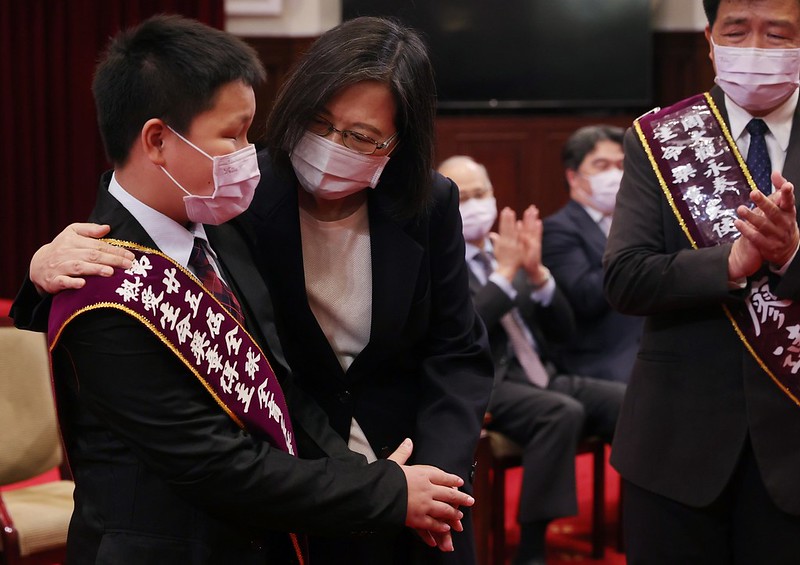
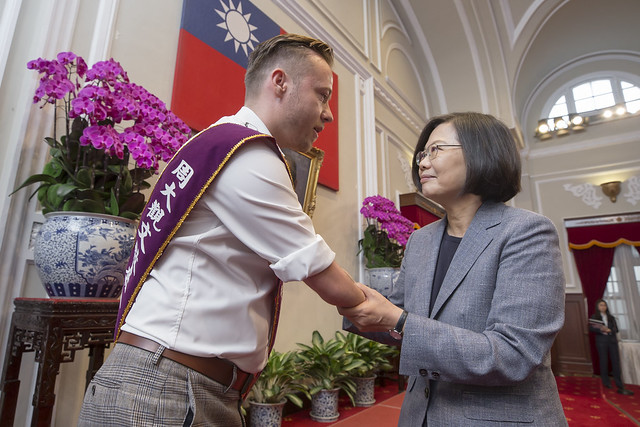
On the morning of December 8, President Tsai Ing-wen met with the winners of the 25th Fervent Global Love of Lives awards. In remarks, President Tsai thanked all the winners for sharing their zest for life and for everything that they have done for Taiwan and the world. The president also said she hopes that all the winners will continue to bring positive energy to every corner of the world.
A translation of President Tsai's remarks follows:
I want to begin by congratulating all the medal winners. I recall that last year, in this same venue, I told Founder Chou Chin-hua (周進華) and Chairperson Guo Ying-lan (郭盈蘭) of the Chou Ta-Kuan Cultural and Educational Foundation that I looked forward to receiving overseas medal winners at the Presidential Office once the COVID-19 pandemic was contained. Today, I am very happy to see guests from home and abroad in Taiwan and at the Presidential Office. I warmly welcome you all.
Over the past 25 years, 416 individuals from 71 countries have been awarded Fervent Global Love of Lives medals. I would like to thank the Chou Ta-Kuan Cultural and Educational Foundation for its efforts in encouraging medal recipients and facilitating exchanges between Taiwan and countries around the world. This allows us to work together to advance our shared values.
Since I took office, combating drugs has been one of my administration's top priorities. We have seen Ms. Gloria Pachón, known as the mother of Colombia's antidrug movement, striving to combat drugs and corruption in her country and to promote antidrug education worldwide. Today, her son Mr. Juan Manuel Galán is here on her behalf. I am sure his speech in a moment will give us much food for thought.
Also here with us is Mr. Fatih Küçük, a Turkish artist who has traveled to rural schools in Taiwan and volunteered to paint murals. On this trip, he volunteered his services to Cifong Elementary School in Linbian Township, Pingtung County. He also donated money generated from the sale of his paintings to rural schools in Taiwan. We are very touched by and grateful for this act of kindness.
Ms. Iwasaki Kanae is a Japanese pianist who likes to say, "Even if I can only move one finger, I can still play the music of life." And our bright young musician Chou Hsuan-wei (周軒瑋) also said, "Don't just think about what your eyes can't see, but see with your heart the truth, goodness, and beauty of the world."
This is the same spirit with which young Chou Ta-kuan (周大觀) fought cancer, when he said that he still had one leg and wanted to stand on the Earth and walk throughout this beautiful world. Ta-kuan's passion for life is very much evident in every single one of the winners here today. We truly admire how you light up the world with your vitality and extraordinary contributions.
The film director Chu Chuan-lee (曲全立) has documented both the natural beauty of Taiwan and the work of more than 100 craftspeople. His Formosa 3D mobile movie vehicle travels all over Taiwan screening films that encourage children to care for the environment. Mr. Li Sheng-mao (李升茂) is known as a painter and a guardian of Taiwan's power supply. Having worked on the frontlines for Taiwan Power Company, making emergency repairs following outages, his ink paintings capture the arduous nature of this work and help people understand the contributions that many hardworking individuals make to Taiwan.
Every medal recipient has a moving story to tell. I want to thank you all for sharing your zest for life with us and for everything that you have done for Taiwan and the world. I wish the foundation and all the winners an even brighter future as you continue to deliver inspiration and positive energy to every corner of the world.
Details
2022-11-16
President Tsai meets delegation led by Lions Clubs International President Brian Sheehan
On the morning of November 16, President Tsai Ing-wen met with a delegation led by Lions Clubs International (LCI) President Brian Sheehan. In remarks, President Tsai expressed hope that under Mr. Sheehan's leadership, Lions Club members in Taiwan and LCI will engage in closer exchanges and cooperation to serve Taiwan and the global community. The president also thanked Lions Club members for their efforts to advance Taiwan's foreign relations and deepen our links with the world.
A translation of President Tsai's remarks follows:
I want to welcome Mr. and Mrs. Sheehan to Taiwan. My warm congratulations to you, Mr. Sheehan, on your election as international president of LCI. You have long been an important Lions leader at both the international and local levels, and I believe that under your leadership, LCI will make even greater contributions to the world.
For years, Lions Club members from across the globe have upheld their sense of mission, reaching out to communities to provide a diverse array of services. LCI is also indispensable to international humanitarian assistance efforts. Since Russia's invasion of Ukraine, the LCI Foundation has contributed approximately US$2.7 million to settling Ukrainian refugees and providing urgently needed healthcare and daily necessities.
In addition, LCI's charitable fundraising program – Campaign 100: LCIF Empowering Service – has raised US$325 million, with Taiwan's Lions Clubs accounting for more than US$40 million, the highest amount from any single country. It is clear that the Lions' spirit of giving transcends all borders. Taiwanese Lions Club members have also drawn worldwide attention to Taiwan as a force for good, leaving us with a deep sense of admiration for their work.
Earlier this month, Taiwan and the United States signed a memorandum of understanding on development and humanitarian assistance cooperation. This represents another step in institutionalizing the robust Taiwan-US partnership in promoting development and humanitarian assistance. Taiwan will continue to support international efforts to collectively advance a better and more sustainable future.
I hope that under Mr. Sheehan's leadership, Taiwanese Lions Club members and LCI will engage in closer exchanges and cooperation to serve Taiwan and the global community. I want to thank all Lions for their efforts to advance Taiwan's foreign relations and deepen our links with the world.
This is Mr. Sheehan's second trip to Taiwan. I hope that during this visit, you have the opportunity to learn more about Taiwan and that you will return often. I wish you a rewarding and successful trip.
Details
2021-08-11
President Tsai addresses 2021 Asian Conference of Women's Shelters
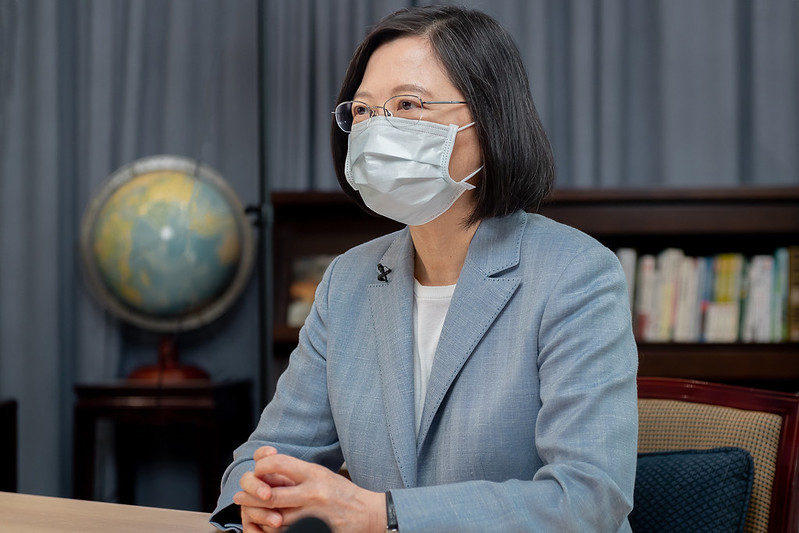
On the morning of August 11, President Tsai Ing-wen addressed the opening of the 2021 Asian Conference of Women's Shelters via video. In her remarks, President Tsai said that by expanding access to affordable, high-quality housing, we can reduce the burden on victims of abuse and disadvantaged groups, empowering them to start new lives while taking steps to bring about residential justice. The president also expressed hope that the discussions and experience-sharing at this conference will make a difference in our ongoing work to protect women's and children's rights.
A transcript of President Tsai's remarks follows:
It is an honor to join you at this virtual conference. First and foremost, I want to thank each of you for all you have done during this pandemic to protect women's and children's rights.
Since its founding, the Global Network of Women's Shelters has been devoted to ending violence against women and children worldwide.
Within this global organization, the Asian Network of Women's Shelters and its partners have been working across the region to bring attention to the issue of violence against women and children. At the same time, they are also addressing the crucial need for shelters and social housing for those affected.
To support women leaving or ending violent relationships, we need these stable external support systems that empower women and give them opportunities to grow.
In Taiwan, the Garden of Hope Foundation has done a great deal of important work in this field. Before, shelters in Taiwan mainly offered only emergency, short term stays. But to help women adjust to normal life, it was necessary to let shelters serve other functions throughout the support process.
By offering professional training as well as legal and economic aid, the Garden of Hope is providing the resources needed to help women take charge of their lives.
In terms of social housing, by expanding access to affordable, good-quality homes, we can reduce the burden on disadvantaged groups and empower them to start new lives. This is how we bring about residential justice.
With experts from all over Asia sharing their insights, today's conference is sure to be a valuable learning experience for everyone in attendance. I am confident that this forum will spur conversations on these important issues, and will provide inspiration for how we think about future policy.
I want to thank each of you for your hard work, and I hope that in the near future, we can overcome the challenges of the pandemic and welcome all of you to Taiwan. Thank you.
Details
2019-09-27
President Tsai meets winners of 22nd Fervent Global Love of Lives Medals
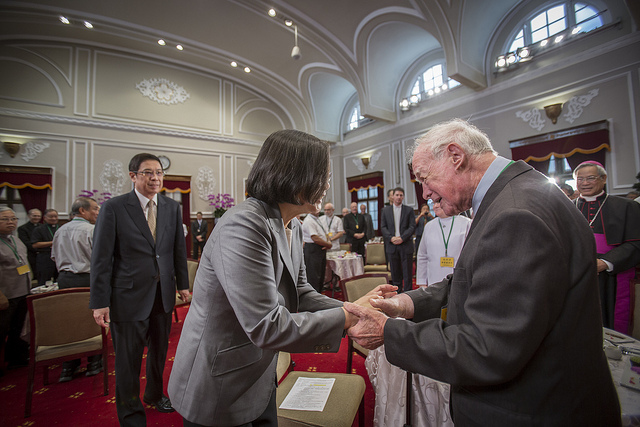
President Tsai Ing-wen met with the winners of the 22nd Chou Ta-Kuan Cultural and Educational Foundation Fervent Global Love of Lives Medals on the afternoon of September 27. She also thanked all the winners for showing us that no matter what challenges we face in life, we all have limitless potential. She expressed hope that the awards would allow us to spread the winners' powerful stories across the globe.
A translation of the president's remarks follows:
I want to first welcome you to the Presidential Office. I also want to thank Chou Ta-Kuan Cultural and Educational Foundation Founder Chou [Chin-hua] (周進華) and Chairperson Guo [Ying-lan] (郭盈蘭) for organizing this meaningful event each year.
This year, 20 winners were chosen from a variety of fields for overcoming life's obstacles and achieving what was once thought impossible. Many winners have surmounted physical limitations to create artistic masterpieces, an admirable achievement.
Mr. Alexey Romanov, from Russia, is a pianist who will be putting on a lively performance in just a few minutes. Ms. Rusidah Badawi, from Indonesia, is a photographer whose works have been featured at the Indonesia National Gallery. Mr. Mariusz Kedzierski is a talented artist from Poland. Ms. Gao Shu-jhuan (高淑專) is an artist who painted her autobiography using her mouth. Mr. Lu Chih-song (盧志松) is a stoneworker and National Crafts Award Winner. All of them exemplify this determination to overcome physical obstacles.
Japanese pianist Mr. Takuto Koyanagi drew from his own experiences to establish an association for musicians with autism in Japan that has cultivated a number of outstanding musicians.
Mr. Li Xiao-guan (李曉光) from China, holds over 200 patents for codes he wrote using a single finger, a truly commendable achievement. Mr. Chou Tse-han (周則翰) refused to let his disabilities hold him back, swimming to first place at Taiwan's National Disabled Games.
Chen Kuo-hsin (陳國信), also known as the "Presidential head chef," did not have an easy childhood growing up in an orphanage, but he strived for greatness. He has become a culinary sensation, and has cooked for many presidents and leaders of our allies at state banquets.
Many of this year's winners acted as advocates and encouraged others who needed help, bringing about many important changes.
Ms. Maria Luisa de Cossío de Gonzales Posada from Peru works to help homeless children on the streets. She has helped treat more than 30,000 South American children for drug addictions, giving them a new start in life.
Kareem Waris Olamilekan from Nigeria is an artist with quite a following online. Although he is only 11 years old, his works have already amazed people the world over. More importantly, he shares the food he earns for his works with other children in his village, earning him the nickname "little Robin Hood."
Mr. Ku Ying-yung (古英勇), an elder from Taiwan's Paiwan tribe, has made crucial contributions to indigenous culture and tribal tourism, and he works hard to foster mutual understanding between Taiwan's indigenous peoples and Han people. Mr. Lai Shui-huo (賴水和), also from Taiwan, planted 7 hectares of trees so that his mother could be exposed to more phytoncides, a natural plant compound. Mr. Lai was able to both take care of his mother and help realize our goals of environmental friendliness and greening.
There are many other winners who have made contributions in different areas. These awards allow us to spread these powerful stories across the globe, and I am confident that they will spark a greater love of life in others.
We are all presented with new challenges each day, and I want to thank this year's winners for showing us that no matter what challenges we face, we all have limitless potential. Thank you.
The delegation was accompanied to the Presidential Office by Chou Ta-Kuan Cultural and Educational Foundation Founder Chou Chin-hua, and Deputy Minister of Health and Welfare Ho Chi-Kung (何啟功). Also attending the meeting was National Security Council Secretary-General David T. Lee (李大維).
Details
2018-08-28
Vice President Chen meets Dementia Alliance International Chair Kate Swaffer
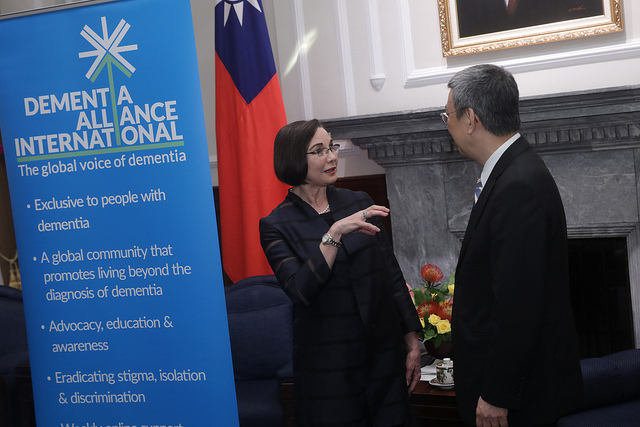
On the morning of August 28, Vice President Chen Chien-jen met with Dementia Alliance International (DAI) Chair Kate Swaffer. The vice president thanked Chair Swaffer for speaking up on Taiwan's behalf for many years in important international venues, and also said that Taiwan looks forward to receiving her continued support in the international arena.
In remarks, Vice President Chen stated that he was delighted to meet with his visitors, and also expressed gratitude for the many valuable suggestions that Chair Swaffer and her husband gave during several previous visits to Taiwan. The vice president then took the opportunity to thank her for voicing support for Taiwan for many years in important international venues like the World Health Organization and Alzheimer's Disease International (ADI). He went on to say that her voice has made the international community aware of Taiwan's efforts to address dementia, making her an extremely valuable ally.
Chair Swaffer has been diagnosed with early-onset Alzheimer's, said the vice president, and for many years has been a devoted advocate, spokesperson, and activist for people like herself. Ms. Su Hui-mei (蘇惠美), who was on hand, has also been diagnosed with Alzheimer's, and the vice president commended her active involvement in activities for people with the disease. In the future, the vice president said he hopes that the DAI will help foster exchanges between Taiwan and international organizations, so that we can develop the services that dementia patients in Taiwan need most.
Vice President Chen pointed out that last year, the World Health Assembly has passed a Global Action Plan on the Public Health Response to Dementia 2017-2025, and Taiwan's Ministry of Health and Welfare has also launched the "Taiwan Dementia Policy: A Framework for Prevention and Care 2.0." Taiwan's 2.0 program has seven major strategies that can be grouped into three major tasks.
The first task is to conduct an overall review of the relevant laws, and raise public awareness and acceptance of dementia. Since many children don't understand dementia, they can't get along with older people in their own families. So going forward, the vice president said, Taiwan will make dementia education part of the elementary and junior high school curriculum to resolve these issues.
The second major task, Vice President Chen said, is to create a comprehensive diagnostic, treatment, and care network. So the Taiwan government will be actively setting up dementia community care centers and community-based service branches, and start medical care and treatment early. And for those with a confirmed diagnosis, we'll provide consultations and care services in a community nearby. Diverse support services will also be widely accessible to relieve pressure on caregivers and families.
The vice president further explained that the third major task is to establish a national platform to collect and analyze dementia information. Through this nationwide system, we can immediately grasp the status of dementia patients, quickly analyze which services they need most, and take remedial action.
Vice President Chen stated that system implementation is well underway, and the government has already set up a mechanism for comprehensive, long-term tracking, a responsible oversight unit, and a mechanism to integrate cooperation between ministries and agencies. The government will invest a total of NT$9 billion in those three tasks at various levels, working together to promote the rights and interests of dementia patients, and take care of all their needs.
Since so many services are offered, the vice president said, it's also important that we help the public understand how to use them. Last year, Taiwan set up a long-term care services hotline so that our citizens can get all the information they need by dialing 1966. Looking ahead, we also plan to share Taiwan's achievements in dementia prevention and care with the international community. Caring for dementia patients, and our Long-term Care 2.0 plan, are major tasks and a tremendous responsibility. So the government is doing everything it can to make sure those policies are fully implemented.
Vice President Chen closed his remarks by once again welcoming Chair Swaffer and the other visitors to Taiwan, and thanked the DAI, ADI, Taiwan Alzheimer's Disease Association, and other domestic organizations for their efforts to protect the human rights of dementia patients. He also said he hopes Chair Swaffer will continue to support for Taiwan in the international arena.
Details
2025-12-04
President Lai interviewed by The New York Times DealBook Summit
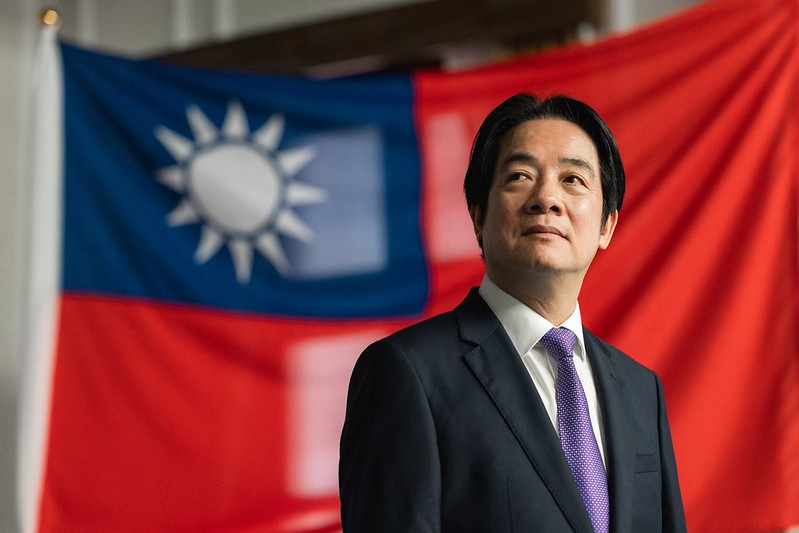
In a recent interview via videoconference with The New York Times for its DealBook Summit, President Lai Ching-te responded to questions from host Andrew Ross Sorkin on topics including Taiwan’s national defense, cross-strait relations, Taiwan-US relations, the Russia-Ukraine war, and the semiconductor industry. The interview was broadcast in the early morning of December 4.
The DealBook Summit is a major annual event held by The New York Times aimed at facilitating dialogue among leaders from various sectors and sharing their insights and analyses on international affairs. This year’s summit was held on December 3 (US EST) in New York, and included such speakers as Israeli Prime Minister Benjamin Netanyahu, United States Treasury Secretary Scott Bessent, California Governor Gavin Newsom, Palantir CEO Alex Karp, and Turning Point USA CEO and Chair of the Board Erika Kirk.
The following is the full text of the interview:
Q: Here’s where I want to start the conversation. You’ve just announced this past week that you’re introducing a US$40 billion special budget for military spending to buy more weapons from the US to try to deter China from invading Taiwan. What indicators, and perhaps new indicators, are you looking at that shows an increased threat to Taiwan?
President Lai: We can see that China’s military drills targeted at Taiwan are becoming increasingly frequent and intense. They have even moved beyond the first island chain into the second, affecting the wider Indo-Pacific region. At the same time, China’s united front influence campaigns against Taiwan are also becoming more serious. In order to safeguard national security and fulfill our responsibility to maintain peace and stability across the Taiwan Strait, we have announced this special defense budget.
We believe that peace is priceless, and war has no winners. While we aspire to peace, we cannot harbor illusions about it. Peace must be secured through strength. This is why we are increasing our defense budget and strengthening our national defense capabilities, while also cutting back our economic dependence on China. This includes improving our economic resilience. In 2010, 83.8 percent of Taiwan’s outbound investment went to China; last year, that figure had dropped to around 7 percent. We are also working side-by-side with other democracies to reinforce deterrence. Robust preparations are the best way to avoid war and achieve peace.
Q: Let me ask you this: President Xi has said that his goal for China’s military is to be capable of taking Taiwan by force by 2027. You said that Beijing is accelerating these preparations for an attempted invasion. So what do you think China’s timeline is now?
President Lai: We must ensure the best possible preparations for the worst-case scenarios. Whatever timeline the PLA may have, Taiwan’s fundamental principle is that we must be ready first – this is our basic principle.
I also want to use this opportunity to reiterate to the international community that Taiwan will do everything necessary to protect itself and to safeguard regional peace and stability. We are grateful to the international community, including the G7, the president of the United States, Japan’s political leaders, and many others for their interest in cross-strait peace and emphasizing that stability in the Taiwan Strait is essential to global security and prosperity. Their shared position greatly contributes to stability in Taiwan and peace in the region. We hope Taiwan can continue working with the international community to uphold the rules-based international order.
Q: Well, let me ask you about that because, Mr. President, last week you said the relationship between Taiwan and the US is rock-solid. How confident are you that the United States, and in particular President Trump, would come to the aid of Taiwan if China were to invade?
President Lai: Although Taiwan and the United States do not have official diplomatic relations, Taiwan is deeply grateful to the US Congress for passing the Taiwan Relations Act and to President Ronald Reagan for the Six Assurances. For decades, successive US administrations and both parties in Congress have strongly supported Taiwan based on this foundation. Our relationship truly is rock-solid. Since President Trump took office, cooperation with Taiwan has not only continued but even expanded. We look forward to working with the United States through tariff negotiations – not only to help address their trade deficit, but also to deepen bilateral economic relations and strengthen our friendship.
Q: We’ve all been watching what’s been happening play out in Ukraine between Ukraine and Russia. And there have been questions inside Ukraine about the support that the United States has provided or not in terms of how this ultimately gets settled. How do you view what’s happening in Ukraine right now and the role that the US is playing there?
President Lai: Taiwan stands with the people of Ukraine. We hope this irrational and illegitimate war will be over as soon as possible so that the Ukrainian people will no longer have to suffer. However, in ending this war, we also hope that Ukraine’s national dignity and the well-being of its people will be respected, and future conflict will be prevented.
Q: You talked about trade earlier. When you talk about the relationship between the US and Taiwan, one of the reasons that Taiwan is so valuable, such a strategic asset – and President Trump talks about it this way about Taiwan – is because of semiconductors. And one of the things that he says is that he hopes that the US is going to be manufacturing 40 to 50 percent of all semiconductors in the next couple of years with your help. Does that make Taiwan more valuable ultimately to the US or do you worry at all that it makes it less valuable to the US?
President Lai: Taiwan’s semiconductor industry plays a crucial role, especially as we enter the future AI era. But I want to emphasize, with humility, that Taiwan’s semiconductor sector is a global asset. The industry functions as an ecosystem: the US excels in R&D, design, and has the world’s largest market; Japan provides materials and equipment; the Netherlands makes advanced lithography systems; Taiwan specializes in logic chip manufacturing; and Korea leads in flash memory chips.
In other words, semiconductors are a global ecosystem – it requires worldwide cooperation to be effective. This is why our government supports TSMC and other Taiwanese semiconductor firms as they invest in the US, Japan, Europe, or wherever they believe is needed. This contributes to global progress and prosperity.
As a result, we remain supportive as President Trump seeks investments from Taiwanese semiconductor companies and suppliers in the US. We hope Taiwan can support the reindustrialization of the US. President Trump wants the US to become the world center for AI, and we are willing to assist in this.
As I said earlier, we hope Taiwan-US tariff negotiations will not only help reduce the US trade deficit, but also deepen bilateral economic cooperation, further integrate Taiwan’s industries with the American economic structure, and strengthen the Taiwan-US relationship. This will contribute to global prosperity and development.
Q: Do you think that President Trump’s timeline, this idea that 40 to 50 percent of all semiconductors could be manufactured in the United States in the next two or three years, is realistic?
President Lai: We understand President Trump’s sense of urgency; he wants the United States to maintain an edge in global competition. Whether this target of 40 to 50 percent can be achieved within this timeframe depends not only on Taiwan’s support but also on the US government’s ability to facilitate land acquisition, water and electricity supply, workforce and talent development, and investment incentives. If the US government manages to do this well and effectively, then this goal becomes much more achievable.
Q: There’s a big debate in the United States right now about whether companies like Nvidia should be allowed to sell their most advanced chips to China. And there has not been a real answer yet here in the US. I’m curious what you think about that. Do you think that the most advanced chips should be allowed to be exported to China?
President Lai: As Taiwan’s president, it would not be appropriate for me to comment on US domestic policy. But I can share an experience: Around the year 2000, Taiwan faced a similar debate about whether our advanced chip manufacturing capabilities should move to mainland China. There was an extensive and thorough discussion across society and among different political parties. The consensus was that it would be unwise and should not happen. Looking back, that decision was correct. Had Taiwan allowed its most advanced manufacturing to relocate to China, Taiwan would not be what it is today.
Q: Final question for you. Your economy is red hot right now, in large part because of the AI boom. It’s a two-part question. I wonder whether you’re worried about an AI boom being an AI bubble. And I’m also curious how you think about the Chinese economy today and how that relates to how President Xi even views Taiwan, and when and if it would consider either invading or, through using the gray zone, trying to effectively cut off or control Taiwan.
President Lai: There are many different views in the tech and economic communities. Some say AI could become a bubble; others say it may not. As a political leader, I believe the AI era will bring greater convenience to people’s lives, stimulate economic development, and contribute to global prosperity. That is why we must take steps to prevent AI from becoming a bubble.
In other words, leaders around the world – especially those from countries with AI-related industries – should work together and take necessary measures to ensure AI develops sustainably and has a soft landing, so that it can drive long-term global growth.
China’s economy is indeed struggling. Taiwan’s growth rate this year is projected to reach 7.37 percent, while international financial institutions estimate China’s growth to be only a little above 4 percent. We sincerely hope that as China faces economic pressures, President Xi Jinping will focus not on territorial expansion but on improving the well-being of the Chinese people. Taiwan is willing to help and to cooperate in addressing these economic challenges.