
To the central content area
:::
:::

News & activities

News releases

2019-09-18
President Tsai attends International Forum on Quality and Safety in Healthcare

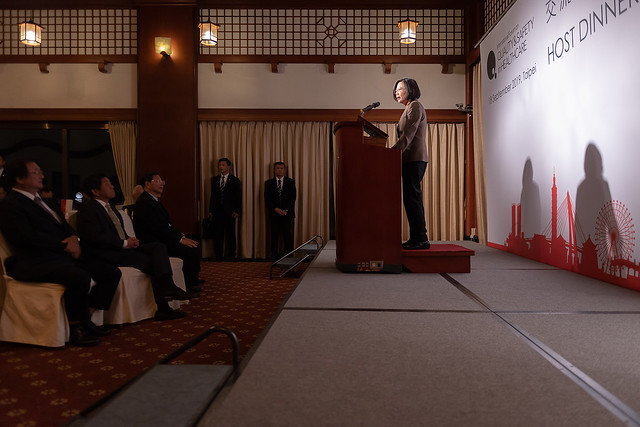
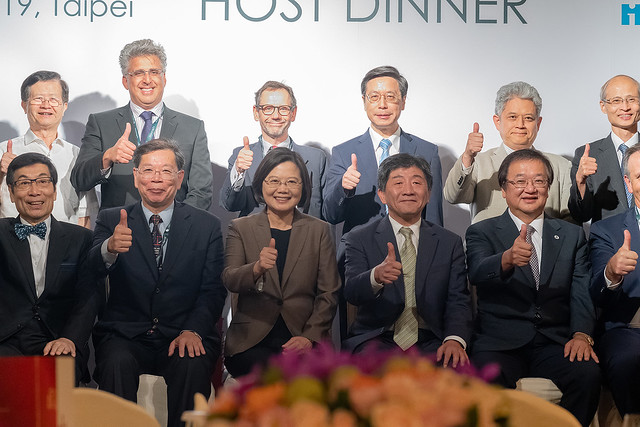
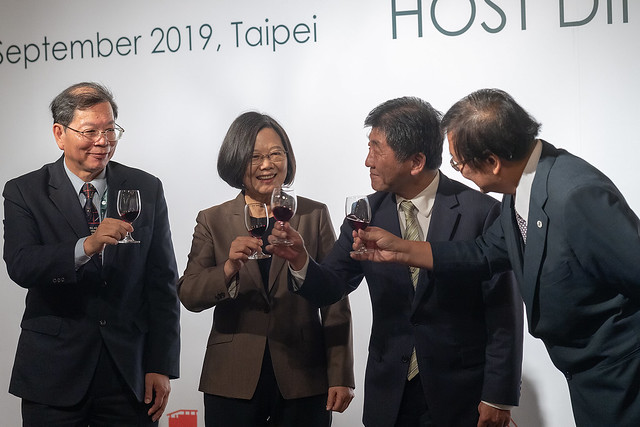
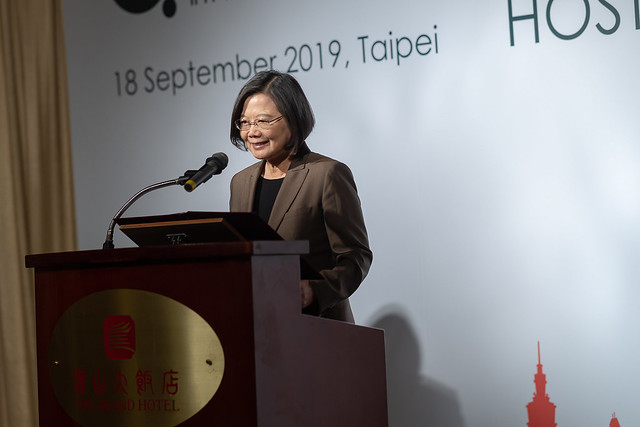
President Tsai Ing-wen attended the International Forum on Quality and Safety in Healthcare on the evening of September 18. She stated that Taiwan is more than willing to share our experiences with the rest of the world regarding our National Health Insurance, hospital accreditation system, patient safety reporting network, and community-based Long-term Care 2.0 Plan. She expressed hope that the exchanges and connections we make at the forum will help us work together to build a healthier tomorrow.

A transcript of the president's remarks follows:

It is an honor to be here at this year's International Forum on Quality and Safety in Healthcare. Since its inception in 1996, this forum has grown to become one of the largest of its kind in the world.

This year marks our first time, holding the fall forum in Taiwan, and I understand that there are more than 1200 experts from 25 countries participating in this event. I want to take a moment to welcome all of you to Taiwan. I also want to thank Chairperson Lin Chi-chen (林啟禎) for working so hard to make this event possible. I think he deserves a round of applause.

I trust that all of you are familiar with Taiwan's strengths in medicine, and how we are using them to make the world a healthier place. That is something that China cannot take away from us, even as they exclude us from the World Health Assembly on political grounds.

Taiwan has so much to share with the global medical community. Our National Health Insurance gives people equal access to quality healthcare. We have established a hospital accreditation system, as well as a patient safety reporting network. We are also working hard to promote our community-based Long-term Care System. And we are more than willing to share our experiences with the rest of the world.

I know that this forum will also focus on many new technologies in medicine, from AI to VR. This synergizes well with our 5+2 Industrial Innovation Program, which is working to develop new applications for IoT technology.

This forum will give us an opportunity to share how we are using these technologies across different fields. And I'm sure these discussions will spur new ideas and possibilities.

Our very own Vice President Dr. Chen Chien-jen—I’m sure you will have an opportunity to meet with him while you are here—he is a world-renowned public health expert himself. He has dedicated his career to serving Taiwan's medical community. And he will use his personal experience to share Taiwan's past, present, and future challenges in healthcare, and how we are dealing with them.

Of course, all of you here tonight know the importance of sharing global experiences. I hope that you will take the opportunity to learn from each other. The connections we make here today will help us work together to build a healthier tomorrow.

And finally, I would be remiss if I did not ask all of you to take some time to explore Taiwan, because we have so much to offer beyond, of course, outstanding medicine. And I'm sure that Taiwan's local customs, culture, and cuisine will make you plan your next trip to Taiwan very soon.

I want to close by wishing you all a very successful and rewarding forum. Thank you.

Among those present were Minister of Health and Welfare Chen Shih-chung (陳時中), and Joint Commission of Taiwan Chairperson Lin.
Related News
Details
2025-12-04
President Lai attends opening of Taiwan Medical Association’s International Symposium on Transforming Healthcare  
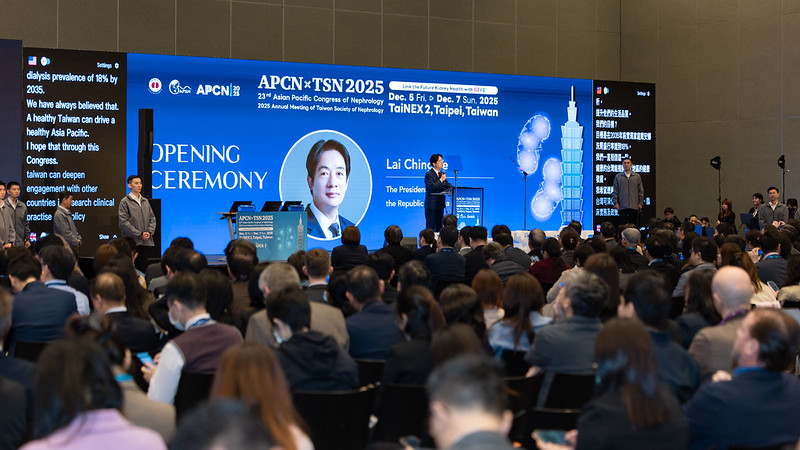
On the morning of December 4, President Lai Ching-te attended the opening of the Taiwan Medical Association (TMA)’s International Symposium on Transforming Healthcare – Universal Health Coverage, AI, Green Healthcare and Collaborative Healthcare System. In remarks, President Lai stated that creating a Healthy Taiwan is one of the nation’s major policy goals, and that the government will continue to actively participate in global health governance, expand medical technology exchanges, promote the development of smart healthcare, build consensus on medical ethics, and develop resilient healthcare in the context of climate change. The president said that these efforts aim to keep Taiwanese healthcare current and our people healthy, and that Taiwan is ready and willing to make even greater contributions to the world. A transcript of President Lai’s remarks follows: The World Medical Association (WMA) is one of the world’s leading professional organizations for healthcare. With 118 constituent members, it is profoundly influential in international healthcare ethics, empowerment for the healthcare community, and global health policy. Taiwan is honored to co-host this 2025 Open Expert Meeting with the WMA. We welcome our distinguished guests from around the world, and wish you all fruitful discussions. I would also like to acknowledge the WMA’s long-time support for Taiwan. In 2021, it formally passed a resolution supporting Taiwan’s participation in the World Health Assembly (WHA) and World Health Organization. And every year before the WHA, it issues a public statement in support of Taiwan. For this, I want to express deepest thanks on behalf of the people of Taiwan. I also want to thank the TMA for continuing to increase Taiwan’s visibility in healthcare and expand our global links through international cooperation. These efforts help the world recognize Taiwan’s professional excellence, future-oriented approach, and humanitarian values in the field. As a physician myself, I understand how important a strong healthcare system is for our people, national security, and social resilience. With challenges such as an aging population, the growing burden of chronic diseases, and epidemic threat, creating a Healthy Taiwan is one of our major policy goals. We must take steps to advance and transform healthcare. Our policies aim to keep Taiwanese healthcare current and our people healthy. First, we initiated a healthcare policy transformation, using digital technology and AI to build a smart health system for all ages and settings, offering early warnings and timely intervention. This will help Taiwan shift from a healthcare model focused on disease treatment to one focused on prevention and health promotion. The era of AI is here, so we are also leading ten new AI infrastructure initiatives. With enhanced AI, cybersecurity, and data governance, we are establishing a national cybersecurity system for healthcare, promoting medical information exchange standards, and setting up a verification and accountability system for AI applications. This will help us build a secure, interconnected, and trustworthy smart healthcare environment. Our applications of AI have already shown promising initial results in areas from international epidemic monitoring, the My Health Bank personal health records service, and home-based care, to telemedicine, assistive technology, and our primary care platform. In view of the global trend toward net-zero emissions, our government has already begun to discuss incorporating sustainable development into hospital accreditation, and is proactively assisting medical institutions with saving energy, net zero, and green transformation. Many of us here are invested in the use of health databases and biobanks, which are crucial to advancing the biotech industry. In recent years, Taiwan has been working on legal amendments to support this sector. Our National Infectious Diseases Bank, which will be completed next year, will help further promote cooperation and exchanges in biotech between Taiwan and other countries. We will continue to actively participate in global health governance and work with the WMA to expand medical technology exchanges, promote the development of smart healthcare, build consensus on medical ethics, and develop resilient healthcare in the context of climate change. I would like to once again thank you all for supporting Taiwan and promoting deeper cooperation between Taiwan and the international community. Taiwan is happy to share our experience with the world, conduct joint research, and invest in and train talent. We are ready and willing to stand with the international community in the face of global health challenges, and make even greater contributions to the world. Let’s keep working together for a brighter future. I wish everyone good health and success in all your endeavors. Thank you. Also in attendance at the event were WMA President Jacqueline Kitulu, Council Chair Jack Resneck, Jr., and Secretary General Otmar Kloiber.  
Details
2025-09-04
President Lai presides over fifth meeting of Healthy Taiwan Promotion Committee
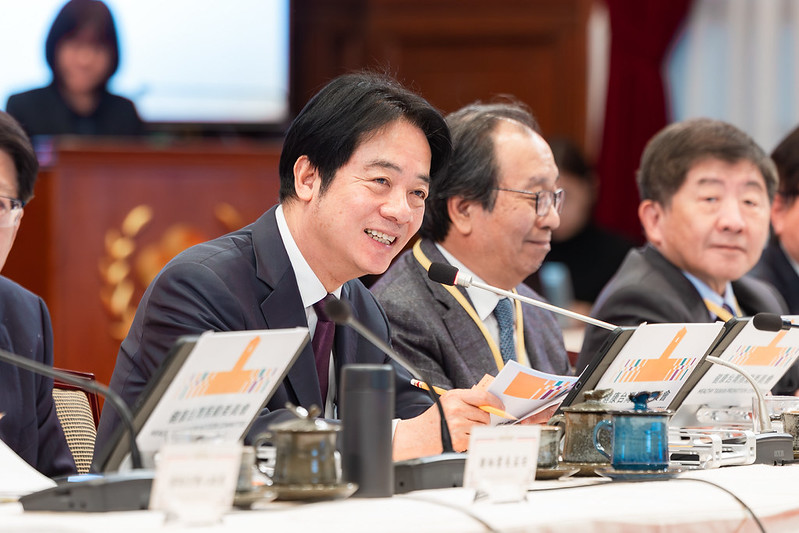
On the afternoon of September 4, President Lai Ching-te presided over the fifth meeting of the Healthy Taiwan Promotion Committee. In his opening statement, President Lai said that AI is an important key to Taiwan’s continued leadership in future technological trends. The president expressed hope for strong collaboration between Taiwan’s AI high-tech and biomedical industries, which will not only help both industries grow, but will also significantly improve the quality of medical care services. Noting that Taiwan is facing the challenges of a super-aged society, a surge in chronic diseases, and extreme weather and climate change, President Lai said that Taiwan must initiate a policy transformation in healthcare, leverage digital technology and AI, and transform and upgrade its healthcare system from a disease treatment model to a prevention and health promotion model. He expressed hope for keeping up the hard work to gradually achieve the goals of Healthy Taiwan. A translation of President Lai’s remarks follows: The Healthy Taiwan Promotion Committee has now been operating for a full year. I am very grateful to the deputy conveners, advisors, and committee members for their active participation over the past year, ensuring more effective implementation of cross-disciplinary and public-private collaboration. I also want to thank the Executive Yuan for its support and the Ministry of Health and Welfare (MOHW) for its efforts to integrate the strengths of multiple government ministries and agencies, working methodically to carry out tasks related to Healthy Taiwan. Following adjustments to the Executive Yuan team, Executive Yuan Secretary-General Chang Tun-han (張惇涵) and Minister of Health and Welfare Shih Chung-liang (石崇良) will now serve as the executive secretaries of this committee, and due to reassignments at the National Development Council (NDC), NDC Minister Yeh Chun-hsien (葉俊顯) will now serve as a committee member. Secretary-General Chang is quite familiar with communication between the Presidential Office and Executive Yuan. Efficient and decisive in his work, he can accelerate policy implementation. Minister Shih has extensive administrative experience, as well as medical expertise and public communication skills. Minister Yeh has a firm grasp of domestic industrial policy, and is adept at policy analysis. During the pandemic, these two gentlemen laid a solid foundation for Taiwan’s disease prevention efforts and provided excellent solutions regarding relief policy. In addition, Committee Member Shen Ching-fen (沈靜芬) became the director general of the Health Promotion Administration last month and has resigned from the committee. We thank Director General Shen for her efforts on the committee, and hope that under the leadership of Minister Shih and Director General Shen, the core concepts of health promotion are reflected in policies and practiced in everyday life. National Taiwan University Hospital (NTUH) Superintendent Yu Chong-jen (余忠仁) is now succeeding her as a member of the committee, although he is unable to attend today’s meeting. At NTUH, Superintendent Yu pioneered the Patient-centered Seamless Transition and Referral System that links over 500 community-based healthcare facilities in a shared care network that integrates hospitals and communities. He also made many contributions during his tenure as superintendent of the Hsinchu Branch of NTUH (now NTUH Hsin-Chu Branch). I am confident that Committee Member Yu will provide many valuable suggestions regarding tiered healthcare and hospital accreditation. This slight adjustment to the committee membership will strengthen communication and interaction among various specializations, which I believe will help realize our national policy vision for a Healthy Taiwan more quickly. In addition to a status report on items listed from the previous meeting, today’s agenda features two reports from the MOHW, one regarding the integration of smart medicine into healthcare, and the other on promoting innovation and development in Taiwan’s biomedical industry. AI is the “magic sword” of the new era and an important key to Taiwan’s continued leadership in future technological trends. I believe that as long as there is close collaboration between Taiwan’s AI high-tech and biomedical industries, not only will both industries grow, but they will also significantly improve the quality of medical care services. Taiwan is facing the challenges of a super-aged society, a surge in chronic diseases, and extreme weather and climate change. We must initiate a policy transformation in healthcare, leverage digital technology and AI, and create a smart healthcare system that covers all ages and all domains, provides early warnings, and can intervene to manage healthcare situations in a timely manner. That will enable Taiwan to transform and upgrade its healthcare system from a disease treatment model to a prevention and health promotion model. Now, we must keep up the hard work and gradually achieve our goals. Thank you. Following his statement, President Lai heard a status report on items listed from the fourth committee meeting, a report on the integration of smart medicine into healthcare from Minister Shih, who is also the committee’s executive secretary, and a report on promoting innovation and development in Taiwan’s biomedical industry from MOHW Taiwan Food and Drug Administration Director-General Chiang Chih-kang (姜至剛). Afterward, President Lai exchanged views with the committee members regarding the content of the reports.
Details
2025-05-22
President Lai presides over fourth meeting of Healthy Taiwan Promotion Committee
On the afternoon of May 22, President Lai Ching-te presided over the fourth meeting of the Healthy Taiwan Promotion Committee. In his opening statement, the president emphasized that building a Healthy Taiwan requires inter-ministerial collaboration and public-private cooperation, and that even more, it requires full public participation to keep people healthy and make the nation stronger so that the world embraces Taiwan. President Lai indicated that promotional efforts for the government’s policies have already been elevated to a cooperative endeavor involving the entire government through a division of labor, continuously expanding whole-of-society participation, noting that the task for the next phase is to achieve public consensus. Looking ahead, he said, the government will promote sports and athletics among citizens through four main strategies: creating the right social climate, building a supportive physical environment, enhancing people’s awareness of self-health, and integrating information systems. The president stated that through inter-ministerial collaboration, we will create a comprehensive health education support system so that health is an everyday habit. A translation of President Lai’s opening statement follows: Today is the fourth meeting of the Healthy Taiwan Promotion Committee. The day before yesterday, Vice President Bi-khim Hsiao and I completed one year in office. I want to thank the three deputy conveners and all of our advisors and committee members for their efforts and dedication regarding various health policies since the committee’s first meeting last August. On the 27th of last month, we also helped our friends in the medical community learn about the Healthy Taiwan Promotion Committee’s achievements, the government’s current policies, and our goals going forward at the 2025 Healthy Taiwan national forum. I want everyone to know that whether it is today’s committee, the National Climate Change Committee, or the Whole-of-Society Defense Resilience Committee, over the past year, we have worked to implement the spirit of inter-departmental, cross-disciplinary, and public-private collaboration. Currently, the discussions and promotional efforts for various policies have shifted from individual departments performing their respective duties to a cooperative division of labor involving the entire government, continuously expanding whole-of-society participation. In the next phase, our task is to achieve public consensus. We need to actively initiate campaigns that the public can participate in, promoting awareness and concepts that everyone should have, so that the ideas and practices that promote better health, respond to climate change, and boost whole-of-society defense resilience can be integrated into people’s lives. When policies have a palpable impact and public participation, working together, we can achieve the goals set by each committee. For example, last year at the first meeting, we set a Healthy Taiwan goal to increase the average life expectancy of the public from 79 years to 82 years within 8 years, and reduce time spent living with illness or disability from 10 percent to 8 percent of the average life expectancy. To achieve that goal, we must integrate the strengths of various ministries and agencies, establish a comprehensive sports network, and promote regular exercise habits for people of all ages nationwide. By 2030, we aim to increase the number of physically active people by 15 percent compared to 2021, thereby extending the average healthy lifespan of our citizens. The World Health Organization (WHO) has indicated that insufficient physical activity is one of the four main risk factors leading to non-communicable diseases, and that regular physical activity has significant benefits for both physical and mental health. But according to Taiwan’s 2021 National Health Interview Survey, more than half of the population does not meet the WHO’s recommendation of 150 minutes of moderate-intensity physical activity per week. We must implement various policies to enhance the willingness of people of all ages to engage in physical activity. Therefore, at today’s meeting, in addition to hearing a report by the Ministry of Health and Welfare (MOHW) on the status of certain items listed in the third committee meeting, we have also specially invited the MOHW to deliver a report on promoting sports and athletics to drive citizen health, and the Ministry of Education (MOE) to deliver a report on courses and teaching activities regarding health promotion for schools at the high school level and below. As I mentioned earlier, promotional efforts for our policies have already been elevated to a cooperative endeavor involving the entire government through a division of labor. Today’s report from the MOHW incorporates plans from the Ministry of Transportation and Communications, MOE, and Ministry of Labor, along with guidance from Committee Member Chien Wen-jen (簡文仁) and the Executive Yuan prior to the meeting. Looking ahead, the government will promote sports and athletics among citizens through four main strategies: creating the right social climate, building a supportive physical environment, enhancing people’s awareness of self-health, and integrating information systems. In addition, education is the foundation and key to cultivating healthy citizens. By establishing correct health concepts from a young age, developing healthy behaviors that meet individual needs, and forming good habits, the likelihood of maintaining routine exercise in adulthood increases significantly. In a few minutes, the MOE will deliver a report on helping children understand the importance of health through health-promotion courses and incorporating that understanding into their daily habits through practical and situational education. In the future, through inter-ministerial collaboration and comprehensive campus health promotion policies, as well as close engagement with families and communities, we will create a comprehensive health education support system so that health is not just something people learn about from books, but an everyday habit. I want to emphasize that building a Healthy Taiwan requires inter-ministerial collaboration and public-private cooperation. Even more, it requires full public participation to keep people healthy and make the nation stronger so that the world embraces Taiwan. Taiwan’s various health policies and medical and public health experiences can help promote exchanges and cooperation with the world. As we meet today, Minister of Health and Welfare Chiu Tai-yuan (邱泰源) is leading a World Health Assembly action team to conduct professional medical and public health exchanges in Geneva. These exchanges not only demonstrate to the world Taiwan’s extensive soft power in the medical and public health fields, but also tell the international community that if Taiwan is permitted to participate in WHO-related activities, we can definitely contribute even more to the international medical and public health system. Once again, I want to thank all the advisors and committee members for working together with the government. I also hope that after listening to the reports, you can provide expert opinions from the perspectives of your various fields for the reference of government agencies, so that together, we can raise health management awareness among the public and work together to achieve our vision of a Healthy Taiwan. Thank you. Following his statement, President Lai heard a report on the progress of certain items listed in the third committee meeting from Deputy Executive Secretary and National Health Insurance Administration Director General Shih Chung-liang (石崇良), a report on promoting sports and athletics to drive citizen health from Deputy Minister of Health and Welfare Chou Jih-haw (周志浩), and a report on courses and teaching activities regarding health promotion for schools at the high school level and below from Political Deputy Minister of Education Chang Liao Wan-chien (張廖萬堅). Afterward, President Lai exchanged views with the committee members regarding the content of the reports.
Details
2025-02-27
President Lai presides over third meeting of Healthy Taiwan Promotion Committee
On the afternoon of February 27, President Lai Ching-te presided over the third meeting of the Healthy Taiwan Promotion Committee. In his opening statement, the president stated that the best strategies to care for citizens’ health are to increase physical activity, boost food literacy, and improve the domestic food environment, preventing chronic diseases from the front end. The president said that the Ministry of Health and Welfare (MOHW) has upgraded preventive health services for adults this year, lowering the age eligibility to 30. He expressed hope that public-private sector cooperation can help reduce the incidence of chronic diseases and their associated disability risks and achieve the goal of lowering the standardized mortality rate for chronic diseases related to the “three highs”(high blood pressure, high cholesterol, and high blood sugar) by one-third by 2030. With regard to the hospital congestion issue, President Lai noted that through local health departments, the government will strengthen the supervision and distribution of emergency room beds, boost the distribution of inpatient beds in medical centers, and enhance joint prevention mechanisms among regional hospitals to reduce the pressure on emergency departments. The president said that the government will continue to incentivize hospitals to hire more nursing personnel and will consider adjusting health insurance coverage to encourage more hospitals to participate in emergency and critical care so as to reduce the pressure on medical institutions. By taking a multi-channel approach, the president said, we hope to resolve the problems facing healthcare in Taiwan, provide the public with better care, and achieve our vision of a Healthy Taiwan. A translation of President Lai’s opening statement follows: Today is the third meeting of the Healthy Taiwan Promotion Committee. First, I would like to thank both deputy conveners, our advisors and committee members, and our friends online for their continuing concern about the planning and implementation of the Healthy Taiwan initiative.        At the last meeting, we heard a report on enhancing cancer prevention and treatment strategies. Guided by the Executive Yuan, the scope of government-funded major cancer screenings will be expanded starting this year, including expanding the age parameters and the categories eligible for screening. Treatment efforts will focus on genetic testing and precision medicine, and a fund will be established that provides diversified coverage for new cancer drugs. We hope to achieve our goal of reducing the standardized cancer mortality rate by one-third by 2030.  At today’s meeting, the MOHW will deliver progress reports on certain items listed in the second committee meeting, as well as chronic disease prevention and treatment initiatives under the Healthy Taiwan plan including the development of models for healthy living, obesity prevention and treatment, and the 888 Program for prevention and treatment of the “three highs.”Among the top ten causes of death in Taiwan, seven are related to chronic diseases, and five of those seven are related to “three highs” chronic diseases. Annual spending related to treating “three highs” chronic diseases is up to NT$170 billion, and has become a tremendous medical burden.  According to the World Health Organization, most non-communicable diseases are the result of four particular behaviors: tobacco use, physical inactivity, unhealthy diet, and the harmful use of alcohol. The results of the Nutrition and Health Survey in Taiwan show that most citizens are getting low or moderate amounts of physical activity, and have unbalanced diets that include excessive amounts of sugar and salt, and inadequate amounts of fruits, vegetables, and dairy products.  Therefore, the best strategies to care for the health of our citizens are to increase physical activity, boost food literacy, and improve the domestic food environment, preventing chronic diseases from the front end.  In a few minutes, the MOHW will give complete explanations for the various chronic disease prevention and treatment strategies, from building healthy lifestyles at the front end to preventing and treating obesity in the middle stage, making every effort to prevent citizens from symptoms of the “three highs.” Beginning this year, the MOHW has upgraded preventive health services for adults, lowering the age eligibility to 30. Among people who already suffer from the “three highs,” the 888 Program for the prevention and treatment of those diseases will identify a target group and then conduct interventions, making every effort to improve symptoms and avoid the development of chronic disease.  This kind of action strategy needs to be promoted simultaneously in the workplace, the community, on campus, and in the military. Only through public-private sector cooperation can we reduce the incidence of chronic diseases and their associated disability risks. We have also set a goal to lower the standardized mortality rate for chronic diseases related to the “three highs” by one-third by 2030. I hope that through the expertise of our advisors and committee members, we can provide discussions and suggestions from multiple perspectives to enable the government to propose health policies that meet citizens’ needs. The government will also actively address the hospital congestion issue that everyone is concerned about. The MOHW, in addition to taking preventive measures such as purchasing additional flu vaccines before the Lunar New Year, is addressing the emergency department congestion that occurred from the Lunar New Year until recently, and has formulated a short-term response strategy as well as middle and long-term directions for reforms as directed by Premier Cho Jung-tai (卓榮泰). Through local health departments, we will strengthen the supervision and distribution of emergency room beds. At the same time, we will continue to boost the distribution of inpatient beds in medical centers, and give full play to our emergency medicine network to enhance joint prevention mechanisms among regional hospitals and reduce the pressure on emergency departments. We will also enhance the public’s access to information about tiered healthcare, and implement a tiered treatment system to make better use of resources.  To address middle- and long-term human resource issues, we will continue to incentivize hospitals to hire more nursing personnel to lighten their burdens. We will also consider adjusting health insurance coverage to encourage more hospitals to participate in emergency and critical care. To respond to the challenges of an aging society, home healthcare, acute hospital care at home, Long-term Care 3.0, and post-acute care programs need to be promoted together to reduce the pressure on medical institutions.    By taking a multi-channel approach, we hope to resolve the problems facing healthcare in Taiwan, provide the public with better care, and achieve our vision of a Healthy Taiwan. So let us keep working hard together. Thank you. Following his statement, President Lai heard a report on the progress of certain items listed in the second committee meeting from Minister of Health and Welfare Chiu Tai-yuan (邱泰源), who is also the committee’s executive secretary, and a report on chronic disease prevention and treatment initiatives under the Healthy Taiwan plan including the development of models for healthy living, obesity prevention and treatment, and the 888 Program for prevention and treatment of the “three highs” from Deputy Minister of Health and Welfare Chou Jih-haw (周志浩). Afterward, President Lai exchanged views with the committee members regarding the content of the reports.
Details
2024-11-28
President Lai presides over second meeting of Healthy Taiwan Promotion Committee
On the afternoon of November 28, President Lai Ching-te presided over the second meeting of the Healthy Taiwan Promotion Committee. In his opening statement, the president said that we are implementing mental health support programs this year to provide more support for young and middle-aged people, pointing out that the policy has served over 20,000 people since it was implemented just over three months ago. In terms of bolstering mental health resilience, the president said we still have much to do, our government must lead by example, and the public and private sectors must work together, making every effort to ensure that no one is left behind. Noting that our goal is to reduce the standardized cancer mortality rate by one-third by the year 2030, President Lai stated that next year’s budget for cancer screening will be increased to NT$6.8 billion. He also stated that plans are in the works to establish a fund for new cancer drugs, adding that in the general budget we will allocate NT$5 billion, which will gradually rise to NT$10 billion. At the same time, he said, we are also actively promoting genetic testing and precision medicine. He expressed confidence that expanding preventive screening at the front end and providing advanced treatments at the back end will effectively fight cancer and improve the overall health of our citizens. A translation of President Lai’s opening statement follows: Today is the second meeting of the Healthy Taiwan Promotion Committee. First, I want to thank our two deputy conveners, our advisors and committee members, and our friends online for their enthusiastic participation. I also want to welcome Committee Member Chien Wen-jen (簡文仁), who was on leave for the previous meeting. I would also like to introduce three new committee members: Let’s welcome Committee Member Huang Chin-shun (黃金舜), president of the Federation of Taiwan Pharmacists Associations. During the pandemic, he led the nation’s pharmacists in promoting services including name-based distribution systems for masks and rapid-test kits and home delivery of medications. I am sure that he will be able to provide many valuable views regarding pharmaceutical safety and supply resilience.    Let’s also welcome Committee Member Ko Fu-yang (柯富揚). During his time as secretary-general of the National Union of Chinese Medical Doctors’ Association, he led the Chinese medicine community in the transition from experience-based medicine to evidence-based medicine, and promoted the modernization of traditional Chinese medicine. With his participation, the committee will be able to spur research and development in both modern and traditional medicine. Our third new committee member is Liao Mei-nan (廖美南), president of the Taiwan Nurses Association, who was unable to be here today. She has long been dedicated to raising the quality of nursing care and actively promoting a high-quality, friendly work environment for nurses. The committee will rely on her experience to strengthen the link between policy and practice in nursing care. I want to thank all the members of the committee once again for working together with the government. Since the last committee meeting, under the guidance of Minister without Portfolio Chen Shih-chung (陳時中), the Ministry of Health and Welfare (MOHW) has implemented various policies. At the beginning of October, for example, three major AI centers were set up to resolve three key AI application issues: implementation, certification, and reimbursement, helping advance Taiwan’s smart healthcare ecosystem. At today’s meeting, the MOHW will first deliver a report on the progress of certain items listed in the first committee meeting, followed by a joint report by the MOHW and Ministry of Education on bolstering public mental health resilience and a report by the MOHW on enhancing cancer prevention and treatment strategies.  The World Health Organization has affirmed that “there is no health without mental health.” In a fast-changing, fast-paced society, the government should invest more resources in the field of mental health to safeguard the people’s overall health. We are therefore implementing mental health support programs this year and expanding the range of eligibility, from 15 to 30, to 15 to 45 years old, to provide more support for young and middle-aged people. That policy has served over 20,000 people since it was implemented just over three months ago. In terms of bolstering mental health resilience, we still have much to do. From the workplace to the campus and every corner of society, our government must lead by example, and the public and private sectors must work together, making every effort to ensure that no one is left behind.    Aside from mental health, in view of cancer being the leading cause of death in Taiwan for 42 consecutive years, our goal is to reduce the standardized cancer mortality rate by one-third by the year 2030. And so we must expand screening and advance treatment. Last year, the government subsidized screenings for five types of cancer, providing a total of 4.87 million screenings and detecting 11,000 cases of cancer and 52,000 cases of precancerous conditions. We have allocated an additional NT$4 billion beginning next year, bringing the total budget for cancer screening to NT$6.8 billion, to expand the scope of cancer screening eligibility and services.  Plans are also in the works to establish a fund for new cancer drugs. In next year’s general budget, we will allocate NT$5 billion, which will gradually rise to NT$10 billion, to provide reimbursement funding for a variety of new cancer drugs and reduce the economic burden on patients. These new measures will be reported on in detail moments from now by the MOHW. At the same time, we are also actively promoting genetic testing and precision medicine. Next generation sequencing, for example, has already been included in National Health Insurance coverage, which will help provide patients with precise, individualized treatment strategies. I am confident that expanding preventive screening at the front end and providing advanced treatments at the back end will effectively fight cancer and improve the overall health of our citizens. Today’s meeting will help the government understand viewpoints from many perspectives so we can promote policies that more closely meet the public’s needs. Let’s keep working hard together. Thank you.  Following his statement, President Lai heard a report on the progress of certain items listed in the first committee meeting from deputy executive secretary and National Health Insurance Administration Director General Shih Chung-liang (石崇良), a joint report on bolstering public mental health resilience from Deputy Minister of Health and Welfare Lin Ching-yi (林靜儀) and Deputy Minister of Education Lin Teng-chiao (林騰蛟), and a report on enhancing cancer prevention and treatment strategies from Deputy Minister of Health and Welfare Chou Jih-haw (周志浩). Afterward, President Lai exchanged views with the committee members regarding the content of the reports.
Details
2025-12-04
President Lai interviewed by The New York Times DealBook Summit
In a recent interview via videoconference with The New York Times for its DealBook Summit, President Lai Ching-te responded to questions from host Andrew Ross Sorkin on topics including Taiwan’s national defense, cross-strait relations, Taiwan-US relations, the Russia-Ukraine war, and the semiconductor industry. The interview was broadcast in the early morning of December 4. The DealBook Summit is a major annual event held by The New York Times aimed at facilitating dialogue among leaders from various sectors and sharing their insights and analyses on international affairs. This year’s summit was held on December 3 (US EST) in New York, and included such speakers as Israeli Prime Minister Benjamin Netanyahu, United States Treasury Secretary Scott Bessent, California Governor Gavin Newsom, Palantir CEO Alex Karp, and Turning Point USA CEO and Chair of the Board Erika Kirk. The following is the full text of the interview: Q: Here’s where I want to start the conversation. You’ve just announced this past week that you’re introducing a US$40 billion special budget for military spending to buy more weapons from the US to try to deter China from invading Taiwan. What indicators, and perhaps new indicators, are you looking at that shows an increased threat to Taiwan? President Lai: We can see that China’s military drills targeted at Taiwan are becoming increasingly frequent and intense. They have even moved beyond the first island chain into the second, affecting the wider Indo-Pacific region. At the same time, China’s united front influence campaigns against Taiwan are also becoming more serious. In order to safeguard national security and fulfill our responsibility to maintain peace and stability across the Taiwan Strait, we have announced this special defense budget. We believe that peace is priceless, and war has no winners. While we aspire to peace, we cannot harbor illusions about it. Peace must be secured through strength. This is why we are increasing our defense budget and strengthening our national defense capabilities, while also cutting back our economic dependence on China. This includes improving our economic resilience. In 2010, 83.8 percent of Taiwan’s outbound investment went to China; last year, that figure had dropped to around 7 percent. We are also working side-by-side with other democracies to reinforce deterrence. Robust preparations are the best way to avoid war and achieve peace. Q: Let me ask you this: President Xi has said that his goal for China’s military is to be capable of taking Taiwan by force by 2027. You said that Beijing is accelerating these preparations for an attempted invasion. So what do you think China’s timeline is now? President Lai: We must ensure the best possible preparations for the worst-case scenarios. Whatever timeline the PLA may have, Taiwan’s fundamental principle is that we must be ready first – this is our basic principle. I also want to use this opportunity to reiterate to the international community that Taiwan will do everything necessary to protect itself and to safeguard regional peace and stability. We are grateful to the international community, including the G7, the president of the United States, Japan’s political leaders, and many others for their interest in cross-strait peace and emphasizing that stability in the Taiwan Strait is essential to global security and prosperity. Their shared position greatly contributes to stability in Taiwan and peace in the region. We hope Taiwan can continue working with the international community to uphold the rules-based international order. Q: Well, let me ask you about that because, Mr. President, last week you said the relationship between Taiwan and the US is rock-solid. How confident are you that the United States, and in particular President Trump, would come to the aid of Taiwan if China were to invade? President Lai: Although Taiwan and the United States do not have official diplomatic relations, Taiwan is deeply grateful to the US Congress for passing the Taiwan Relations Act and to President Ronald Reagan for the Six Assurances. For decades, successive US administrations and both parties in Congress have strongly supported Taiwan based on this foundation. Our relationship truly is rock-solid. Since President Trump took office, cooperation with Taiwan has not only continued but even expanded. We look forward to working with the United States through tariff negotiations – not only to help address their trade deficit, but also to deepen bilateral economic relations and strengthen our friendship. Q: We’ve all been watching what’s been happening play out in Ukraine between Ukraine and Russia. And there have been questions inside Ukraine about the support that the United States has provided or not in terms of how this ultimately gets settled. How do you view what’s happening in Ukraine right now and the role that the US is playing there? President Lai: Taiwan stands with the people of Ukraine. We hope this irrational and illegitimate war will be over as soon as possible so that the Ukrainian people will no longer have to suffer. However, in ending this war, we also hope that Ukraine’s national dignity and the well-being of its people will be respected, and future conflict will be prevented. Q: You talked about trade earlier. When you talk about the relationship between the US and Taiwan, one of the reasons that Taiwan is so valuable, such a strategic asset – and President Trump talks about it this way about Taiwan – is because of semiconductors. And one of the things that he says is that he hopes that the US is going to be manufacturing 40 to 50 percent of all semiconductors in the next couple of years with your help. Does that make Taiwan more valuable ultimately to the US or do you worry at all that it makes it less valuable to the US? President Lai: Taiwan’s semiconductor industry plays a crucial role, especially as we enter the future AI era. But I want to emphasize, with humility, that Taiwan’s semiconductor sector is a global asset. The industry functions as an ecosystem: the US excels in R&D, design, and has the world’s largest market; Japan provides materials and equipment; the Netherlands makes advanced lithography systems; Taiwan specializes in logic chip manufacturing; and Korea leads in flash memory chips. In other words, semiconductors are a global ecosystem – it requires worldwide cooperation to be effective. This is why our government supports TSMC and other Taiwanese semiconductor firms as they invest in the US, Japan, Europe, or wherever they believe is needed. This contributes to global progress and prosperity. As a result, we remain supportive as President Trump seeks investments from Taiwanese semiconductor companies and suppliers in the US. We hope Taiwan can support the reindustrialization of the US. President Trump wants the US to become the world center for AI, and we are willing to assist in this. As I said earlier, we hope Taiwan-US tariff negotiations will not only help reduce the US trade deficit, but also deepen bilateral economic cooperation, further integrate Taiwan’s industries with the American economic structure, and strengthen the Taiwan-US relationship. This will contribute to global prosperity and development. Q: Do you think that President Trump’s timeline, this idea that 40 to 50 percent of all semiconductors could be manufactured in the United States in the next two or three years, is realistic? President Lai: We understand President Trump’s sense of urgency; he wants the United States to maintain an edge in global competition. Whether this target of 40 to 50 percent can be achieved within this timeframe depends not only on Taiwan’s support but also on the US government’s ability to facilitate land acquisition, water and electricity supply, workforce and talent development, and investment incentives. If the US government manages to do this well and effectively, then this goal becomes much more achievable. Q: There’s a big debate in the United States right now about whether companies like Nvidia should be allowed to sell their most advanced chips to China. And there has not been a real answer yet here in the US. I’m curious what you think about that. Do you think that the most advanced chips should be allowed to be exported to China? President Lai: As Taiwan’s president, it would not be appropriate for me to comment on US domestic policy. But I can share an experience: Around the year 2000, Taiwan faced a similar debate about whether our advanced chip manufacturing capabilities should move to mainland China. There was an extensive and thorough discussion across society and among different political parties. The consensus was that it would be unwise and should not happen. Looking back, that decision was correct. Had Taiwan allowed its most advanced manufacturing to relocate to China, Taiwan would not be what it is today. Q: Final question for you. Your economy is red hot right now, in large part because of the AI boom. It’s a two-part question. I wonder whether you’re worried about an AI boom being an AI bubble. And I’m also curious how you think about the Chinese economy today and how that relates to how President Xi even views Taiwan, and when and if it would consider either invading or, through using the gray zone, trying to effectively cut off or control Taiwan. President Lai: There are many different views in the tech and economic communities. Some say AI could become a bubble; others say it may not. As a political leader, I believe the AI era will bring greater convenience to people’s lives, stimulate economic development, and contribute to global prosperity. That is why we must take steps to prevent AI from becoming a bubble. In other words, leaders around the world – especially those from countries with AI-related industries – should work together and take necessary measures to ensure AI develops sustainably and has a soft landing, so that it can drive long-term global growth. China’s economy is indeed struggling. Taiwan’s growth rate this year is projected to reach 7.37 percent, while international financial institutions estimate China’s growth to be only a little above 4 percent. We sincerely hope that as China faces economic pressures, President Xi Jinping will focus not on territorial expansion but on improving the well-being of the Chinese people. Taiwan is willing to help and to cooperate in addressing these economic challenges.
Go Top