
To the central content area
:::
:::

News & activities

News releases

2020-05-20
Inaugural address of ROC 15th-term President Tsai Ing-wen

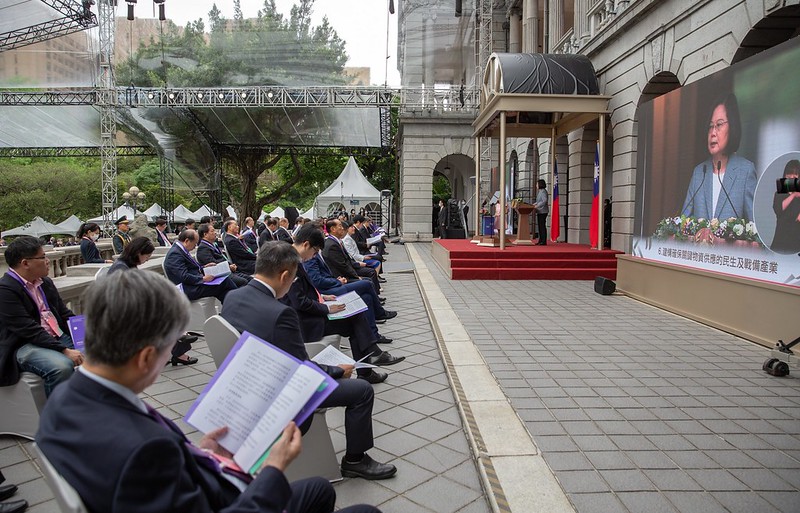
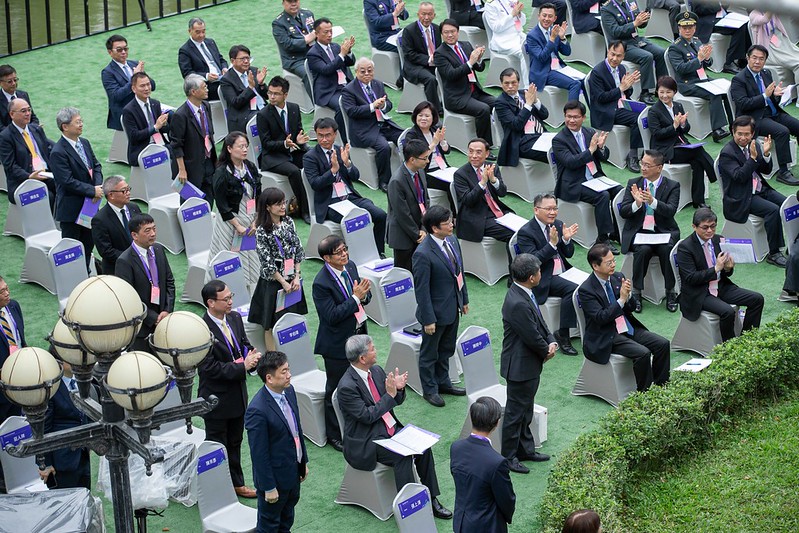
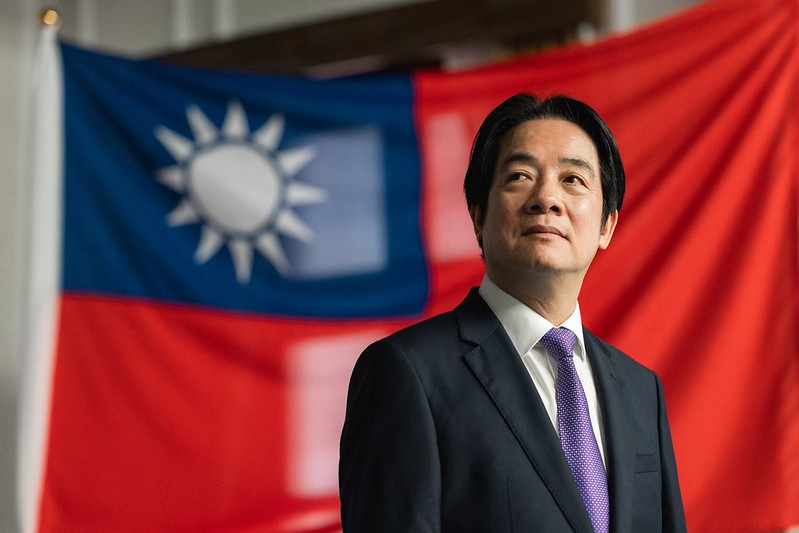
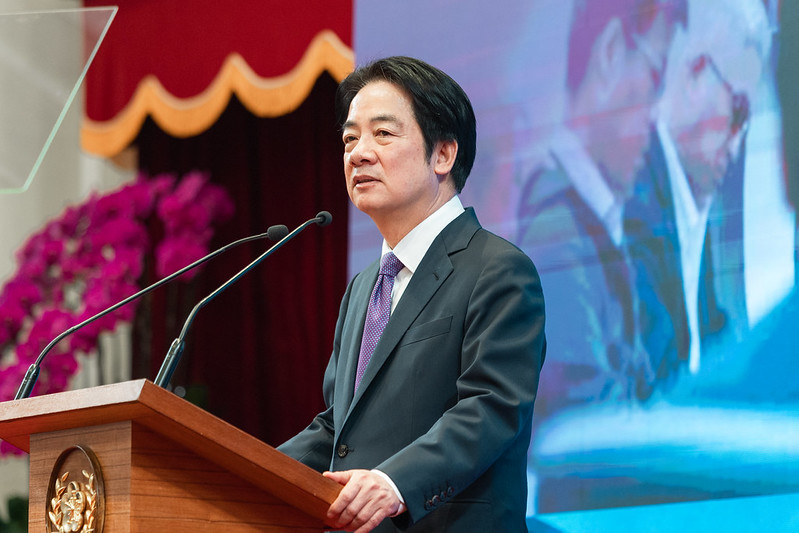
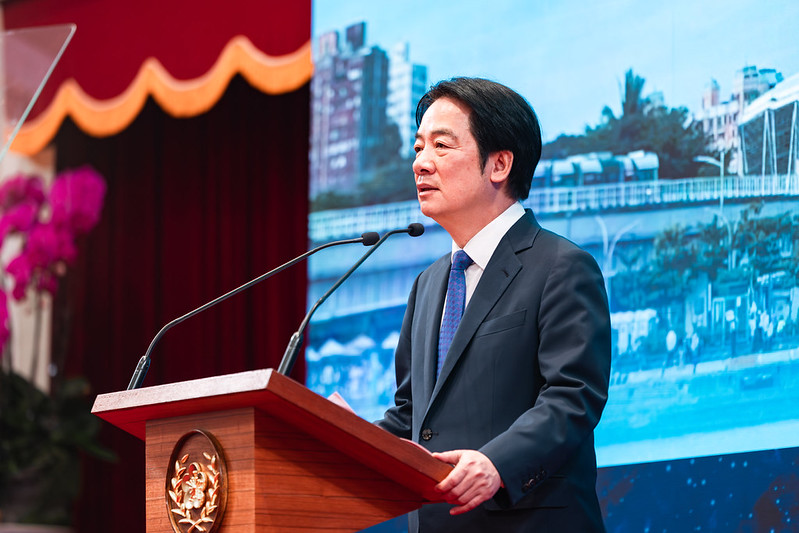
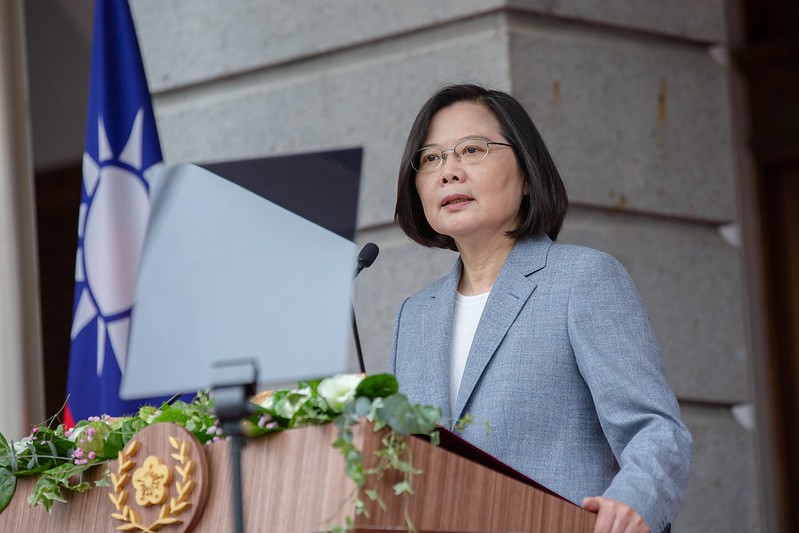
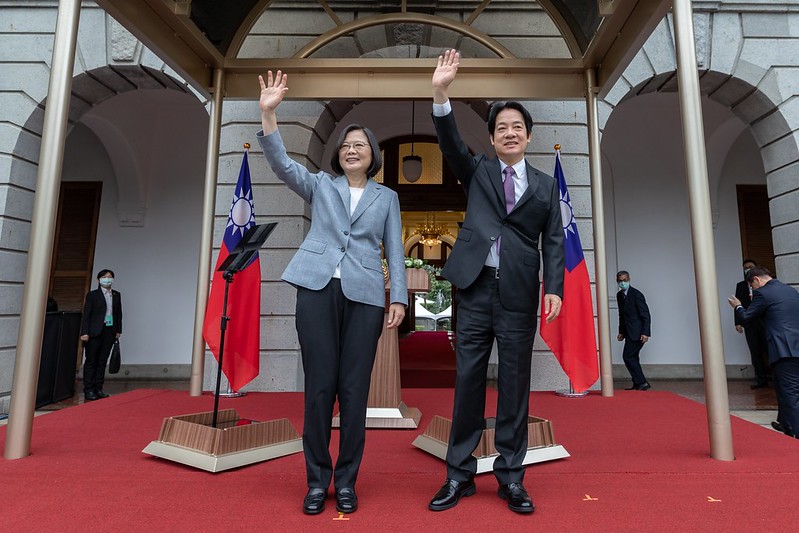
On the morning of May 20, ROC 15th-term President Tsai Ing-wen and Vice President Lai Ching-te attended inaugural celebrations at the Taipei Guest House. President Tsai also delivered her inaugural address.

A translation of the president's remarks follows:

Vice President Lai, esteemed guests, friends watching on TV and online, my fellow citizens across the country, good morning.

A Taiwanese Community

I feel immensely grateful to stand here once again today and take on the responsibility entrusted to me by the Taiwanese people.

This inauguration ceremony is unique in the history of the Republic of China. What makes it special is not its size or the number of people in attendance. It is special because we know how difficult it has been for us to get to this point.

I want to thank the people of Taiwan for making such a difficult feat possible.

I particularly want to thank a group of people who have not received a lot of attention over the past four months in our fight against COVID-19. I want to thank every single person who waited in line outside of the pharmacy in the early days of the coronavirus outbreak. Thank you for your patience, and thank you for trusting the government. You have shown the world Taiwan's commitment to civic virtues, even in times of greatest distress.

I also want to thank everyone who was quarantined or isolated at home, putting up with inconvenience in your daily life to keep others safe and healthy. Thank you for exemplifying humanity's best qualities and helping us successfully bring the coronavirus outbreak under control.

This sense of pride in our country, this community's shared destiny, and the memories of these past months will live on in all of our hearts. This is what solidarity feels like.

Many ambassadors and representatives from other countries are here today, and I trust that many countries around the world are watching Taiwan as well.

I want to take this opportunity to tell you that the country you see is populated by kind and resilient people. No matter the difficulties we face, we can always count on our democracy, our solidarity, and our sense of responsibility towards each other to help us overcome challenges, weather difficult times, and stand steadfast in the world.


Unprecedented challenges and unparalleled opportunities

From January to now, Taiwan has amazed the international community twice. The first was our democratic elections, and the second was our success in the fight against COVID-19.

In recent months, Taiwan's name has appeared in headlines around the world, thanks to our successful containment of the coronavirus outbreak.

"Taiwan" is also emblazoned on the boxes of supplies we are sending abroad. The Taiwanese people have the kindest hearts in the entire world, and we will always offer help to the international community whenever we are able.

I hope that in addition to sharing in a sense of pride and joy, my fellow citizens can take to heart the spirit of "helping ourselves to help others;" "when we help ourselves, others will help us."

This pandemic has not yet ended, and we must remain vigilant. Even when it ends, its impacts will linger on.

The coronavirus has profoundly affected our world. It has changed the global political and economic order, accelerated and expanded the reorganization of global supply chains, restructured the global economy, and changed the way we live and shop. It has even changed the way the international community views Taiwan and developments in the surrounding region.

These changes present us with both challenges and opportunities. I want to ask that my fellow citizens be prepared, because countless challenges and difficulties remain ahead of us.

Over the next four years, only those who can end the pandemic within their borders, lay out a strategy for their country's survival and development, and take advantage of opportunities in the complex world of tomorrow, will be able to set themselves apart on the international stage.

It takes more than fervor to govern a country. Leadership means calmly taking the right direction in a changing world. That is precisely what I have done over the past four years.

I said before that I will leave you with a better country. So over the next four years, I will proactively develop our industries, foster a safe society, ensure national security, and deepen our democracy. I am going to reinvent Taiwan and lead our country into the future.


National Development

1. Industrial and Economic Development

I know that the Taiwanese people are most concerned about our industrial and economic development. In 2016, we initiated a new economic development model to help connect Taiwan's economy to the world. Over the past four years, despite massive changes in the international economy, Taiwan has done more than just weather the storm. Our economic growth has once again topped the Four Asian Tigers, and the stock market index now regularly breaks 10,000 points.

Thanks to our successful control of the pandemic, so far, Taiwan is able to maintain positive economic growth. This is rare in the world. However, we need to continue to take early action on economic relief and revitalization, and do whatever it takes to maintain stable economic growth.

Over the next four years, we will face more intense changes in the global economy and the accelerated reorganization of supply chains. We will continue to implement our Forward-looking Infrastructure Development and trillion NT-dollar investment programs. We will do so in the spirit of "achieving growth through stability, and seizing opportunity amid changes," in order to secure Taiwan's economic development over the coming decades.

In terms of industrial development, we are going to take advantage of the opportunities before us in six core strategic industries founded on our 5+2 Innovative Industries Program, to transform Taiwan into a critical force in the global economy.

● Six Core Strategic Industries

First, we will continue to develop our information and digital industries. We will take advantage of Taiwan's strengths in the semiconductor and ICT industries to secure a central role in global supply chains, and make Taiwan a major base for the development of next generation technologies, including IoT and AI.

Second, we are going to develop a cybersecurity industry that can integrate with 5G, digital transformation, and our national security. We will strive to create cybersecurity systems and an industrial chain that can protect our country and earn the world's trust.

Third, we are going to create biotech and medical technology industries integrated with the rest of the world. Throughout this pandemic, Taiwanese teams have proven that they are capable of working with world-class technologies to produce reagents and develop new drugs and vaccines. We are going to give these industries our utmost support, and transform Taiwan into a key force in the global battle against infectious diseases.

Fourth, we are going to develop national defense and strategic industries by integrating military and civilian capabilities. In addition to domestically-produced naval vessel and aircraft programs that are currently underway, we will push harder to promote technological integration between the military and the private sector, to stimulate private sector production capabilities, and advance into the aviation and space industries.

Fifth, we are going to accelerate the development of green energy and renewable energy industries. Over the past four years, renewable energy has experienced explosive growth, and Taiwan has become a hotspot for international investment. Building on this foundation, I am confident that we will achieve our goal of deriving 20% of our overall power generating capacity from green sources by 2025. We are going to make Taiwan a center for green energy in Asia.

Sixth, we are going to establish strategic stockpile industries that can ensure the steady provision of critical supplies. Facing changes to the global order, we need to keep key industrial chains in Taiwan and maintain a certain degree of self-sufficiency in the production of face masks, medical and daily supplies, energy, and food.

In the current international climate, countries that end their dependence on others will have a head start on national development. I would like our friends across all industries to rest assured that our government stands with you. Over the next few years, we have several strategies to drive the growth of our industries.

● Industrial Development Strategy

First, we will use domestic demand, particularly demand from the public sector and national security needs, as the basic engine for our industrial development.

A prime example of this is the way strategic demand for face masks and other medical supplies throughout this pandemic has spurred the development of related industries. We can adopt a similar model for our national defense and renewable energy industries to help accelerate their development.

We will continue to organize "national teams," like our face mask team, according to the size and conditions of different industries. We will utilize our government's guarantee of domestic demand to establish a global strategic materials manufacturing industry under the "Taiwanese brand" and help it expand into other markets.

We know that financial support is crucial to industrial development. Looking to the future, we will adopt more flexible financial policies, continue to reform financial systems, and use more diverse means to help industries obtain the financing they need.

We will also work to create a safe environment for our industries. Our government is committed to maintaining sound public health and national security systems, a stable society, strong rule of law, and a healthy market. We need to offer these guarantees so that high-tech and strategic industries will be willing to choose Taiwan as their production and R&D base.

We will also continue to guide the global expansion of our industries. We will keep working to sign trade or investment protection agreements with the United States, Japan, and European countries.

As we continue to promote our New Southbound Policy, we will also develop other potential markets and encourage firms to establish operations there, giving our industries an edge when they engage in international cooperation. Overseas Taiwanese business communities around the world will be our best partners as we seek new international opportunities.

Finally, we have the issue of talent. In order for Taiwan to become a key global economic force, we need a diverse talent pool. My government will bring in the world's top technical, R&D, and management talents to help globalize Taiwan's workforce, widen our industries' horizons, and give them the ability to compete in the international arena.

Looking to the future, Taiwan must further connect with the international community. We will work to cultivate more outstanding bilingual and digital talents, giving our industries a global competitive edge.

Over the next four years, Taiwan's economy will enter a new stage, complete with more flexible capital and talent flows, more robust industrial capabilities, and closer ties with the world. Together, we are going to enter a new era of shared prosperity.

2. Safe Society: Health and Social Safety Nets to Catch Those Who Need Help

As we develop our industries, we will also keep in mind that the people expect the government to foster a safe society. To be a better country, the government must take on more responsibilities to reduce the burden on the people and mitigate issues in society.

Over the past few years, we have addressed Long-term Care 2.0, childcare, and residential justice issues. Over the next four years, my goal is to weave an even tighter net that can catch every single person who needs help and prevent future tragedies.

● Health and Disease Prevention Safety Net

First, we will strengthen our health and disease prevention safety net. Taiwan is an ageing society, and infectious diseases pose a serious challenge to the health of our people. That is why we need to bolster our disease prevention and treatment capabilities and link industries to make more breakthroughs in vaccine and new drug development, as well as infectious disease prevention and treatment, so that people can enjoy healthy lives and receive better care.

● Mending Gaps in the Social Safety Net

Our second step will be to mend the gaps in our social safety net. Over the past few years, a great deal of discussion has arisen around public safety incidents involving schizophrenia patients. The same goes for other mental illnesses, drug addiction, and domestic violence.

I understand your concerns. These issues are not just the responsibility of individuals or families; they are the responsibility of the government. When families are unable to provide proper care, the government has a duty to step in and help.

I am going to upgrade our social care system, enhance the capabilities of frontline social workers, and improve their work environments, so that they can work at the grassroots and identify people who have fallen through the gaps in our safety net.

We cannot hold medical agencies or individual judges solely responsible for controversies surrounding specific cases. Our judicial and executive branches should reevaluate and optimize these systems and take initiatives to make any necessary legal amendments.

3. National Security: National Defense Reforms, Active International Participation, Peaceful and Stable Cross-strait Relations

A better country requires a greater emphasis on national security. Over the past four years, we have pushed for national defense reforms, active international participation, and peaceful, stable cross-strait relations. We hope that Taiwan can play a more active role in the peace, stability, and prosperity of the Indo-Pacific region. Over the next four years, the direction of our policies will remain the same, and we will do even more.

● National Defense Reforms

We have three important directions for our national defense reforms. First is accelerating the development of our asymmetrical capabilities. While we work to bolster our defense capabilities, future combat capacity development will also emphasize mobility, countermeasures, and non-traditional asymmetrical capabilities. We will also work to strengthen our defenses against the threats of cyber warfare, cognitive warfare, and "unrestricted" warfare to achieve our strategic goal of multidomain deterrence.

The second is substantive reforms to our military reserve and mobilization systems. We need to enhance the quality of our reserve forces, as well as their weapons, equipment, and training, in order to achieve effective jointness with our regular forces. We also need to establish a standing, interdepartmental system connecting our reserve and mobilization systems. This system will help coordinate personnel and supplies, so that we can successfully mobilize during a transition from peacetime to war.

Third is improvements to our military's management institutions. Today's young servicemembers have all grown up in a democratic society, and one of our most important missions will be to find ways for them to better utilize their professional skills in line with military needs.

Some young servicemembers have difficulties adjusting to military needs, reflecting the gap between today's society and our military management institutions. We need to work to close that gap. We need to reduce negative societal views of the military and end the gradual erosion of our military's prestige and morale due to individual incidents caused by imperfect institutions.

Thus, we will improve appeal and counseling mechanisms within the military, establish a fair and equitable incident investigation mechanism, and regularly evaluate personnel placements. In terms of education and training, we will strengthen leadership capacities across all levels of leadership and foster a modern management system that emphasizes professionalism.

We need to strike a balance and find a way to accommodate the team-oriented military discipline needed for actual combat and society's respect for the individual.

● Active International Participation

Over the past four years, we have actively taken part in addressing major global issues, including counter-terrorism cooperation, humanitarian assistance, religious freedom, and non-traditional security.

Throughout this global pandemic, we have been praised for providing selfless assistance to the international community wherever we are able.

Taiwan has been deemed a democratic success story, a reliable partner, and a force for good in the world by the international community. All Taiwanese people should take pride in this.

Over the next four years, we will continue to fight for our participation in international organizations, strengthen mutually beneficial cooperation with our allies, and bolster ties with the United States, Japan, Europe, and other like-minded countries.

We will also participate more actively in regional cooperation mechanisms and work hand-in-hand with countries in the region to make concrete contributions to peace, stability, and prosperity in the Indo-Pacific region.

● Peaceful and Stable Cross-strait Relations

In the face of complex and changing cross-strait circumstances, we have made the greatest effort to maintain peace and stability in the Taiwan Strait over the past four years, gaining approval from the international community. We will continue these efforts, and we are willing to engage in dialogue with China and make more concrete contributions to regional security.

Here, I want to reiterate the words "peace, parity, democracy, and dialogue." We will not accept the Beijing authorities' use of "one country, two systems" to downgrade Taiwan and undermine the cross-strait status quo. We stand fast by this principle.

We will continue to handle cross-strait affairs according to the Constitution of the Republic of China and the Act Governing Relations between the People of the Taiwan Area and the Mainland Area. This has been our consistent position for maintaining the peaceful and stable status quo in the Taiwan Strait.

Cross-strait relations have reached a historical turning point. Both sides have a duty to find a way to coexist over the long term and prevent the intensification of antagonism and differences. Faced with changing circumstances, I will hold firm to my principles, adopt an open attitude to resolve issues, and shoulder my responsibilities as President. I also hope that the leader on the other side of the Strait will take on the same responsibility, and work with us to jointly stabilize the long-term development of cross-strait relations.


Strengthening State Institutions and Democracy

While we work to achieve national development, it is crucial that we optimize our government institutions over the next four years. Our Legislative Yuan will establish a constitutional amendment committee, giving us a platform to engage in dialogue and reach a consensus on constitutional reforms pertaining to government systems and people's rights.

This democratic process will enable the constitutional system to progress with the times and align with the values of Taiwanese society. Our first priority should be to lower the voting age from 20 to 18, an issue on which both the majority and opposition parties are in agreement.

In terms of judicial reform, I delivered on my promise to convene a National Congress on Judicial Reform, and we completed amendments to the Judges Act, the Attorney Regulation Act, the Constitutional Court Procedure Act, and the Labor Incident Act. This is all base work for the further improvement of our judicial system.

However, our judicial reforms are still in transition, and our current progress has not yet met the public's expectations. I will continue to solicit opinions from across society and keep pressing forward. The people's dissatisfaction drives us to continue on the path of reform.

Within the next four years, we need to implement a lay judge system, so that citizens can act as lay judges in court and become catalysts for judicial reform. This will help bridge the distance between the people and our judicial system, so that it aligns better with their expectations and earns their trust.

All constitutional institutions must also continue on the path of reform. The Executive Yuan will reevaluate and reinitiate its organizational reform process, including the establishment of a specialized digital development agency and adjustments to all ministries in line with current needs. This will enable governance capabilities to be more responsive to the needs of national development.

The National Human Rights Commission under the Control Yuan will officially be established in August of this year. This will be a milestone in our journey to place human rights at the center of Taiwan's national ethos, and marks the start of a new chapter for the Control Yuan.

Our new Examination Yuan team will be instated in September, and I will ask them to propose a comprehensive reform plan and evaluate past policies, so that they can become an effective human resource department that can cultivate the talent a modern government needs.


Conclusion

My fellow citizens, over the past 70 years, the Republic of China (Taiwan) has grown more resilient and unified through countless challenges. We have resisted the pressure of aggression and annexation. We have made the transition from authoritarianism to democracy. Although we were once isolated in the world, we have always persisted in the values of democracy and freedom, no matter the challenges ahead of us. We will always remain committed to our common belief: Taiwan must help ourselves to help others, and when we help ourselves, others will help us.

Many of the heroes in our fight against COVID-19 are here with us today, including members of our national face mask team, our Central Epidemic Command Center's public health team, and Premier Su Tseng-chang's (蘇貞昌) team.

There are many more heroes from all walks of life not in attendance today: medical workers, postal workers, pharmacists, convenience store clerks, taxi drivers, and many more.

I may not be able to call out all of your names, but I want everyone to know that Taiwan has overcome countless challenges over the past 70 years, relying on not just one or two heroes, but thanks to countless heroes such as yourselves, working together to turn the wheels of history. You have helped make Taiwan a happy, safe, and prosperous place for generations to come.

I want to express my respect to all of you. Every single person in Taiwan is a hero. Vice President Lai and I are honored to take on the responsibility you have entrusted to us.

Taking on the responsibility of the President of the Republic of China in such difficult times brings me more pressure than joy. But I will not back down, because all of you are with me.

The path forward will not be easy, and greater challenges await us. But we are a country that has persevered through even the greatest hardships. We, the 23 million people, have always been and will always be a community with a shared destiny.

I truly hope that all of my fellow citizens will remember how it felt to come together to overcome the challenges of the past few months. The Republic of China can be united. Taiwan can be safe. Being Taiwanese can be an honor that makes you hold your head high.

My dear citizens, the path ahead of us is long, and we are about to begin a new chapter in Taiwan's story. Taiwan's story belongs to each and every one of us, and it needs each and every one of us.

I ask that the 23 million people of Taiwan act as our guides and partners. Let us pool our wisdom and courage and make this country a better place together. Thank you.
Related News
Details
2025-11-26
President Lai holds press conference on national security action plans to safeguard democratic Taiwan
On the morning of November 26, President Lai Ching-te convened a high-level national security meeting regarding action plans to safeguard democratic Taiwan. Following the meeting, the president held a press conference to address intensifying threats from China against Taiwan and the Indo-Pacific region, introducing two major action plans: to uphold national sovereignty with a comprehensive democratic defense, and to bolster defense capabilities while developing a robust, full-spectrum defense industry. President Lai stated that the national security team and executive agencies will take action to demonstrate to the world Taiwan’s firm resolve and will to safeguard the nation and maintain the status quo. He said that the government aims to build defense capabilities, economic strength, and democratic defense mechanisms sufficient for Taiwan to protect itself, comprehensively responding to urgent national security threats and sparing no effort to safeguard democratic Taiwan. The president emphasized that democracy is not a provocation, and Taiwan’s existence is no excuse for aggressors to disrupt the status quo. Safeguarding democratic Taiwan, he said, is the shared responsibility of the government, ruling and opposition parties, and all the people of Taiwan. He expressed hope that all citizens will unite to safeguard the nation and the freedom of Taiwan’s people. A translation of President Lai’s remarks follows: Earlier today, I convened a high-level national security meeting to hear a briefing from our team regarding the current national security situation. The Beijing authorities have recently been comprehensively advancing attempts to turn democratic Taiwan into “Taiwan, China.” This has already posed a severe threat to our national security and Taiwan’s freedom and democracy. After thorough discussion, we have formulated a concrete strategic response: two national security action plans to safeguard democratic Taiwan, which I will now present. As the international community has noted, China’s threats against Taiwan and the Indo-Pacific region are intensifying. Recently, hybrid threats, including various types of military provocations, maritime gray-zone tactics, and disinformation and cognitive operations, have occurred continuously in and around Japan, the Philippines, and the Taiwan Strait, causing deep unease and disturbance for all parties in the region, including Taiwan. Furthermore, the Beijing authorities have set the goal of completing military preparations to attempt unification with Taiwan by force by 2027, and are accelerating preparations for an attempted invasion. They continue to ramp up military exercises and gray-zone aggression around Taiwan with the ambition to annex Taiwan by militarily forcing unification or surrender. Aside from its use of military force, China is also escalating legal, psychological, and public opinion warfare in its effort to erase Taiwan’s sovereignty from the world stage. By opposing independence, urging for unification, and engaging in transnational repression, it is attempting to encroach upon the jurisdiction of the Republic of China government and create a false impression of their substantive “governance” over Taiwan. China is expanding its united front infiltration and division tactics within Taiwan, with the aim of obscuring the national identity of our citizens and weakening our unity, all to forcibly impose their goals of “one country, two systems” and “governance by ‘patriots’” in Taiwan. The purpose of these actions is to take a free and prosperous Taiwan, a Taiwan that shines on the world stage, a democratic Taiwan, and lock it in an authoritarian cage under the label “Taiwan, China.” This would allow them to achieve their ambition of annexing Taiwan and dominating the Indo-Pacific region. To address this situation, which is more severe than ever, our national security team has formulated two major action plans to fully address urgent national security threats and safeguard democratic Taiwan. The first of these is to uphold national sovereignty with a comprehensive democratic defense. I want to reiterate that democratic Taiwan is a sovereign, independent nation; that among people here and in the international community, some call this land the Republic of China, some call it Taiwan, and some, the Republic of China Taiwan; that the Republic of China and the People’s Republic of China are not subordinate to each other; that Taiwan resists annexation or encroachment upon its sovereignty; and that the future of the Republic of China Taiwan must be decided by the 23 million people of Taiwan. This is the status quo that we must uphold. Therefore, we firmly oppose China’s distortion of United Nations General Assembly Resolution 2758 and its manipulation of historical World War II documents to falsify historical facts and falsely claim that Taiwan is part of the People’s Republic of China. We remain highly vigilant to the reality that while accelerating preparations to attempt unification with Taiwan by military force, China is also intensifying its push – internationally, across the strait, and in various fields – for an ostensibly “peaceful” unification that is in reality a forced unification, with the goal of bringing Taiwan under the jurisdiction of China. When it comes to national security, there is no room for compromise. National sovereignty and the core values of freedom and democracy are the foundation of Taiwan’s establishment. This struggle is not about ideology, and even less is it about unification versus independence. Rather, it is about defending democratic Taiwan and refusing to submit and become “Taiwan, China.” This is the shared position of the Taiwanese people. To uphold our sovereignty and build a strong democratic defense, we will take the following concrete actions: First, our national security team will work with the relevant agencies to establish a permanent task force to formulate action plans centered around democratic Taiwan versus “Taiwan, China.” Through strategic international and domestic communication, historical narrative, and counter-lawfare, these plans will help link Taiwan society and friends and allies to show the world that democratic Taiwan has the determination and will to defend itself and resolutely maintain the status quo. They will also comprehensively counter Beijing’s hegemonic actions that attempt to eliminate the sovereignty of the Republic of China and take away the freedom of Taiwan’s people, all of which disrupt the status quo. Second, facts and truth are the foundation upon which democratic countries build social trust and strengthen national identity. The Executive Yuan will assess China’s intervention, interference, and possible impact during major acts of governance and elections. By revealing the facts and ensuring the circulation of correct information, we will enhance the understanding and awareness of all sectors of society regarding Beijing’s interference in our internal affairs and its promotion of forced unification, strengthen our national identity, and achieve internal unity in facing external forces. Third, the 17 major strategies to counter China’s united front infiltration and national security threats that were released and implemented in March this year have already yielded initial results. The government will continue to implement those strategies and accelerate the promotion of legislation for 10 national security laws and related administrative measures to strengthen our protection of national security. Fourth, the Executive Yuan, along with the National Security Council (NSC), will take concrete measures and effective countermeasures against China’s transnational repression of Taiwan’s people, including: establishing a reporting, liaison, and protection system for victims; strengthening strategic communication with friendly and allied countries and international organizations to enhance transnational cooperation to protect potential victims; and improving the legal system and severely punishing local collaborators who assist China in carrying out transnational suppression, harming our nation and its citizens. Fifth, opinion polls show that the people of Taiwan have always overwhelmingly opposed China’s “one country, two systems” model for Taiwan. Through government policy declarations, Legislative Yuan resolutions, and collective action by political parties and civil society groups, it should be established that for Taiwan society, the “one country, two systems” model crosses a red line. On that basis, institutional norms should be established for exchanges and political dialogue between domestic political parties, legal entities, or civil society organizations and China, while using the principles of democratic governance and transparency to prevent China from exploiting Taiwan’s internal conflicts to promote forced unification. Next is an explanation of the second action plan: bolstering defense capabilities while developing a robust, full-spectrum defense industry. Peace is won through strength, and investing in national defense is investing in security, and investing in peace. Faced with China’s ever-increasing military threats and hegemonic ambitions toward the region and Taiwan, democratic countries in the Indo-Pacific region such as Japan, Korea, the Philippines, and even Australia are gradually forming a consensus on island chain defense and responsibility sharing, making more national defense investments, and strengthening their response to China’s threats. As the most important and critical link in the first island chain of defense, Taiwan must not become a gap in regional security. Taiwan must show determination, and take on greater responsibility for self-defense by enhancing national defense more quickly, dealing with threats through indigenous defense and joint deterrence. Three major strategies – denial, resilience, and the adoption of smart technologies – will be used to achieve the following three phased goals: The first goal is to achieve a high level of combat readiness for our armed forces’ joint combat units by 2027 to effectively deter threats from China. The second goal is to further build highly resilient and comprehensive deterrent defense capabilities by 2033. Our ultimate goal is to build national defense capabilities that can defend democratic Taiwan indefinitely. For this, we will take the following concrete actions: First, in response to development trends in global defense, Taiwan will systematically increase defense spending. Defense spending, as it is defined by NATO, will exceed 3 percent of GDP next year, and will reach 5 percent of GDP by 2030, demonstrating our determination to defend the nation. Second, to build key combat capabilities for future warfare scenarios, the Ministry of National Defense (MND) has completed the planning and budgeting for a special act on procurement for enhancing defense, resilience, and asymmetric capabilities. Over the next eight years (2026-2033), we plan to invest NT$1.25 trillion to develop an advanced defense system including three major features: the T-Dome, a multi-layered air defense system with high-level detection and effective interception; the introduction of advanced technologies and AI to form a resilient defense system that enables efficient decision-making and precision strikes; and enhanced indigenous defense capabilities, expanding the defense industry for economic and security benefits. Third, the Executive Yuan will complete their review of the draft act and submit it to the Legislative Yuan. It will also instruct the Ministry of Finance and the Directorate-General of Budget, Accounting and Statistics to properly manage funding sources and finances to avoid crowding out other budget items. Fourth, in view of the successful integration and rapid iteration of new technologies, the MND will comprehensively optimize and strengthen equipment procurement mechanisms, accelerate acquisition and military development timelines, and ensure anti-corruption measures are in place to prevent delays. Fifth, while introducing advanced equipment and continuously developing asymmetric capabilities and defense resilience, the MND will to its utmost to implement comprehensive and timely reforms to optimize military force structure and develop new training methods, tactics, and logistical support. Increasing defense spending not only enhances military capabilities and national security, but also strengthens defense industry development and boosts national income. In addition to foreign procurement, this special budget will allocate a significant portion to domestic construction projects, commercial purchasing, and commissioned production, creating substantial economic output and employment opportunities. With Taiwan’s strong capabilities in high tech and manufacturing, including an integrated ecosystem of semiconductors, ICT, and AI, as well as precision machinery and related foundational industries, the country can play a significant role in the global advanced defense and military industry. This can also drive the transformation and upgrading of domestic industries and the economy, enabling more engineers and technology professionals to help strengthen national defense, fulfilling our goal of building a strong nation with prosperous citizens. Sixth, the government will promptly formulate an action plan for defense and military industry development. On this basis, we will develop a comprehensive strategy to further advance Taiwan’s industry and economy. Seventh, to support cooperation with friends and allies and build non-red supply chains, we will strengthen measures on the protection of high tech to fully safeguard and utilize advanced technologies. Eighth, the NSC, together with the MND and relevant agencies, will strengthen public communication, build consensus, and secure the support and recognition of our people, guided by the principle of investing in defense, peace, and Taiwan’s economic future. My fellow citizens, China has many scenarios for annexing Taiwan, but the greatest threat of all is not their military force, but our giving in. Under China’s united front offensive, some individuals regard upholding democracy and enjoying freedom as a provocation to China, mistakenly believing that if the people of Taiwan are willing to give up some freedoms or sacrifice some sovereignty, and humbly accept the transformation of democratic Taiwan into “Taiwan, China,” it could somehow secure “peace.” History, however, has shown that compromising with aggressors only leads to endless war and oppression. In 1938, many in Europe believed that if Czechoslovakia ceded some territory to the fascists, it could secure a generation of peace. Instead, it triggered the full outbreak of World War II, bringing untold suffering and tragedy. In 1951, the people of Tibet thought that by signing the Seventeen Point Agreement with Beijing, they could preserve their culture and way of life. Instead, their snowy nation became a red plateau under communist control. Democracy is not a provocation, and Taiwan’s existence is no excuse for aggressors to disrupt the status quo. As a democratic country, our ruling and opposition parties may hold differing views, but we sincerely hope that in safeguarding democracy and freedom of the Republic of China Taiwan and ensuring national sovereignty, we can oppose any actions that disrupt the status quo of peace and stability in the region. Protecting democratic Taiwan and preventing Taiwan from being forcibly annexed or reduced to “Taiwan, China” must be the shared responsibility of the government, ruling and opposition parties, and all the people of Taiwan. We must all unite to safeguard our nation and the freedom of Taiwan’s people. Our national security team and administrative agencies will now take action to build defense capabilities, economic strength, and democratic defense mechanisms sufficient for Taiwan to protect itself – laying an unshakable foundation to secure Taiwan’s safety and national sovereignty. For Taiwan, for the Republic of China, let us all take action together! Thank you. May Taiwan be blessed! Let’s keep going, Taiwan!
Details
2025-10-10
President Lai delivers 2025 National Day Address
President Lai Ching-te on the morning of October 10 attended the ROC’s 114th Double Tenth National Day Celebration in the plaza fronting the Presidential Office Building, and delivered an address titled “A New Taiwan Rises in a Time of Change.” A translation of the president’s address follows: National Day Celebration Chairperson Han Kuo-yu (韓國瑜), Vice President Bi-khim Hsiao, Premier Cho Jung-tai (卓榮泰), Her Excellency the Governor-General of Belize Froyla Tzalam and Mr. Daniel Mendez, His Excellency the Governor-General of St. Lucia Errol Charles and First Lady Anysia Charles, President of the Chamber of Deputies of the Republic of Paraguay Raúl Latorre, Japan-ROC Diet Members’ Consultative Council Chairman Furuya Keiji, heads of delegations from diplomatic allies and friendly nations, members of the foreign diplomatic corps in Taiwan, distinguished guests from home and abroad, and my fellow citizens here in person and watching on TV or online: Good morning. Today is the National Day of the Republic of China, and while we gather every year to celebrate the nation’s birthday, this year is an especially significant one. It is a historic year for Taiwan’s democratization. One month ago, September 10, was the historic date when the number of days Taiwan had spent free from martial law officially surpassed the number of days endured under its stifling rule. This signifies that we have parted entirely from an authoritarian regime and its shadow, and have ushered in a democratic future full of hope. We will not forget the blood and tears of those who united to defend against aggression, nor will we forget the selfless sacrifices of past generations in pursuit of democracy and freedom, granting sovereignty to the people. Those stories, which have become woven into the fabric of our land, are our collective memory. Democratic Taiwan, forged through untold hardships, is what most clearly positions the 23 million people of Taiwan, Penghu, Kinmen, and Matsu in this world. Taiwan is a beacon of democracy in Asia. For every person still living in darkness under authoritarian rule, we forever shine the light of hope. This year also saw Taiwan’s rise. Nations around the world are suffering drastic changes and challenges, and Taiwan is no exception. In addition to the Russia-Ukraine war, turmoil in the Middle East, and China’s continued military expansion, the United States’ tariff policy has delivered a blow to economies and industries alike. But the people of Taiwan are still on their feet. And not only that – this year’s economic performance greatly impressed the global community. According to the Asian Development Bank’s latest report, Taiwan’s economic growth rate this year leapt from 3.3 to 5.1 percent, leading the Four Asian Tigers and surpassing China. Taiwanese exports have continued to reach record highs, and employment is at its best in 25 years. Our stock market has also risen for six consecutive months, hitting an all-time high of 27,301 points. Taiwan’s market capitalization has topped US$3 trillion, making our stock market the world’s eighth largest, and foreign exchange reserves surpassed US$600 billion for the first time, setting a new record. In the midst of adversity, we remain undaunted. In the midst of challenges, we grow ever stronger. These are achievements that the people of Taiwan made together. Let us all celebrate them!  These impressive economic accomplishments also reflect the stellar record of Taiwan’s semiconductor, ICT, electronic component, and other leading industries. Their advantageous position in the global supply chain is the result of long-term key policies for the development of technological and manufacturing capabilities, unique business models, and government-led science parks. This is a monumental industrial achievement forged by decades of combined efforts, and it belongs to all the people of Taiwan. As president, it is my mission to protect these valuable assets and use them to boost Taiwan’s and even worldwide industrial and economic growth, helping to create even better lives for people in Taiwan and around the world. This is also the direction Taiwan is taking. Of course, we will certainly not ignore the formidable challenges in this time of global change, and the risks they pose to different industries, different fields, and groups of different backgrounds. Many of the champions, traditional industries, and micro-, small-, and medium-sized enterprises (MSMEs) leading Taiwan’s economic growth from behind the scenes are facing the pressure of the digital and net-zero transition. Many workers feel concerned and uneasy about job opportunities, salaries, commodity prices, and cost of living in the face of the AI wave. Farmers are also being impacted by an aging rural population and market liberalization. The government will not take these challenges lightly, and will not ignore the impact they have on each and every citizen. It is our responsibility to put our full effort into assisting traditional industries, MSMEs, working families, and those in the agricultural and fishing industries. Therefore, in addition to having proposed a 93-billion-NT-dollar tariff impact support plan to help enterprises, workers, and those in the agricultural and fishing industries weather this difficult time, the government will also be investing tens of billions of dollars each year to help MSMEs introduce AI into their work so they can move toward digital and net-zero upgrading and transformation and address challenges. For traditional machine tools, screws and nuts, and other industries that are facing difficulties, we will also be proposing separate countermeasures to actively help boost competitiveness and expand the market. My fellow citizens, times of change are also times of opportunity. Taiwan’s economic performance is clear for all to see, and our key position in the global supply chain can neither be challenged nor replaced. In the face of change, we must not doubt ourselves or waver, but seize opportunities with confidence and bravely follow through. We must not be complacent or turn back, but even more proactively forge ahead in the world. A Taiwan that is certain will serve as an important, reliable, and steady force for an uncertain world. Moving ahead, we will adopt three major strategies in order to ensure the Republic of China Taiwan’s competitive advantage: First, we will expand investment in Taiwan. Our Three Major Programs for Investing in Taiwan have yielded substantial results. Investment has surpassed NT$2.5 trillion, creating over 160,000 job opportunities. In July, the Executive Yuan extended the programs to 2027 while also expanding applicable industries and eligibility to include overseas Taiwanese businesses worldwide and foreign investing enterprises. The government is continuing to optimize the investment environment, adding NT$720 billion in new loans to attract investment in Taiwan and bring in an estimated NT$1.2 trillion in capital and 80,000 more job opportunities. Besides having good work, we should also have good lives. With this in mind, the government launched the Trillion NT Dollar Investment National Development Plan to encourage copious investment of private capital in public infrastructure through innovative public-private partnerships. It expands funding for construction while at the same time promoting critical infrastructure projects across counties and cities nationwide, in areas such as water, electricity, housing, education, healthcare, culture, tourism, and transportation. This will help meet local residents’ needs so they can live happy lives, and enable industries and spheres of living to develop in a complementary way so that we can achieve our goal of a balanced Taiwan. Second, we will deepen international economic and trade cooperation, and expand our global presence. This year, Taiwan and the United Kingdom, under the framework of our Enhanced Trade Partnership arrangement, additionally signed three pillar arrangements in investment, digital trade, and energy and net-zero. This marks a new milestone for Taiwan-UK economic and trade relations, showing our mutual commitment to high international trade standards and laying the foundation for cooperation in technology, advanced manufacturing, and other strategic industries. Moving ahead, Taiwan will sign bilateral economic and trade cooperation agreements with even more friends and allies while upholding the principle of mutual benefits. We will also actively engage in reciprocal tariff negotiations with the US to secure a reasonable rate, resolve the trade deficit between Taiwan and the US, and deepen industrial cooperation. This will enable Taiwan’s economic development to become more globally connected and thereby make great strides. Third, we are building a chain of “guardian mountains” to shore up Taiwan’s industrial capabilities. In this digital age, we will implement 10 new AI infrastructure initiatives. In addition to helping make Taiwan one of the world’s top five computing centers, we will also invest more vigorously in R&D in three key technological fields: quantum technology, silicon photonics, and robotics. This will facilitate the introduction of AI tools in different sectors and professions, and promote the application of AI in various fields, helping Taiwan move toward an era of comprehensive smart technology and continue to maintain its leading position in global tech development. We are also building Taiwan into a hub in Asia for asset management. This will not only help retain trillions in Taiwanese capital, but attract investment in Taiwan with international capital, promoting growth in the financial industry, creating quality job opportunities, and strengthening Taiwan. The biopharmaceutical industry is a key national industry and has thus been included in our National Project of Hope. We are also developing toward greater use of precision health in health maintenance, preventive medicine, diagnosis, treatment, and care, giving our nation durable competitiveness and advancing the well-being of our people. Next year, our National Infectious Diseases Bank will be completed, and Taiwan will continue stepping up its cooperation with other countries in the field of biotechnology. Through our program for investment in smart healthcare innovation and entrepreneurship, with its budget of NT$10 billion, we will encourage more firms to invest in innovative R&D, expand investment, and move the biomedical industry toward becoming a trillion-NT-dollar industry, which will be one more guardian mountain for our nation. My fellow citizens, Taiwan is for all the people of Taiwan. We are well aware that no matter how impressive our economic performance may be, we must not overlook anyone on this land. The fruits of our economic growth should be enjoyed by all our people. Good numbers should translate into good lives, with no one left behind. Helping our citizens stay healthy, nurturing young talent, creating an even better environment for the younger generation, and providing greater support for young families is the government’s absolute responsibility. The Healthy Taiwan Cultivation Plan, launched this year, is improving the medical environment and system overall and will ensure higher quality healthcare services for all citizens. Also this year, we officially established the Ministry of Sports, ushering in a new era of sports for all, competitive sports, and professional sports. With this new ministry, we aim to ensure that all athletes receive full national support so that they can pursue their dreams on the global stage, winning national glory. In addition, to support our young people, we are providing free tuition for high schools and vocational schools, and an NT$35,000 annual tuition subsidy for students of private junior colleges, colleges, and universities. Our Taiwan Global Pathfinders Initiative, which supports young people aged 15 to 30 in pursuing their dreams abroad, is officially underway. Moreover, for renters, the government provides NT$30 billion in annual rent subsidies. Unmarried renters with an annual income below NT$626,000, families of four with a combined annual income below NT$1.641 million, and households with three generations living together with a combined annual income below NT$2.1245 million will be exempt from individual income tax. We will also provide even greater support to the young parents in our society. In addition to promoting version 2.0 of our national childcare policy for ages 0–6, with increased childcare allowances and expanded childcare subsidies, starting next year, the government will provide an increased birth subsidy of NT$100,000 per child. Nor do our senior citizens need to worry. Next year, with the launch of Long-Term Care 3.0, the government will work hard to ensure that all seniors receive more convenient, more comprehensive care. Our goal is to ensure that all to whom the nation belongs – our children, young people, parents, and grandparents – receive better care so that they can face the future with greater confidence. This year also marks the 80th anniversary of the end of World War II. The lessons of World War II are still fresh in our memory. The ambitions of the aggressors in that conflict caused widespread devastation and loss of life. In today’s world, authoritarianism continues to expand and the international order faces severe challenges. Regional order in the Taiwan Strait, East China Sea, and South China Sea, and even the security of the entire first island chain, are under serious threat. Democratic Taiwan is a crucial link for the peace and stability of the Indo-Pacific and a responsible member of the international community. As such, Taiwan will work to uphold the status quo, ensure peace and stability across the Taiwan Strait, and promote the prosperous development of the region. We look forward to the day when China can take responsibility as a major power and cease its distortion of United Nations General Assembly Resolution 2758 and historical World War II documents. We also hope it will renounce the use of force or coercion to change the status quo across the Taiwan Strait so that we can jointly maintain the peace and stability of the Indo-Pacific. Looking back at World War II, we see that so many experienced the suffering of war and the pain of invasion. We should learn from these lessons and ensure that the tragedies of history are never repeated. The outcomes of that conflict tell us that aggression fails, unity prevails, and that peace is won through strength. I want to declare to our citizens and the international community: At the end of this year, we will be proposing a special budget for national defense. Defense spending, as it is defined by NATO, will exceed 3 percent of GDP next year, and will reach 5 percent of GDP by 2030, showing our determination to safeguard the nation. The increase in defense spending has a purpose; it is a clear necessity to counter enemy threats and a driving force for developing our defense industries. Through our new defense budget, we aim to achieve three major goals: First, we will accelerate our building of the T-Dome, establish a rigorous air defense system in Taiwan with multi-layered defense, high-level detection, and effective interception, and weave a safety net for Taiwan to protect the lives and property of citizens. Second, we will advance the integration of high-tech and AI technologies to build a smart defense combat system, maximizing effective deterrence for our asymmetric strategy. Third, we will continue to invest in innovative defense technologies and collaborate with the military industries of advanced nations to bolster our defense industry capabilities. We will strengthen our domestic supply chains through local R&D, design, and manufacturing. This will enable Taiwan to accelerate industry upgrades, enhance the resilience of our military equipment, and boost the capacity of our defense industry. In that way, Taiwan, becoming a trusted security partner for our friends and allies, can jointly avoid the red supply chain and foster trust in defense among free and democratic countries, while building a robust line of defense to safeguard the values of freedom and democracy. We are determined to maintain peace through strength. We firmly believe that strength is not obtained through military strength alone, but must also rely on resilience throughout society. Over the past year, through the efforts of the Office of the President Whole-of-Society Defense Resilience Committee, we have built up greater strength between the government and private sector, and between the central and local governments. We have integrated disaster prevention and defense to strengthen military-civilian cooperation. We have also continued to strengthen resilience in civilian training, energy, healthcare, information and communications networks, and finance, comprehensively enhancing our ability to respond to various crises. I want to emphasize that building societal defense and resilience requires every ounce of effort. Last month, we released our updated national public safety guide, which includes strategies for responding to various natural disasters and even extreme scenarios such as a military invasion. We plan to gradually ensure that each and every household has access to this safety guide, because only when all of society participates and learns to help themselves and one another can Taiwan develop greater resilience to face all kinds of challenges. My fellow citizens, over the past year, we have faced numerous challenges together, but the people of Taiwan never give up hope. Whenever a crisis arises, we always see numerous Taiwanese standing on the frontline, selflessly dedicating themselves to the nation they love. Just last month we saw two very moving scenes. The first was at the UN General Assembly held in New York, where many members of the overseas Taiwanese community raised money and launched a fundraising campaign to light up Times Square with advertisements to “Chip in with Taiwan,” promoting Taiwan’s participation, and advocating that we are “Better Together.” It touched the hearts of people around the world. The second was the tens of thousands of volunteers who, after the Fata’an Creek barrier lake disaster, slipped on their rain boots, shouldered their shovels, and traveled great distances to provide relief to help the affected residents of Hualien return to normal life as soon as possible.  These “superheroes with shovels” did more than dig out heavy mud and sludge to help disaster victims return home; these heroes also uncovered a light – a light of hope that warmed every heart it touched. More than that, they proved the remarkable resilience of the Taiwanese people and their resolve to protect our homeland in the face of crisis. Now, let us all thank these superheroes of disaster relief, who come from all walks of life and from all over the country, as well as friends from abroad and the military, police, firefighters, and central and local government personnel who devoted themselves to the relief effort. This spontaneous nationwide movement is absolutely unique in the world, and for that the world will remember: Taiwan, that small mountainous country, is truly compassionate, and truly great! Moving forward, I will continue to lead the country, hearts united, without fear of hardship or challenge, bravely, toward an even better tomorrow. Let’s keep going, Taiwan! Let’s keep going, Republic of China! Let’s keep going, Republic of China Taiwan! Thank you.
Details
2025-10-07
President Lai interviewed by The Clay Travis and Buck Sexton Show
President Lai Ching-te recently met with Stephen Yates, senior research fellow at the Heritage Foundation’s Asian Studies Center; Buck Sexton, host of the American radio program The Clay Travis and Buck Sexton Show; and Mr. Sexton’s brothers Mason and Keats. President Lai was also interviewed by Buck Sexton and responded to questions regarding cross-strait relations, the regional landscape, national defense, the economic and trade partnership between Taiwan and the United States, and Taiwan’s social welfare policies. The interview was broadcast on the early morning of October 7. Following is the text of the questions and the president’s responses: Q: One of the things we’ve noticed that has already gotten some attention back in the States is the sense of civic responsibility here, how respectful and law-biding everyone is, how safe everyone feels on your streets. It is inspiring to tell Americans about this. I also wanted to ask you about the situation right now with your neighbor, China. There’s obviously a lot of global concern about a sense of rhetoric heating up, a sense that there is a pathway now that is becoming more imminent that there could be a crisis. How do you want to describe the situation right now, for specifically an American audience? President Lai: First of all, I am very glad that you have seen a lot of things during your stay in Taiwan and that you are having a fruitful trip so far. I also want to thank you for commending our civil society. In the international community, Taiwan is often lauded as being a place where the most beautiful scenery is actually its people. Recently, due to a typhoon, a barrier lake overflowed in Hualien, causing a significant number of injuries and deaths. Streets and houses were covered in mud. Taiwanese society mobilized to help people affected. We had a long holiday weekend this past weekend. On the first day, 30,000 people traveled to Hualien to offer assistance. And on both the second and third days, another 40,000 went, meaning that over 100,000 people, of their own accord, took their shovels to help those affected. In our society, these people were referred to “superheroes with shovels.” So you can feel that in Taiwan there is a lot of warmth. People are kind. So our streets, at nighttime or daytime, are generally very safe. Your question was about Taiwan’s relations with China. I very much hope that everyone in the world who pays attention to Taiwan-China issues can be clear about several things. Firstly, the Republic of China and the People’s Republic of China are not subordinate to each other. Taiwan is not a part of the PRC. China does not have the right to invade Taiwan. Secondly, China has been holding military exercises in the Taiwan Strait, undermining peace and stability in the region. So it is China – not Taiwan – that is disrupting the cross-strait status quo. The fact that the Taiwanese people seek to protect their sovereignty and pursue a way of life based on democracy, freedom, and human rights should not be seen as a provocation against China. Thirdly, even though Taiwan is facing increasing threats from China, Taiwan has not given up on seeking peace and mutual prosperity across the strait. We understand that peace is priceless and that there are no winners in war. Peace and stability across the Taiwan Strait are essential elements of global security and prosperity. Our pursuit of peace is an ideal, not a fantasy. We believe that to achieve peace, there must be strength. Since taking office, I have implemented the Four Pillars of Peace action plan. The first pillar is strengthening Taiwan’s national defense. Our defense spending, as defined by NATO, will reach 3.32 percent of GDP next year. And this will increase to 5 percent of GDP by 2030. We are procuring arms from the United States and partners across the international community. At the same time, we are promoting indigenous defense capabilities. We will work with the international community to codevelop arms, including R&D, design, and manufacturing. This will allow the domestic defense industry to grow and contribute to Taiwan’s security. Drones, unmanned submarines, and robotics are all areas that Taiwan will prioritize in the future. The second pillar is enhancing our economic resilience. In 2010, 83.8 percent of Taiwan’s outbound investment went to China. But last year, this number was only 7 percent. The United States is now Taiwan’s largest destination for outbound investment. In other words, we are not putting all of our eggs in the same basket. We hope that Taiwan’s industries will be rooted in Taiwan, deploy globally, and market across the world. This will not only strengthen our economy but also make it more resilient, thereby safeguarding Taiwan’s security. The third pillar is standing together with the United States and other free and democratic countries to bolster joint deterrence. This will allow us to prevent war by preparing for one. And fourthly, Taiwan is willing to engage in dialogue with China based on parity and dignity. Through exchanges and cooperation, we can achieve the goal of peace and mutual prosperity. I noticed that US President Donald Trump once said publicly that Xi Jinping actually called him and stated that he would not attack Taiwan during President Trump’s term in office. We hope that Taiwan will continue to enjoy the support of President Trump. If he is able to convince Xi Jinping to permanently renounce the use of force against Taiwan, President Trump will surely win the Nobel Peace Prize. Q: If you could speak directly to President Trump about Taiwan’s situation right now, the security situation more specifically, what would you want him to know?  President Lai: If I had the chance to meet President Trump in person and talk about the current cross-strait situation, I would suggest that he take note of the fact that Xi Jinping is not just holding ever-larger military exercises in the Taiwan Strait but expanding China’s military deployment in the South and East China Seas. China’s military exercises now extend across the Indo-Pacific region. Its aircraft carriers are moving beyond the first island chain and second island chain. And its northern fleet even sailed around Japan for a week. Chinese naval vessels also conducted live-fire exercises in Australia’s exclusive economic zone. The situation in the Indo-Pacific region is changing constantly, and tensions are rising. So the issue is not only a possible annexation of Taiwan. If it is able to annex Taiwan, China will be in a stronger position to compete with the United States and alter the rules-based international order. This would eventually also impact US interests. So we hope that President Trump can continue to maintain peace and stability in the Indo-Pacific. Taiwan is determined to ensure its national security. We will fulfill our responsibility and work with free and democratic countries to maintain regional peace and stability. Q: Because America has learned some difficult lessons about foreign policy and foreign policy intervention, there is a focus on partners who will carry their weight for their own defense and have a willingness to fight. If anyone in America, policymaker or citizen, has a question about whether Taiwan is willing to defend its own sovereignty, what would you say to them? President Lai: I would tell them that Taiwan is absolutely determined to ensure its own national security. Peace and stability across the Taiwan Strait are indispensable elements in global security and prosperity. So when Taiwan looks after its own national security, it shows that Taiwan is committed to protecting regional peace and stability as well. That is why, as I mentioned before, we are continuing to increase our national defense budget. So during former President Tsai Ing-wen’s term, the national defense budget was increased from 1.9 percent of GDP to 2.5 percent. Next year, it will reach 3.32 percent. And we hope to increase this to 5 percent by 2030. This would be five years earlier than NATO’s own goal. Also, we have established the Whole-of-Society Defense Resilience Committee under the Office of the President. This committee brings various sectors of Taiwan together and combines the strengths of the public and private sectors to carry out exercises and drills that enhance whole-of-society defense. I also convened a high-level national security meeting in which we defined the Chinese Communist Party regime as a foreign hostile force; and I proposed 17 strategies to address the five major threats we face from China. These will translate into more than a hundred amendments to our national security laws, which will be reviewed by the Legislative Yuan during the current session. This will put Taiwan on a stronger legal footing, bolster its national defense, and allow people to contribute their power toward safeguarding our nation and protecting regional peace and stability. I believe that people help those who help themselves. So I very much agree with your idea that Taiwan and other countries should meet their own responsibilities. Only by helping ourselves can we expect help from others. And when we show unity and work together, that is when deterrence is at its strongest; and that is when we will be able to safeguard peace and stability in the world. Q: Obviously, there’s a tremendous global and American, specifically, interest in artificial intelligence and the future of it. Also very interesting is the incredible facility that TSMC has built and is building out more in Arizona. I would like to ask you to speak to the economic partnership, specifically in advanced technology, microchip manufacturing, and artificial intelligence, and the relationship between Taiwan and America going forward, and how you view that to grow and bring prosperity for both countries. President Lai: So we all know that Taiwan’s technology industry has performed well. This is the result of decades of cooperation among Taiwan’s industries, government, academia, and R&D sector, as well as the support of the Taiwanese people. But I must also note with appropriate humility that TSMC and the Taiwanese semiconductor industry are still only one part of a bigger ecosystem, and do not represent the whole system. So if you look at the entire semiconductor ecosystem, the United States is strong in areas such as innovation, R&D, and design. And it is also the biggest market. Japan is strong in raw materials and related equipment. And the Republic of Korea, they have flash memory. Taiwan’s strength is in wafer manufacturing. And the Netherlands makes the critical equipment that is used to make semiconductors. But in the whole ecosystem, you can see that around 80 percent of profits go to the United States. So for semiconductors, I would say the United States is still the leader in this ecosystem. Looking ahead, as we face the AI era, every nation in the semiconductor ecosystem will be extremely important. And the United States will continue to lead the world in this. So Taiwan is very willing to work with the United States to achieve this goal. We want to help the United States reindustrialize and become a global AI hub. We want the United States to continue to lead the world in this new AI era and we want to help make America great again. So with regard to Taiwan’s semiconductor industry, we see it as an important responsibility in terms of ensuring the world’s future prosperity. That is why the Taiwan government has been very supportive of TSMC’s investments in the United States and Japan, as well as Germany. In the future, when the United States has reindustrialized and become a global AI hub, I am sure that TSMC will continue to play a crucial role. Q: Over the course of meetings with various members of your government, I learned something very interesting that has to do with family formation, a problem we have also started to look at in America. It will be very interesting, I think, to the American audience, to hear of countries that are trying to use policy to address issues like encouraging marriage and encouraging children so that a society can replenish – so that there is replenishment and there is resiliency. Could you please speak to some of the ways that you are encouraging people to have more kids here? What is Taiwan doing and how are those initiatives going so far? President Lai: I am very glad that you look positively at what we have been doing in Taiwan. Actually, Taiwan’s policies were made with reference to what the United States and other countries have been doing. Concerning our strategies: first, the government is supporting families in jointly raising children from birth to six years old by providing monthly subsidies. Tuition is also free for both public and private high schools and vocational schools. We also have a long-term care system for senior citizens. Across Taiwan, there are some 15,000 service centers with around 100,000 long-term care staff who look after seniors over the age of 65 as well as people with disabilities so that they can receive quality care. Young people who want to get married and have children are given priority in applying for social housing. If they want to buy a home, they can get government funding to subsidize the interest on their mortgage. And if they are renting, they can get a rent subsidy from the government. For couples who are having problems conceiving, the government subsidizes fertility treatment. We are also cutting taxes. Taiwan’s government is currently investing more in our society and cutting taxes by more than ever before in our history. These initiatives will help our young people feel confident that they can get married, have children, and will be able to raise them. I note that President Trump is also cutting taxes. We want to reduce the burden on households so that more people can start a family. This will promote social stability, prosperity, development, and continual growth for the country.
Details
2025-08-01
President Lai delivers remarks on US reciprocal tariff policy response
On the morning of August 1, President Lai Ching-te delivered remarks at the Presidential Office on the response to the reciprocal tariff policy of the United States. President Lai explained that technical consultations with the US are finished, but as the final concluding meeting has not yet taken place, 20 percent has been set for Taiwan as an interim tariff rate. The president said that Taiwan will work towards a more favorable and reasonable rate in the subsequent negotiations, and that the US has expressed its willingness to continue talks. He added that a support plan for Taiwan’s export supply chain in response to US tariffs has been proposed to assist small- and medium-sized enterprises (SMEs) in responding to the US tariff policy. A translation of President Lai’s remarks follows: Earlier today, the US government informed our lead negotiator, Vice Premier Cheng Li-chiun (鄭麗君), that an interim tariff rate for Taiwan has been set at 20 percent. Since April 2, when the US introduced its new tariff policy targeting countries worldwide, Taiwan has actively engaged in four in-person rounds of negotiation and multiple discussions over videoconference with the US government. Throughout the process, both sides have negotiated in good faith based on the shared goal of addressing the trade deficit between Taiwan and the US and creating complementary and mutually beneficial outcomes. Although we have achieved an interim reduction in the tariff rate from 32 percent to 20 percent at this point in the negotiations, 20 percent was never our goal. We hope to work towards a more favorable and reasonable rate for Taiwan in the subsequent negotiations, and the US has expressed its willingness to continue talks. We have finished technical consultations, but as the final concluding meeting has not yet taken place, a final tariff rate has not yet been reached. This is the reason for the setting of an interim tariff rate. I extend my sincere gratitude to Vice Premier Cheng and Minister without Portfolio of the Executive Yuan Yang Jen-ni (楊珍妮) for working tirelessly over the past few months leading the negotiation team, remaining on call whether in Taiwan or the US. From here in Taiwan I, along with Vice President Bi-khim Hsiao, National Security Council Secretary-General Joseph Wu (吳釗燮), Premier Cho Jung-tai (卓榮泰), and Secretary-General Pan Men-an (潘孟安), have also provided full support to our negotiating team in the US. Regardless of the final tariff rate, Taiwan’s industries will inevitably be impacted. I am deeply grateful to Premier Cho for proposing on April 4 a support plan for Taiwan’s export supply chain in response to US tariffs, and for holding over 20 industry consultation sessions. The special budget has also been increased from NT$88 billion to NT$93 billion. This special act has already been submitted to the Legislative Yuan and passed review. I hope that the Executive Yuan will promptly submit the budget request for legislative review so that the special budget can be implemented as soon as possible to assist SMEs in responding to this new US tariff policy.
Details
2025-05-20
President Lai interviewed by Nippon Television and Yomiuri TV
In a recent interview on Nippon Television’s news zero program, President Lai Ching-te responded to questions from host Mr. Sakurai Sho and Yomiuri TV Shanghai Bureau Chief Watanabe Masayo on topics including reflections on his first year in office, cross-strait relations, China’s military threats, Taiwan-United States relations, and Taiwan-Japan relations. The interview was broadcast on the evening of May 19. During the interview, President Lai stated that China intends to change the world’s rules-based international order, and that if Taiwan were invaded, global supply chains would be disrupted. Therefore, he said, Taiwan will strengthen its national defense, prevent war by preparing for war, and achieve the goal of peace. The president also noted that Taiwan’s purpose for developing drones is based on national security and industrial needs, and that Taiwan hopes to collaborate with Japan. He then reiterated that China’s threats are an international problem, and expressed hope to work together with the US, Japan, and others in the global democratic community to prevent China from starting a war. Following is the text of the questions and the president’s responses: Q: How do you feel as you are about to round out your first year in office? President Lai: When I was young, I was determined to practice medicine and save lives. When I left medicine to go into politics, I was determined to transform Taiwan. And when I was sworn in as president on May 20 last year, I was determined to strengthen the nation. Time flies, and it has already been a year. Although the process has been very challenging, I am deeply honored to be a part of it. I am also profoundly grateful to our citizens for allowing me the opportunity to give back to our country. The future will certainly be full of more challenges, but I will do everything I can to unite the people and continue strengthening the nation. That is how I am feeling now. Q: We are now coming up on the 80th anniversary of the end of World War II, and over this period, we have often heard that conflict between Taiwan and the mainland is imminent. Do you personally believe that a cross-strait conflict could happen? President Lai: The international community is very much aware that China intends to replace the US and change the world’s rules-based international order, and annexing Taiwan is just the first step. So, as China’s military power grows stronger, some members of the international community are naturally on edge about whether a cross-strait conflict will break out. The international community must certainly do everything in its power to avoid a conflict in the Taiwan Strait; there is too great a cost. Besides causing direct disasters to both Taiwan and China, the impact on the global economy would be even greater, with estimated losses of US$10 trillion from war alone – that is roughly 10 percent of the global GDP. Additionally, 20 percent of global shipping passes through the Taiwan Strait and surrounding waters, so if a conflict breaks out in the strait, other countries including Japan and Korea would suffer a grave impact. For Japan and Korea, a quarter of external transit passes through the Taiwan Strait and surrounding waters, and a third of the various energy resources and minerals shipped back from other countries pass through said areas. If Taiwan were invaded, global supply chains would be disrupted, and therefore conflict in the Taiwan Strait must be avoided. Such a conflict is indeed avoidable. I am very thankful to Prime Minister of Japan Ishiba Shigeru and former Prime Ministers Abe Shinzo, Suga Yoshihide, and Kishida Fumio, as well as US President Donald Trump and former President Joe Biden, and the other G7 leaders, for continuing to emphasize at international venues that peace and stability across the Taiwan Strait are essential components for global security and prosperity. When everyone in the global democratic community works together, stacking up enough strength to make China’s objectives unattainable or to make the cost of invading Taiwan too high for it to bear, a conflict in the strait can naturally be avoided. Q: As you said, President Lai, maintaining peace and stability across the Taiwan Strait is also very important for other countries. How can war be avoided? What sort of countermeasures is Taiwan prepared to take to prevent war? President Lai: As Mr. Sakurai mentioned earlier, we are coming up on the 80th anniversary of the end of WWII. There are many lessons we can take from that war. First is that peace is priceless, and war has no winners. From the tragedies of WWII, there are lessons that humanity should learn. We must pursue peace, and not start wars blindly, as that would be a major disaster for humanity. In other words, we must be determined to safeguard peace. The second lesson is that we cannot be complacent toward authoritarian powers. If you give them an inch, they will take a mile. They will keep growing, and eventually, not only will peace be unattainable, but war will be inevitable. The third lesson is why WWII ended: It ended because different groups joined together in solidarity. Taiwan, Japan, and the Indo-Pacific region are all directly subjected to China’s threats, so we hope to be able to join together in cooperation. This is why we proposed the Four Pillars of Peace action plan. First, we will strengthen our national defense. Second, we will strengthen economic resilience. Third is standing shoulder to shoulder with the democratic community to demonstrate the strength of deterrence. Fourth is that as long as China treats Taiwan with parity and dignity, Taiwan is willing to conduct exchanges and cooperate with China, and seek peace and mutual prosperity. These four pillars can help us avoid war and achieve peace. That is to say, Taiwan hopes to achieve peace through strength, prevent war by preparing for war, keeping war from happening and pursuing the goal of peace. Q: Regarding drones, everyone knows that recently, Taiwan has been actively researching, developing, and introducing drones. Why do you need to actively research, develop, and introduce new drones at this time? President Lai: This is for two purposes. The first is to meet national security needs. The second is to meet industrial development needs. Because Taiwan, Japan, and the Philippines are all part of the first island chain, and we are all democratic nations, we cannot be like an authoritarian country like China, which has an unlimited national defense budget. In this kind of situation, island nations such as Taiwan, Japan, and the Philippines should leverage their own technologies to develop national defense methods that are asymmetric and utilize unmanned vehicles. In particular, from the Russo-Ukrainian War, we see that Ukraine has successfully utilized unmanned vehicles to protect itself and prevent Russia from unlimited invasion. In other words, the Russo-Ukrainian War has already proven the importance of drones. Therefore, the first purpose of developing drones is based on national security needs. Second, the world has already entered the era of smart technology. Whether generative, agentic, or physical, AI will continue to develop. In the future, cars and ships will also evolve into unmanned vehicles and unmanned boats, and there will be unmanned factories. Drones will even be able to assist with postal deliveries, or services like Uber, Uber Eats, and foodpanda, or agricultural irrigation and pesticide spraying. Therefore, in the future era of comprehensive smart technology, developing unmanned vehicles is a necessity. Taiwan, based on industrial needs, is actively planning the development of drones and unmanned vehicles. I would like to take this opportunity to express Taiwan’s hope to collaborate with Japan in the unmanned vehicle industry. Just as we do in the semiconductor industry, where Japan has raw materials, equipment, and technology, and Taiwan has wafer manufacturing, our two countries can cooperate. Japan is a technological power, and Taiwan also has significant technological strengths. If Taiwan and Japan work together, we will not only be able to safeguard peace and stability in the Taiwan Strait and security in the Indo-Pacific region, but it will also be very helpful for the industrial development of both countries. Q: The drones you just described probably include examples from the Russo-Ukrainian War. Taiwan and China are separated by the Taiwan Strait. Do our drones need to have cross-sea flight capabilities? President Lai: Taiwan does not intend to counterattack the mainland, and does not intend to invade any country. Taiwan’s drones are meant to protect our own nation and territory. Q: Former President Biden previously stated that US forces would assist Taiwan’s defense in the event of an attack. President Trump, however, has yet to clearly state that the US would help defend Taiwan. Do you think that in such an event, the US would help defend Taiwan? Or is Taiwan now trying to persuade the US? President Lai: Former President Biden and President Trump have answered questions from reporters. Although their responses were different, strong cooperation with Taiwan under the Biden administration has continued under the Trump administration; there has been no change. During President Trump’s first term, cooperation with Taiwan was broader and deeper compared to former President Barack Obama’s terms. After former President Biden took office, cooperation with Taiwan increased compared to President Trump’s first term. Now, during President Trump’s second term, cooperation with Taiwan is even greater than under former President Biden. Taiwan-US cooperation continues to grow stronger, and has not changed just because President Trump and former President Biden gave different responses to reporters. Furthermore, the Trump administration publicly stated that in the future, the US will shift its strategic focus from Europe to the Indo-Pacific. The US secretary of defense even publicly stated that the primary mission of the US is to prevent China from invading Taiwan, maintain stability in the Indo-Pacific, and thus maintain world peace. There is a saying in Taiwan that goes, “Help comes most to those who help themselves.” Before asking friends and allies for assistance in facing threats from China, Taiwan must first be determined and prepared to defend itself. This is Taiwan’s principle, and we are working in this direction, making all the necessary preparations to safeguard the nation. Q: I would like to ask you a question about Taiwan-Japan relations. After the Great East Japan Earthquake in 2011, you made an appeal to give Japan a great deal of assistance and care. In particular, you visited Sendai to offer condolences. Later, you also expressed condolences and concern after the earthquakes in Aomori and Kumamoto. What are your expectations for future Taiwan-Japan exchanges and development? President Lai: I come from Tainan, and my constituency is in Tainan. Tainan has very deep ties with Japan, and of course, Taiwan also has deep ties with Japan. However, among Taiwan’s 22 counties and cities, Tainan has the deepest relationship with Japan. I sincerely hope that both of you and your teams will have an opportunity to visit Tainan. I will introduce Tainan’s scenery, including architecture from the era of Japanese rule, Tainan’s cuisine, and unique aspects of Tainan society, and you can also see lifestyles and culture from the Showa era.  The Wushantou Reservoir in Tainan was completed by engineer Mr. Hatta Yoichi from Kanazawa, Japan and the team he led to Tainan after he graduated from then-Tokyo Imperial University. It has nearly a century of history and is still in use today. This reservoir, along with the 16,000-km-long Chianan Canal, transformed the 150,000-hectare Chianan Plain into Taiwan’s premier rice-growing area. It was that foundation in agriculture that enabled Taiwan to develop industry and the technology sector of today. The reservoir continues to supply water to Tainan Science Park. It is used by residents of Tainan, the agricultural sector, and industry, and even the technology sector in Xinshi Industrial Park, as well as Taiwan Semiconductor Manufacturing Company. Because of this, the people of Tainan are deeply grateful for Mr. Hatta and very friendly toward the people of Japan. A major earthquake, the largest in 50 years, struck Tainan on February 6, 2016, resulting in significant casualties. As mayor of Tainan at the time, I was extremely grateful to then-Prime Minister Abe, who sent five Japanese officials to the disaster site in Tainan the day after the earthquake. They were very thoughtful and asked what kind of assistance we needed from the Japanese government. They offered to provide help based on what we needed. I was deeply moved, as former Prime Minister Abe showed such care, going beyond the formality of just sending supplies that we may or may not have actually needed. Instead, the officials asked what we needed and then provided assistance based on those needs, which really moved me. Similarly, when the Great East Japan Earthquake of 2011 or the later Kumamoto earthquakes struck, the people of Tainan, under my leadership, naturally and dutifully expressed their support. Even earlier, when central Taiwan was hit by a major earthquake in 1999, Japan was the first country to deploy a rescue team to the disaster area. On February 6, 2018, after a major earthquake in Hualien, former Prime Minister Abe appeared in a video holding up a message of encouragement he had written in calligraphy saying “Remain strong, Taiwan.” All of Taiwan was deeply moved. Over the years, Taiwan and Japan have supported each other when earthquakes struck, and have forged bonds that are family-like, not just neighborly. This is truly valuable. In the future, I hope Taiwan and Japan can be like brothers, and that the peoples of Taiwan and Japan can treat one another like family. If Taiwan has a problem, then Japan has a problem; if Japan has a problem, then Taiwan has a problem. By caring for and helping each other, we can face various challenges and difficulties, and pursue a brighter future. Q: President Lai, you just used the phrase “If Taiwan has a problem, then Japan has a problem.” In the event that China attempts to invade Taiwan by force, what kind of response measures would you hope the US military and Japan’s Self-Defense Forces take? President Lai: As I just mentioned, annexing Taiwan is only China’s first step. Its ultimate objective is to change the rules-based international order. That being the case, China’s threats are an international problem. So, I would very much hope to work together with the US, Japan, and others in the global democratic community to prevent China from starting a war – prevention, after all, is more important than cure.
Details
2025-11-26
President Lai holds press conference on national security action plans to safeguard democratic Taiwan
On the morning of November 26, President Lai Ching-te convened a high-level national security meeting regarding action plans to safeguard democratic Taiwan. Following the meeting, the president held a press conference to address intensifying threats from China against Taiwan and the Indo-Pacific region, introducing two major action plans: to uphold national sovereignty with a comprehensive democratic defense, and to bolster defense capabilities while developing a robust, full-spectrum defense industry. President Lai stated that the national security team and executive agencies will take action to demonstrate to the world Taiwan’s firm resolve and will to safeguard the nation and maintain the status quo. He said that the government aims to build defense capabilities, economic strength, and democratic defense mechanisms sufficient for Taiwan to protect itself, comprehensively responding to urgent national security threats and sparing no effort to safeguard democratic Taiwan. The president emphasized that democracy is not a provocation, and Taiwan’s existence is no excuse for aggressors to disrupt the status quo. Safeguarding democratic Taiwan, he said, is the shared responsibility of the government, ruling and opposition parties, and all the people of Taiwan. He expressed hope that all citizens will unite to safeguard the nation and the freedom of Taiwan’s people. A translation of President Lai’s remarks follows: Earlier today, I convened a high-level national security meeting to hear a briefing from our team regarding the current national security situation. The Beijing authorities have recently been comprehensively advancing attempts to turn democratic Taiwan into “Taiwan, China.” This has already posed a severe threat to our national security and Taiwan’s freedom and democracy. After thorough discussion, we have formulated a concrete strategic response: two national security action plans to safeguard democratic Taiwan, which I will now present. As the international community has noted, China’s threats against Taiwan and the Indo-Pacific region are intensifying. Recently, hybrid threats, including various types of military provocations, maritime gray-zone tactics, and disinformation and cognitive operations, have occurred continuously in and around Japan, the Philippines, and the Taiwan Strait, causing deep unease and disturbance for all parties in the region, including Taiwan. Furthermore, the Beijing authorities have set the goal of completing military preparations to attempt unification with Taiwan by force by 2027, and are accelerating preparations for an attempted invasion. They continue to ramp up military exercises and gray-zone aggression around Taiwan with the ambition to annex Taiwan by militarily forcing unification or surrender. Aside from its use of military force, China is also escalating legal, psychological, and public opinion warfare in its effort to erase Taiwan’s sovereignty from the world stage. By opposing independence, urging for unification, and engaging in transnational repression, it is attempting to encroach upon the jurisdiction of the Republic of China government and create a false impression of their substantive “governance” over Taiwan. China is expanding its united front infiltration and division tactics within Taiwan, with the aim of obscuring the national identity of our citizens and weakening our unity, all to forcibly impose their goals of “one country, two systems” and “governance by ‘patriots’” in Taiwan. The purpose of these actions is to take a free and prosperous Taiwan, a Taiwan that shines on the world stage, a democratic Taiwan, and lock it in an authoritarian cage under the label “Taiwan, China.” This would allow them to achieve their ambition of annexing Taiwan and dominating the Indo-Pacific region. To address this situation, which is more severe than ever, our national security team has formulated two major action plans to fully address urgent national security threats and safeguard democratic Taiwan. The first of these is to uphold national sovereignty with a comprehensive democratic defense. I want to reiterate that democratic Taiwan is a sovereign, independent nation; that among people here and in the international community, some call this land the Republic of China, some call it Taiwan, and some, the Republic of China Taiwan; that the Republic of China and the People’s Republic of China are not subordinate to each other; that Taiwan resists annexation or encroachment upon its sovereignty; and that the future of the Republic of China Taiwan must be decided by the 23 million people of Taiwan. This is the status quo that we must uphold. Therefore, we firmly oppose China’s distortion of United Nations General Assembly Resolution 2758 and its manipulation of historical World War II documents to falsify historical facts and falsely claim that Taiwan is part of the People’s Republic of China. We remain highly vigilant to the reality that while accelerating preparations to attempt unification with Taiwan by military force, China is also intensifying its push – internationally, across the strait, and in various fields – for an ostensibly “peaceful” unification that is in reality a forced unification, with the goal of bringing Taiwan under the jurisdiction of China. When it comes to national security, there is no room for compromise. National sovereignty and the core values of freedom and democracy are the foundation of Taiwan’s establishment. This struggle is not about ideology, and even less is it about unification versus independence. Rather, it is about defending democratic Taiwan and refusing to submit and become “Taiwan, China.” This is the shared position of the Taiwanese people. To uphold our sovereignty and build a strong democratic defense, we will take the following concrete actions: First, our national security team will work with the relevant agencies to establish a permanent task force to formulate action plans centered around democratic Taiwan versus “Taiwan, China.” Through strategic international and domestic communication, historical narrative, and counter-lawfare, these plans will help link Taiwan society and friends and allies to show the world that democratic Taiwan has the determination and will to defend itself and resolutely maintain the status quo. They will also comprehensively counter Beijing’s hegemonic actions that attempt to eliminate the sovereignty of the Republic of China and take away the freedom of Taiwan’s people, all of which disrupt the status quo. Second, facts and truth are the foundation upon which democratic countries build social trust and strengthen national identity. The Executive Yuan will assess China’s intervention, interference, and possible impact during major acts of governance and elections. By revealing the facts and ensuring the circulation of correct information, we will enhance the understanding and awareness of all sectors of society regarding Beijing’s interference in our internal affairs and its promotion of forced unification, strengthen our national identity, and achieve internal unity in facing external forces. Third, the 17 major strategies to counter China’s united front infiltration and national security threats that were released and implemented in March this year have already yielded initial results. The government will continue to implement those strategies and accelerate the promotion of legislation for 10 national security laws and related administrative measures to strengthen our protection of national security. Fourth, the Executive Yuan, along with the National Security Council (NSC), will take concrete measures and effective countermeasures against China’s transnational repression of Taiwan’s people, including: establishing a reporting, liaison, and protection system for victims; strengthening strategic communication with friendly and allied countries and international organizations to enhance transnational cooperation to protect potential victims; and improving the legal system and severely punishing local collaborators who assist China in carrying out transnational suppression, harming our nation and its citizens. Fifth, opinion polls show that the people of Taiwan have always overwhelmingly opposed China’s “one country, two systems” model for Taiwan. Through government policy declarations, Legislative Yuan resolutions, and collective action by political parties and civil society groups, it should be established that for Taiwan society, the “one country, two systems” model crosses a red line. On that basis, institutional norms should be established for exchanges and political dialogue between domestic political parties, legal entities, or civil society organizations and China, while using the principles of democratic governance and transparency to prevent China from exploiting Taiwan’s internal conflicts to promote forced unification. Next is an explanation of the second action plan: bolstering defense capabilities while developing a robust, full-spectrum defense industry. Peace is won through strength, and investing in national defense is investing in security, and investing in peace. Faced with China’s ever-increasing military threats and hegemonic ambitions toward the region and Taiwan, democratic countries in the Indo-Pacific region such as Japan, Korea, the Philippines, and even Australia are gradually forming a consensus on island chain defense and responsibility sharing, making more national defense investments, and strengthening their response to China’s threats. As the most important and critical link in the first island chain of defense, Taiwan must not become a gap in regional security. Taiwan must show determination, and take on greater responsibility for self-defense by enhancing national defense more quickly, dealing with threats through indigenous defense and joint deterrence. Three major strategies – denial, resilience, and the adoption of smart technologies – will be used to achieve the following three phased goals: The first goal is to achieve a high level of combat readiness for our armed forces’ joint combat units by 2027 to effectively deter threats from China. The second goal is to further build highly resilient and comprehensive deterrent defense capabilities by 2033. Our ultimate goal is to build national defense capabilities that can defend democratic Taiwan indefinitely. For this, we will take the following concrete actions: First, in response to development trends in global defense, Taiwan will systematically increase defense spending. Defense spending, as it is defined by NATO, will exceed 3 percent of GDP next year, and will reach 5 percent of GDP by 2030, demonstrating our determination to defend the nation. Second, to build key combat capabilities for future warfare scenarios, the Ministry of National Defense (MND) has completed the planning and budgeting for a special act on procurement for enhancing defense, resilience, and asymmetric capabilities. Over the next eight years (2026-2033), we plan to invest NT$1.25 trillion to develop an advanced defense system including three major features: the T-Dome, a multi-layered air defense system with high-level detection and effective interception; the introduction of advanced technologies and AI to form a resilient defense system that enables efficient decision-making and precision strikes; and enhanced indigenous defense capabilities, expanding the defense industry for economic and security benefits. Third, the Executive Yuan will complete their review of the draft act and submit it to the Legislative Yuan. It will also instruct the Ministry of Finance and the Directorate-General of Budget, Accounting and Statistics to properly manage funding sources and finances to avoid crowding out other budget items. Fourth, in view of the successful integration and rapid iteration of new technologies, the MND will comprehensively optimize and strengthen equipment procurement mechanisms, accelerate acquisition and military development timelines, and ensure anti-corruption measures are in place to prevent delays. Fifth, while introducing advanced equipment and continuously developing asymmetric capabilities and defense resilience, the MND will to its utmost to implement comprehensive and timely reforms to optimize military force structure and develop new training methods, tactics, and logistical support. Increasing defense spending not only enhances military capabilities and national security, but also strengthens defense industry development and boosts national income. In addition to foreign procurement, this special budget will allocate a significant portion to domestic construction projects, commercial purchasing, and commissioned production, creating substantial economic output and employment opportunities. With Taiwan’s strong capabilities in high tech and manufacturing, including an integrated ecosystem of semiconductors, ICT, and AI, as well as precision machinery and related foundational industries, the country can play a significant role in the global advanced defense and military industry. This can also drive the transformation and upgrading of domestic industries and the economy, enabling more engineers and technology professionals to help strengthen national defense, fulfilling our goal of building a strong nation with prosperous citizens. Sixth, the government will promptly formulate an action plan for defense and military industry development. On this basis, we will develop a comprehensive strategy to further advance Taiwan’s industry and economy. Seventh, to support cooperation with friends and allies and build non-red supply chains, we will strengthen measures on the protection of high tech to fully safeguard and utilize advanced technologies. Eighth, the NSC, together with the MND and relevant agencies, will strengthen public communication, build consensus, and secure the support and recognition of our people, guided by the principle of investing in defense, peace, and Taiwan’s economic future. My fellow citizens, China has many scenarios for annexing Taiwan, but the greatest threat of all is not their military force, but our giving in. Under China’s united front offensive, some individuals regard upholding democracy and enjoying freedom as a provocation to China, mistakenly believing that if the people of Taiwan are willing to give up some freedoms or sacrifice some sovereignty, and humbly accept the transformation of democratic Taiwan into “Taiwan, China,” it could somehow secure “peace.” History, however, has shown that compromising with aggressors only leads to endless war and oppression. In 1938, many in Europe believed that if Czechoslovakia ceded some territory to the fascists, it could secure a generation of peace. Instead, it triggered the full outbreak of World War II, bringing untold suffering and tragedy. In 1951, the people of Tibet thought that by signing the Seventeen Point Agreement with Beijing, they could preserve their culture and way of life. Instead, their snowy nation became a red plateau under communist control. Democracy is not a provocation, and Taiwan’s existence is no excuse for aggressors to disrupt the status quo. As a democratic country, our ruling and opposition parties may hold differing views, but we sincerely hope that in safeguarding democracy and freedom of the Republic of China Taiwan and ensuring national sovereignty, we can oppose any actions that disrupt the status quo of peace and stability in the region. Protecting democratic Taiwan and preventing Taiwan from being forcibly annexed or reduced to “Taiwan, China” must be the shared responsibility of the government, ruling and opposition parties, and all the people of Taiwan. We must all unite to safeguard our nation and the freedom of Taiwan’s people. Our national security team and administrative agencies will now take action to build defense capabilities, economic strength, and democratic defense mechanisms sufficient for Taiwan to protect itself – laying an unshakable foundation to secure Taiwan’s safety and national sovereignty. For Taiwan, for the Republic of China, let us all take action together! Thank you. May Taiwan be blessed! Let’s keep going, Taiwan!
Go Top