

News & activities
 News releases
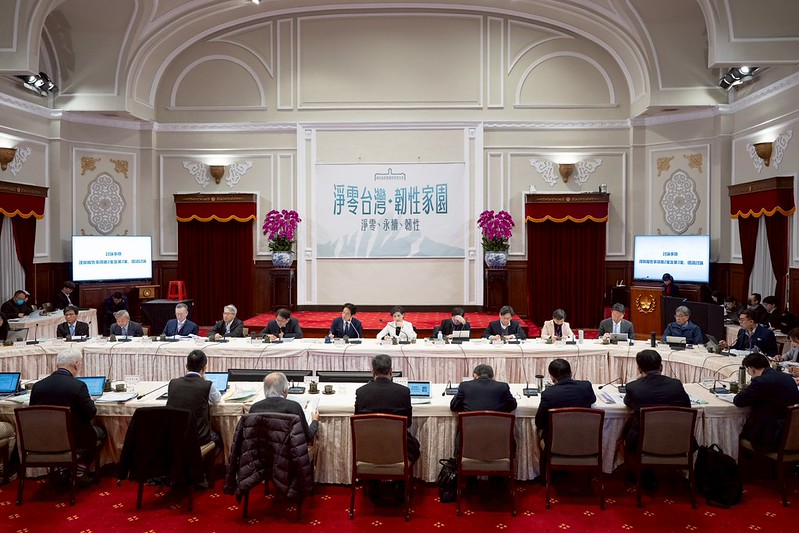
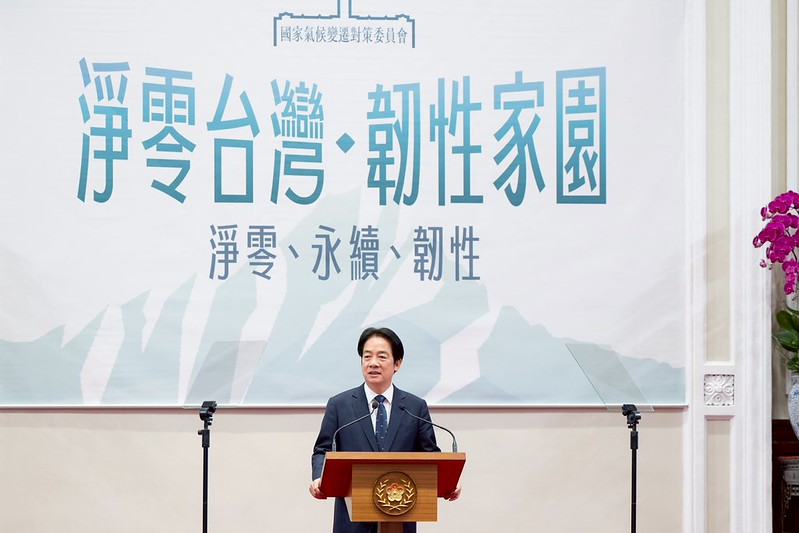
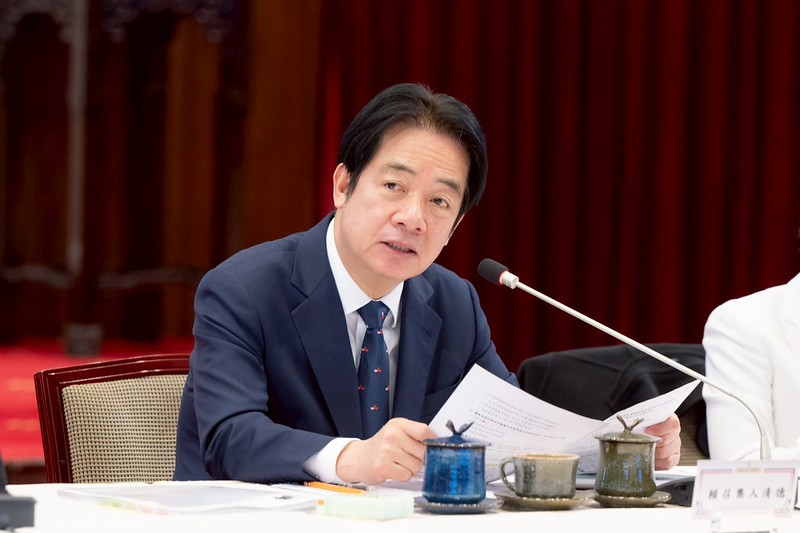
On the afternoon of January 22, President Lai Ching-te presided over the sixth meeting of the National Climate Change Committee. In his opening statement, the president stated that facing the challenges of the global net-zero transition and extreme weather, climate governance has become a crucial factor in national security, industrial competitiveness, and social stability. He emphasized that the government will reduce carbon while supporting enterprises and commit to net zero to save the planet, continuing to improve the institutional environment and working with industries and the public to achieve cross-sector collaboration. President Lai also stated that the government will accelerate the promotion of carbon reduction, energy transition, and NDC 3.0 initiatives, and let the world see a more resilient and vibrant Taiwan.
A translation of President Lai’s remarks follows:
Today is the sixth meeting of the National Climate Change Committee. First, I would like to express gratitude to all the advisors and committee members who have continued to provide professional advice for some time now, laying a solid foundation for climate governance in Taiwan.
Climate governance and energy transition are not issues that stand alone, independent from national development; they are the core foundations supporting Taiwan’s industrial sustainability and social stability. Therefore, in the new year, we must continue our efforts, and ensure that every transition initiative is more thoroughly institutionalized and implemented.
I want to emphasize that addressing the net-zero wave in global supply chains is a total war with repercussions for the nation’s survival. The net-zero transition is a collective mission in which government, industry, and the public must participate and become partners.
The government will take on the responsibility of establishing a stable institutional environment and incentive mechanisms. At the same time, we need all industries to invest in technological upgrades, and all individuals to implement carbon reduction practices in their daily lives so that Taiwan can seize opportunities in the midst of transitional change.
At the end of last year, COP30 concluded in Brazil. In addition to emphasizing the need to accelerate action, the international community also reaffirmed its consensus on collective global action. To address the challenges of extreme weather and net-zero transition, the government, civil society, and industries must not only fulfill their own respective transition obligations. They must also cooperate across sectors and assume collective responsibility through in-depth collaboration.
Therefore, the government will accelerate the promotion and implementation of net-zero transition in the following key directions:
First, we must pragmatically reduce carbon while supporting enterprises. Now that our carbon fee system has officially taken effect, it will lead enterprises to invest in voluntary carbon reduction plans. The government will launch a pilot carbon emissions trading system, and carefully plan a Taiwan version of the Carbon Border Adjustment Mechanism. The government will support industries, help align with international standards, and turn transition pressures into competitive advantages.
Regarding the energy issues that enterprises are concerned about, I want to emphasize again that based on objective scientific data, Taiwan’s power supply will remain stable. While upholding our net-zero target, the government will continue to actively promote renewable energy and energy decarbonization, maximize green energy, and enhance power grid resilience to ensure an even more stable power supply.
Second, we must firmly commit to net zero to save the planet. At our committee meeting in January last year, we proposed the beta version of NDC 3.0 to the people of Taiwan. The administrative team has continued to listen to suggestions from all sectors and review and improve that plan, and has completed an overall carbon reduction action plan for Taiwan. These more ambitious NDC 3.0 targets demonstrate Taiwan’s firm determination to contribute to the global sustainable transition.
This kind of cooperative spirit cannot be just a concept, but must be implemented in government policy decisions and social participation. Therefore, this first committee meeting of 2026 will review the practical results of cross-sector collaboration:
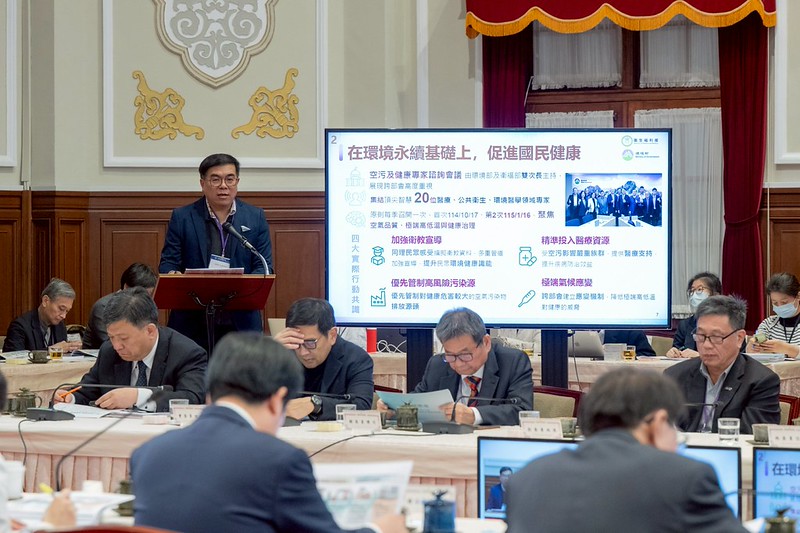
First, the Ministry of Environment, Ministry of Economic Affairs, Ministry of the Interior, Ministry of Transportation and Communications, and Ministry of Agriculture will jointly report on the interim results and future prospects for net-zero transition in six major sectors. This report documents the impact of the collective efforts of the government, industry, and citizens.
Whether it is the low-carbon transition of the energy and manufacturing sectors, the transformation of residential, commercial, and transportation models, or the expansion of green agriculture, each achievement is concrete proof of the public’s collective cross-sector efforts as the government improves systems, industries introduce technology and capital, and society makes lifestyle adjustments. This proves that Taiwan has not only established a carbon reduction path, but has also demonstrated solid capabilities to execute it.
After that, the National Science and Technology Council (NSTC) will report on the implementation and results of community-driven net-zero sandboxes. Among the six major institutional innovations for transition, community-driven initiatives are key to ensuring that policies are implemented effectively.
We have used technological innovation to bring net-zero concepts into neighborhoods, extending net-zero momentum from industry chains to everyday life. When technology is transformed into a tool to solve life problems and promote mutual benefits and well-being, the shared practices of the public become the most solid social foundation for Taiwan’s sustainable development.
Fellow committee members, the climate challenge has no end. As we pursue national security, societal resilience, and investment in the future, climate governance will be the most critical concrete action we can take.
The new year will be a year full of hope and action. Let us forge greater consensus, accelerate our transition, and let the world see a more resilient and vibrant Taiwan. Thank you.
Following his statement, President Lai heard the report on the interim results and future prospects for net-zero transition in six major sectors from Minister of Environment Peng Chi-ming (彭啓明), Vice Minister of Economic Affairs Lai Chien-hsin (賴建信), Deputy Minister of the Interior Tung Chien-hung (董建宏), Minister of Transportation and Communications Chen Shih-kai (陳世凱), and Minister of Agriculture Chen Junne-jih (陳駿季), and the report on the implementation and results of community-driven net-zero sandboxes from NSTC Deputy Minister Lin Faa-jeng (林法正). Afterward, President Lai exchanged views with the committee members regarding the content of the reports.