

News & activities
 News releases
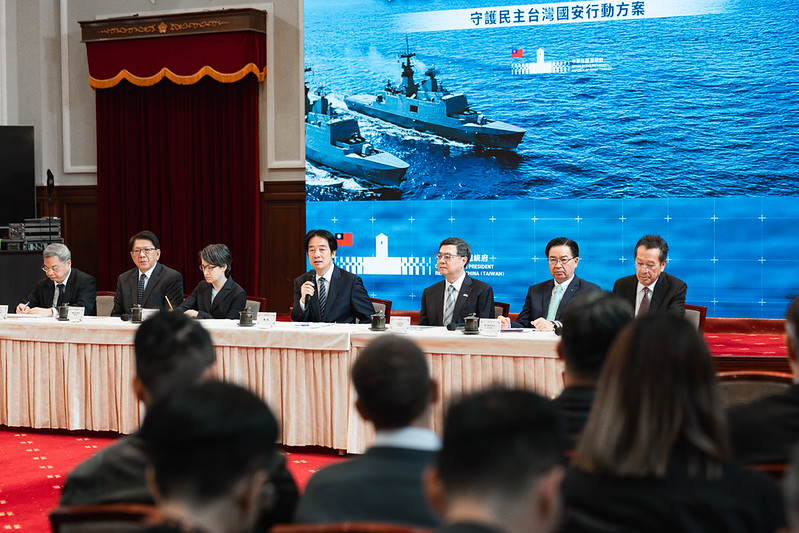
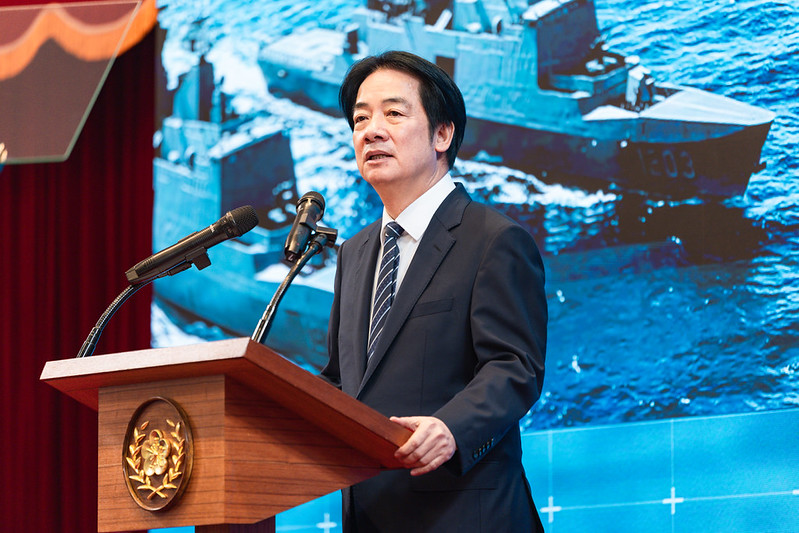
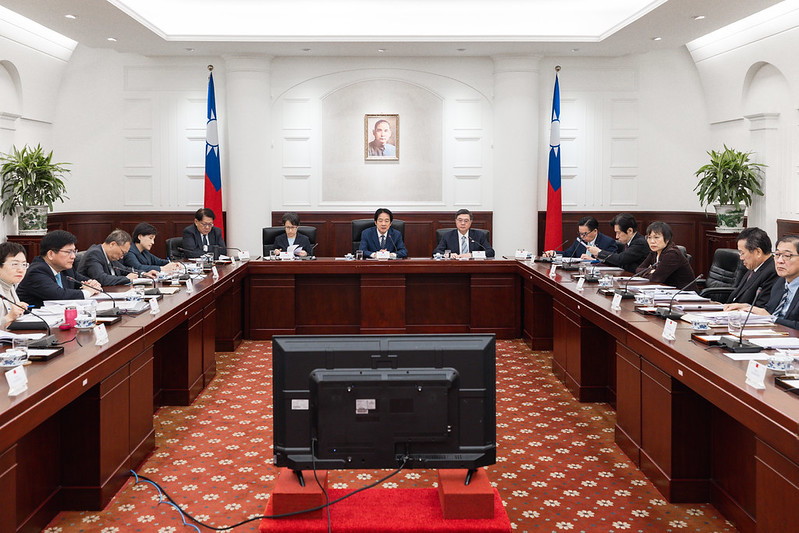
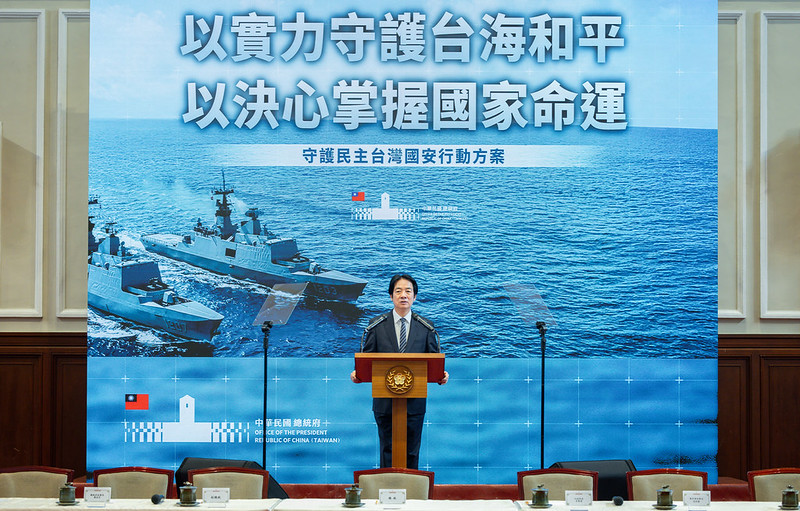
On the morning of February 13, President Lai Ching-te held a press conference following a high-level national security meeting on the signing of the Taiwan-United States Agreement on Reciprocal Trade (ART). During the press conference, titled “Navigating the New Taiwan-US Trade Agreement,” President Lai briefed the public on the outcomes of the trade negotiations, the impact they will have, and the proactive measures the government will be taking going forward.
The president indicated that the signing of the ART and the earlier memorandum of understanding (MOU) on investment by Taiwan and the US represents five historic breakthroughs, and will serve as the greatest driving force for the transformation and upgrading of Taiwan’s industries and economy. He emphasized that the government will take action across three major aspects – supporting industry, boosting cooperation in economic security, and orderly response to mid-to-long term structural adjustments – to accelerate the transformation and upgrading of Taiwan’s economy. He then urged the Legislative Yuan to provide full support for and complete deliberation on the agreements as quickly as possible.
President Lai also announced that the Presidential Office will establish a national economic strategy steering group, in which he will serve as the convener, working in conjunction with the Economic Development Commission led by Premier Cho Jung-tai (卓榮泰). He said that in the future, economic development will be driven by a division of labor and close cooperation between the national security team and the Executive Yuan, who will together formulate strategies and implement plans to address structural issues. By uniting the forces of the ruling and opposition parties, the business community, and civil society groups, President Lai said, we will work collectively to push Taiwan’s economy to a whole new level.
A translation of President Lai’s remarks follows:
Last month, Taiwan and the US signed an MOU on investment, and earlier today, we took a further step by completing the signing of the ART. I have just convened a high-level national security meeting; joining me for this post-meeting press conference is Premier Cho, leading the heads of the relevant ministries and agencies. I am here today to formally report to the nation on the outcomes of these Taiwan-US trade negotiations, the impact they will have, and the proactive measures the government will be taking going forward.
Through the trade negotiations, we have achieved six major goals, securing significant benefits for Taiwan’s industries and our economy as a whole:
First, regarding Taiwan’s exports to the US, we have secured a reciprocal tariff arrangement and the most favorable treatment under Section 232. Taiwan’s reciprocal tariffs will be reduced to 15 percent without stacking. This puts us on equal footing with major competitors such as Japan, Korea, and the European Union. Furthermore, it eliminates the disadvantage we previously faced, where our tariffs were significantly higher than those of our competitors because Taiwan and the US had not signed an FTA.
In addition, we have secured exemptions from reciprocal tariffs for 261 agricultural products (including moth orchids, tea, ingredients for bubble tea, coffee, flamingo flowers, taro, guava, fruit juice, jam, pineapple, and mango) and 1,811 industrial products. In total, 2,072 categories of products exported to the US will be exempt, bringing the average export tariff down from 35.78 percent to 12.33 percent. This significantly enhances the international competitiveness of Taiwan’s industries.
Regarding Section 232 tariffs, Taiwan has also obtained the most favorable treatment. This includes semiconductors and semiconductor derivatives, which are duty-free within a specified quota, with the most favorable treatment still applying to volumes exceeding that quota. Other items, including automotive parts, timber and furniture, and aerospace components, have also been granted the most favorable treatment.
Second, in response to the preferential tariffs granted to Taiwan by the US, and to reduce the significant trade surplus that the US is concerned about, Taiwan has also lowered import tariffs on US products.
Like other nations with a trade surplus with the US, we had to make corresponding tariff reductions. However, we have strictly adhered to the principles of food security and industrial resilience, securing agreements to maintain original tariff rates or implement only partial reductions for 93 products.
Regarding agricultural products, 27 items critical to food security, including rice and rice products, chicken, oysters, clams, garlic, and red beans, will see no tariff reductions. Furthermore, the tariff-rate quotas for rice and rice products, garlic, and red beans remain unchanged.
We have also secured a provision where import tariffs on 15 pork products with high domestic demand will be reduced by half in the third year. Additionally, 31 other agricultural products will have their tariffs lowered to specific designated rates.
In terms of industrial products, under the principle of maintaining industrial resilience, we have ensured that 20 items crucial to Taiwan’s mechanical and electrical maintenance capabilities will only be reduced to specific designated rates. These include small- and medium-sized trucks, horizontal computer numerical control lathes, mechanical parts, power generators, connectors for low-voltage equipment, circuit switches, coaxial cables, and control or distribution apparatuses.
Third, regarding the adjustment of non-tariff trade measures, we remain committed to the principle of protecting the health of our citizens while also aligning with international regulations.
In addressing the issue of beef and pork imports, which has spanned 20 years, our top priority remains the protection of citizens’ health, based on scientific evidence. The maximum residue limits for ractopamine in beef and pork products are consistent with the international standards set by the Codex Alimentarius Commission and have undergone risk assessments in Taiwan. At the same time, we will maintain the requirement for mandatory country-of-origin labeling for beef and pork products at all dining establishments, and our existing inspection mechanisms at the border and post-market will also remain unchanged.
We are also managing all imports based on scientific evidence. For example, regarding US beef, we have only authorized the import of ground beef and certain offal; the prohibition on sensitive items remains in place. Food safety management, including our source, border, and post-market oversight mechanisms, remains unchanged. Furthermore, the policy of prioritizing domestic meat for school lunches, as well as the regulations governing genetically modified food ingredients, will also remain unchanged.
Fourth, building on the foundation of the Taiwan-US Initiative on 21st-Century Trade, we are accelerating efforts to bring our economic and trade systems into alignment with international standards. This includes intellectual property rights protection, labor regulations, environmental standards, trade facilitation, and regulatory transparency, as well as the digital trade environment. By aligning with international norms, we are enhancing a business environment characterized by convenience, fairness, and transparency.
Fifth, regarding economic security, Taiwan and the US have a high degree of consensus. We will strengthen cooperation in areas such as tightening export controls on core key technologies, refining investment screening, and preventing origin washing. These efforts will help Taiwan and the US jointly build a trusted and resilient non-red supply chain.
Sixth, the MOU on investment establishes a mechanism for bilateral investment. We will collaborate with the US on supply chains using the Taiwan Model.
The US government will assist Taiwanese enterprises investing in the US with obtaining land, water, electricity, and other basic infrastructure, enabling them to develop smoothly and form industrial clusters. This will also facilitate easier cooperation with US R&D and design firms and more closely align with the vast US market. Ultimately, this will allow Taiwan’s semiconductor, information and communications technology (ICT), and electronic manufacturing services industries to integrate into the US economy.
On the other hand, the US will promote investment in Taiwan by its enterprises and introduce the most advanced technologies, which will be of immense benefit to Taiwan’s national defense technologies, military, next-generation communications, security and surveillance, AI, semiconductors, biotechnology, and pharmaceuticals.
Additionally, our state-run enterprises will also expand procurement of petroleum, natural gas, power equipment, and civil aircraft from the US, based on the principles of energy security and resilience.
Through bilateral investment and procurement from the US, we can not only promote Taiwan-US trade balance and enhance reciprocal economic and trade cooperation, but also deepen the Taiwan-US economic and trade strategic partnership, promoting economic prosperity as well as peace and stability.
Here, I would like to specifically report to my fellow citizens that the signing of the two trade agreements between Taiwan and the US represents five historic breakthroughs, and will serve as the greatest driving force for the transformation and upgrading of Taiwan’s industries and economy.
First, among the major trading partners of the US, Taiwan has secured the largest reduction in reciprocal tariffs and the most favorable treatment under Section 232. This completely reverses the longstanding trade disadvantage caused by the lack of an FTA between Taiwan and the US, while also creating significant potential business opportunities for our agricultural and traditional industries to enter the US market.
Second, through the trade negotiations, we have fully aligned our food safety, industrial standards, and economic and trade systems with international norms. This is highly beneficial for enhancing the competitiveness of Taiwanese industries and for marketing our products globally.
Third, establishing the Taiwan Model in the US will facilitate the close integration of Taiwan’s world-class semiconductor and ICT industries with the US’s world-leading AI industry, forming the world’s strongest technology and industrial innovation system. This will not only maintain the long-term advantages of Taiwan’s semiconductor and related sectors, but also produce spillover effects that drive development in Taiwan’s drones, robotics, satellites, and military industries, as well as biotechnology and advanced medical treatment, comprehensively enhancing the competitiveness of Taiwan’s industries.
Fourth, incorporating economic security and supply chain resilience as key components of Taiwan-US cooperation will inject new growth momentum into Taiwan’s economy. Furthermore, it will position Taiwan as a core hub for building global non-red supply chains.
Fifth, Taiwan’s deepening economic strategic partnership with the US not only enables Taiwan to play a vital role in bringing manufacturing back to the US, but also facilitates joint efforts between Taiwan and the US to expand cooperation with third countries. Simultaneously, it will fundamentally bolster the resilience of Taiwan’s economy and supply chains, further helping businesses remain firmly rooted in Taiwan while expanding their global presence and marketing worldwide.
My fellow citizens, in order to seize the opportunities created by the signing of these two trade agreements between Taiwan and the US, the government will take action across three major aspects to accelerate the transformation and upgrading of Taiwan’s industries and economy.
First, providing strong support and necessary assistance to the agricultural and industrial sectors.
To begin, in accordance with the Special Statute on Strengthening the Resilience of the Economy, Society, and National Security in Response to International Developments, the Executive Yuan has already allocated NT$93 billion to promote a support plan for Taiwan’s export supply chain in response to US tariffs. Furthermore, a quota of NT$20 billion has been reserved for future special budgets, aiming to mitigate the impact caused by the US imposition of reciprocal tariffs.
At present, the positive benefits of the Taiwan-US negotiation results for industries far outweigh the negative impacts. I want to emphasize that the budget already allocated will not be reduced; however, the objective of mitigating impacts will be shifted to assisting industries in enhancing their competitive advantages and expanding their reach into overseas markets.
As for agriculture, the Ministry of Agriculture will expand the special resilience budget and establish an NT$30 billion agricultural security fund to provide comprehensive support for agricultural upgrading and transformation across four major areas – supporting agriculture, ensuring competitive advantages, expanding the foundation for exports, and consolidating industrial resilience – in order to safeguard farmers’ rights and interests and maintain rural stability.
In terms of industry, the Ministry of Economic Affairs has already allocated an NT$46 billion special budget for resilience to implement four major measures to support the sector, including increased guarantees for preferential export loans, additional loans for the diversified development of micro-, small-, and medium-sized enterprises (MSMEs), R&D transformation subsidies, and efforts to secure overseas orders.
For the small number of industries that may be affected by the opening of the market, such as the complete vehicle industry and its supply chain, as well as health foods, the government will provide corresponding support measures.
Additionally, the Executive Yuan will convene relevant agencies to review and strengthen the functions of the Taiwan External Trade Development Council, dedicating full effort to assisting agriculture, traditional industries, and MSMEs with expanding into global markets.
Second, strengthening Taiwan-US economic security cooperation and implementing key actions.
The National Security Council will work alongside administrative agencies to strengthen the operation of our national high-tech security control project, conducting a comprehensive review of implementation effectiveness and the challenges faced. The project will take the potential impacts of AI development into account to enhance the protection of the nation’s key technologies and high tech. Furthermore, reducing the high-tech industry’s reliance on critical raw materials from China will be included as a regulatory objective.
We will also reference the systems of advanced nations, such as the US and European countries, to refine our review mechanisms for both outbound and inbound investment. This includes enhancing the security management of corresponding financial, personnel, and logistics flows to ensure the healthy development of our industries.
At the same time, we must strengthen our response to the issue of Chinese overcapacity, especially to prevent illegal transshipment and origin washing of products from specific regions, thereby burnishing the “Made in Taiwan” brand.
Furthermore, we must continue to deepen Taiwan-US cooperation regarding critical infrastructure resilience, as well as cyber and digital security.
Third, orderly response to mid-to-long term adjustments in economic and industrial structures.
To address global supply chain resilience, Taiwan must accelerate the transformation and upgrading of its industries and economy, while prioritizing the following mid-to-long term structural issues:
1. We must seek a more balanced and resilient economic growth model. This aims to achieve goals such as a dual-engine drive of both exports and domestic demand, placing equal emphasis on high-tech and traditional industries, ensuring the balanced development of software and hardware, and accounting for both economic growth and income distribution.
2. We must actively implement the Taiwan Model by assisting industries investing in the US with forming clusters, thereby enhancing efficiency and increasing competitiveness.
3. We must integrate Taiwan’s semiconductors with the development of the US’s AI industry. By leveraging local connections within Taiwan, we will comprehensively enhance domestic industrial competitiveness and optimize our economic structure.
4. We must enhance Taiwan’s energy resilience in response to the development of AI.
5. We must strengthen mutually beneficial economic cooperation between Taiwan and the US, with a specific focus on strategic cooperation in the defense industry and other sectors related to economic security.
6. We must effectively utilize excess savings and idle resources to enhance people’s quality of life and promote balanced regional, urban, and rural development.
Therefore, I would now like to announce that the Presidential Office will be establishing a national economic strategy steering group, with myself serving as the convener. This group will work in conjunction with the Economic Development Commission led by Premier Cho. In the future, economic development will be driven by a division of labor and close cooperation between the national security team and the Executive Yuan. Together, they will formulate strategies and implement plans to address the structural issues mentioned above. By uniting the forces of the ruling and opposition parties, the business community, and civil society groups, we will work collectively to push Taiwan’s economy to a whole new level.
The Taiwan-US trade agreements that we signed will take effect and be implemented once both sides complete their internal procedures. The Executive Yuan will, in accordance with the relevant provisions of the Conclusion of Treaties Act, promptly submit the ART to the Legislative Yuan for deliberation. The Taiwan-US MOU on investment signed last month will be submitted to the Legislative Yuan at the same time.
I would specifically like to urge the Legislative Yuan to provide full support and pass these agreements as quickly as possible. This will pave the way for a new era, accelerating the transformation and upgrading of Taiwan’s industries and economy, as well as deepening the Taiwan-US economic and trade strategic partnership.
My fellow citizens, at a time when the entire world suffered from the effects of the pandemic, struggled with supply chain restructuring, and was burdened by tariff barriers, it was because of Taiwan’s strength and the unity of all our citizens that the trade negotiations were able to yield such a positive outcome.
This honor belongs to every single hardworking person of Taiwan. It is everyone’s collective strength that allows us to shine on the world stage. Have confidence in yourselves; we have already proven that Taiwan has the capability to step out into the world and the strength to earn respect.
Let us seize this opportunity together and move toward a safer, stronger, and more prosperous future. Thank you.