

News & activities
 News releases
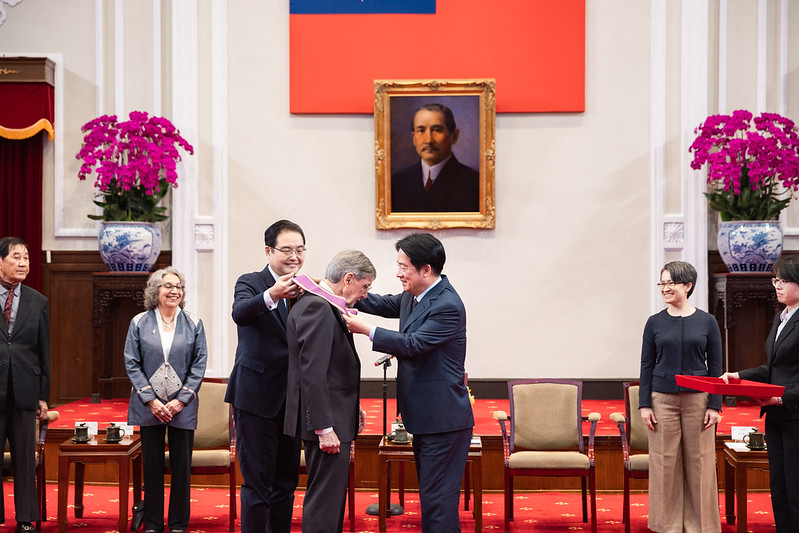
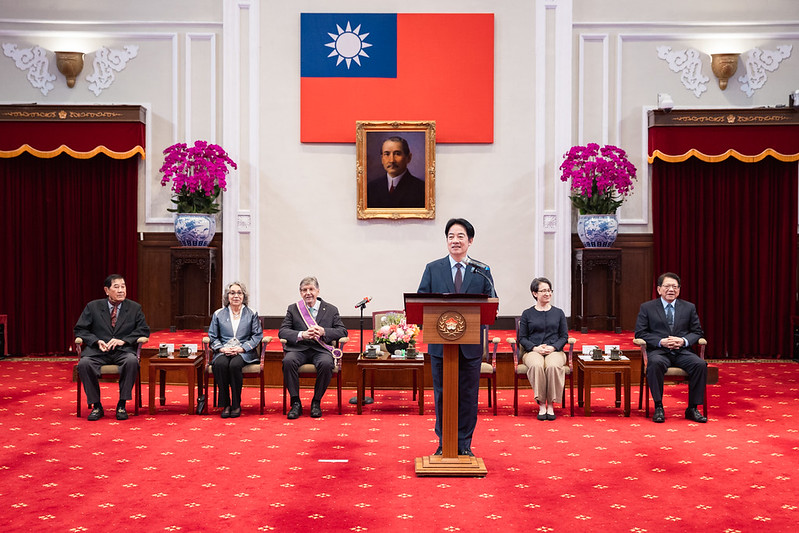
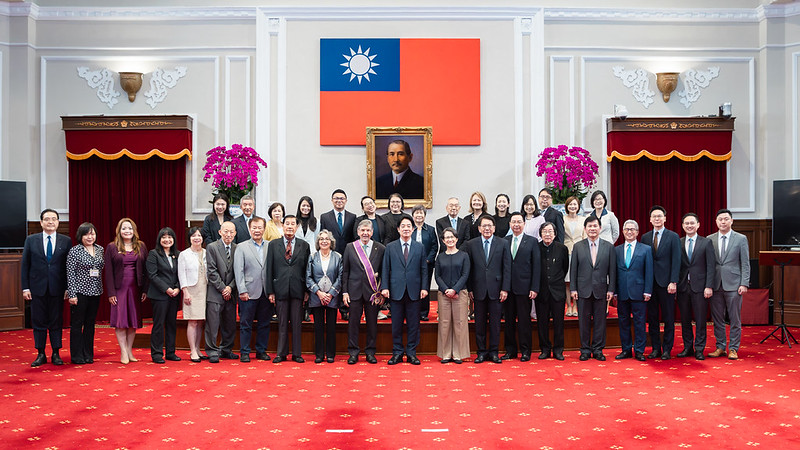
On the morning of May 6, President Lai Ching-te conferred the Order of Brilliant Star with Grand Cordon on Mr. Michael J. Fonte in recognition of his selfless contributions to Taiwan’s democracy and his dedicated efforts and commitment to fostering Taiwan-United States relations over many years. In remarks, President Lai commended Mr. Fonte for working hand in hand with the people of Taiwan for over half a century, dedicating his efforts to Taiwan’s democratization, the promotion of human rights, and international advocacy. The president expressed hope that Mr. Fonte will continue to mentor the next generation so that we can work together to safeguard Taiwan’s hard-won democracy, peace, and prosperity.
A translation of President Lai’s remarks follows:
This year we mark the 30th anniversary of the first direct presidential election in Taiwan. This was a significant milestone on our road to democratization. Michael Fonte has been an important partner on this journey, working hand in hand with the people of Taiwan for over half a century. Therefore, it is my great honor, at this historic moment, to confer upon him the Order of Brilliant Star with Grand Cordon on behalf of the people of Taiwan. This is our way of thanking him for his years of selfless contributions to Taiwan’s democracy through concrete actions and his dedicated efforts and commitment to fostering Taiwan-US relations. The presence of so many people from across different generations today is a testament to the profound respect and gratitude felt for Mike across all sectors of society.
Originally from New York, Mike graduated from seminary in 1967. He has said that while his sights were set on mission work in a major city like Tokyo, Caracas, or Santiago, he was instead dispatched to rural Taiwan to labor alongside farmers and their cattle. He traveled extensively throughout Taichung, Changhua, and Miaoli, spending six hours every day to master the tones of the Taiwanese language. As a result, his Taiwanese sounds better than that of many locals. Mike has also said that Taiwan stole his heart. For him, this forged a bond with this land so inseparable that he would never be parted from Taiwan.
As a citizen of democratic Taiwan, I am deeply grateful to the church that sent Mike here all those years ago. His active involvement and dedication provided great momentum for Taiwan’s democratization. Mike not only served as a missionary during the martial law era, but also championed social justice and human rights. After returning to the US, he spent many years working with the Formosan Association for Public Affairs to lobby the US Congress.
Thanks to Mike’s tireless advocacy, Taiwan secured solid support from the US government at a time when our international standing was precarious. He stood shoulder to shoulder with the people of Taiwan in the many challenges we faced during our struggle for democracy and in gaining international support. The hardships of that journey are something I know Vice President Bi-khim Hsiao, Prospect Foundation Chairman Mark Chen (陳唐山), and many of the senior leaders present today feel deeply and personally.
It was a monumental task to knock on doors across Congress, the executive branch, and think tanks one by one and engage government officials, legislators, experts, and scholars in constant, iterative advocacy, ensuring the precise communication of messages between Taiwan and the US while avoiding misunderstandings. Such work demands a high degree of wisdom, courage, resolve, and patience, and for decades, Mike’s commitment never wavered. He is devoted to Taiwan in heart and soul.
Beyond thanking Mike for over 50 years of heartfelt efforts, I also wish to thank his wife, Mrs. Berta Romero Fonte, whose steadfast support has enabled Mike’s precious and deep bond with Taiwan to flourish as it has. Although Mike is now retired, I hope that he will continue to provide guidance and mentorship to the next generation. Moving ahead, let us continue to work hand in hand to safeguard Taiwan’s hard-won democracy, peace, and prosperity.
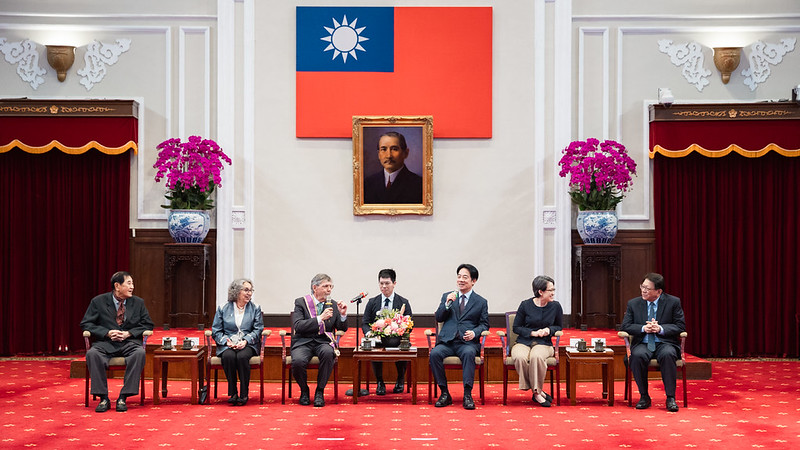
Mr. Fonte then delivered remarks, saying that when he arrived in Taiwan in 1967, a Taiwanese song struck his ear: “Longing for the Spring Breeze.” He said that his Taiwanese language teacher, Mr. Ng Ti-heng (黃智恆), explained to him that there was a deeper meaning to this love song. When the Taiwanese people sang it, he said, they were expressing their longing for freedom from the terrible repression they were under due to martial law.
Mr. Fonte went on to say that things were quiet in central Taiwan where he lived and worked, and that as an Italian American, he strongly related to his Taiwanese friends, whose world also focused on family, friends, and food. He said that he enjoyed the gentle conversations he had with people, invitations to family meals, going to the temple to watch traditional puppet shows, and the festivities of the Lunar New Year. However, he continued, due to martial law, the police and the Taiwan Garrison Command had the area under lock and key, and he realized that he could not do the social justice work his training had prepared him for. Therefore, he said, he left Taiwan after three short years, pained to have to leave his friends behind, but thinking that freedom was still a long way off. He said that if then, somebody had said to him that in 20 years Taiwan would have a democracy, he would have replied with the famous Taiwanese saying, “Go to bed early and dream on.”
Mr. Fonte stated that he later found during his studies at the University of Michigan that there were Taiwanese who were doing much more than just dreaming. He said that he came face to face with Peng Ming-min (彭明敏), who in 1964 had penned the Declaration of Formosan Self-Salvation and had gone to jail for his efforts. Having escaped from house arrest, he said, Mr. Peng was at the University of Michigan working with dedicated activists including now-Chairman Chen, who were trying to keep the dream alive. Mr. Fonte stated that while it is commonly said that dreams die hard, in Taiwanese hearts, dreams never die. Other activists came into view at this time, he said, including Kang Ning-hsiang (康寧祥) and Antonio Chiang (江春男), who penned magazines and pushed for political rights, as well as Huang Hsin-chieh (黃信介) and the strong team he gathered around Formosa Magazine. These activists began to build toward the beginning form of a party and push the envelope on democratization, Mr. Fonte said.
Mr. Fonte continued on to say that during the Kaohsiung Incident in 1979, activists from Formosa Magazine, while conducting a peaceful demonstration, were beat up by thugs and the police, and major leaders were sent to jail with long sentences. However, Mr. Fonte said, that did not stop them, and neither did the murder of the mother and twin daughters of Lin I-hsiung (林義雄). They continued their fight for freedom for Taiwan, he said, and through it all, Taiwanese did not give up. Mr. Fonte continued by saying that defense lawyers, many of whom would become future political leaders, teamed up to support the “Kaohsiung Eight” who were undergoing trial, and under international pressure, the trial was open to the public – a tipping point for Taiwan’s democratic reform.
Taiwanese remained resilient, Mr. Fonte stated; they kept fighting for and eventually won their freedoms after a long and difficult journey. He said that it was with an amazed smile that in 2004, he looked out at 1.5 million people holding hands from Keelung to Pingtung with their backs toward China – which was threatening Taiwan with missiles – and singing the Taiwanese song “She Is Our Darling” during the 228 Hand in Hand rally.
Mr. Fonte said that the world needs to hear this wonderful story and support Taiwan in the face of continued threats from China. Democracy is not static, he said, and in the 22 years since the 228 Hand in Hand rally, there have been many changes and many challenges. He stated that Taiwanese have continued to deepen their democratic governance under the fine care of President Tsai Ing-wen and now President Lai and Vice President Hsiao, and that he is deeply honored to have been a small part of this journey. He then thanked everyone for their companionship through this time. Mr. Fonte closed his remarks by stating that challenges remain, and we must all remain resilient and keep up this good fight. In Taiwanese, he exclaimed, “Long live Taiwan’s democracy!”