

News & activities
 News releases
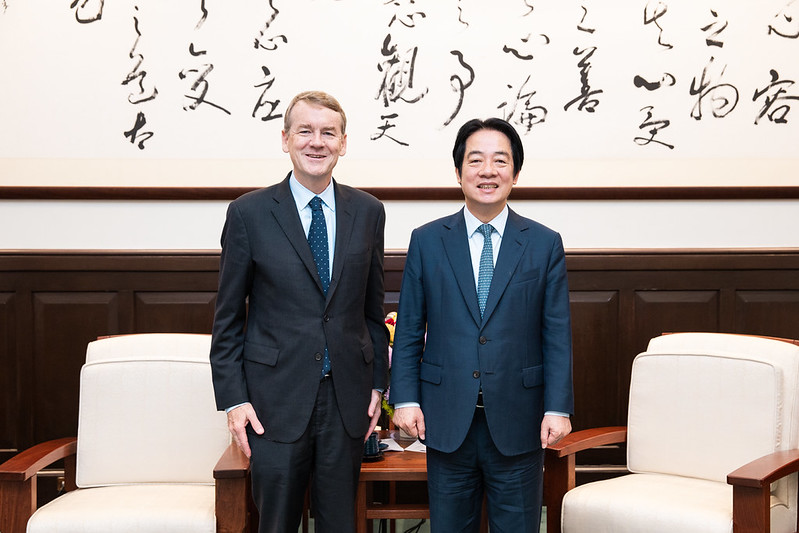
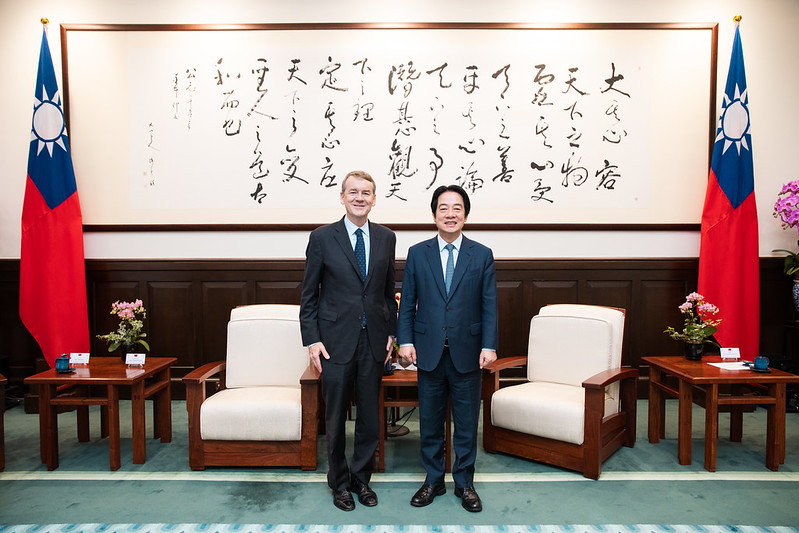
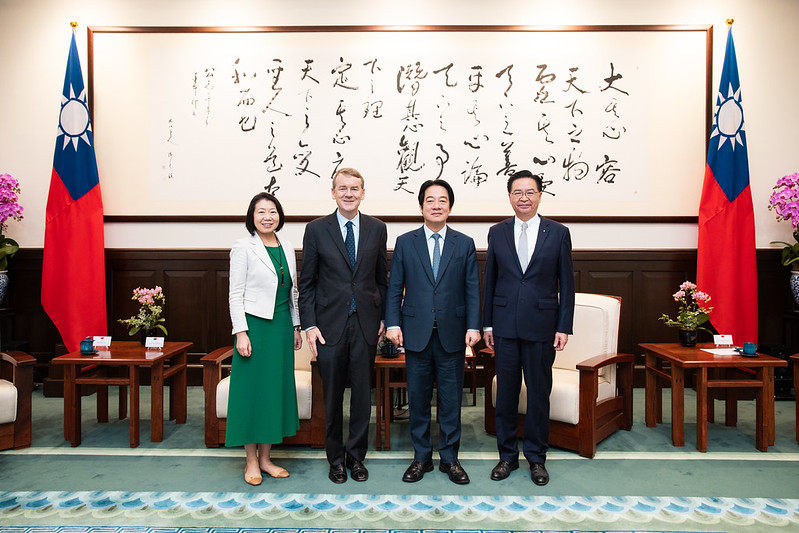
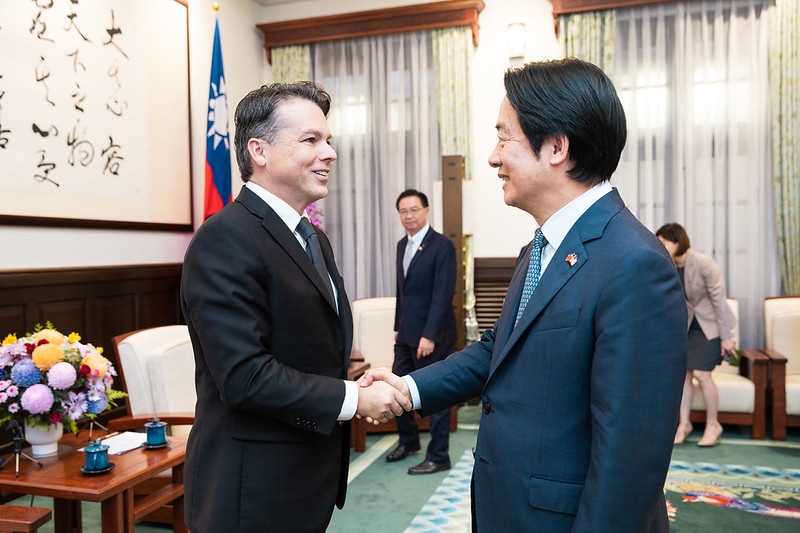
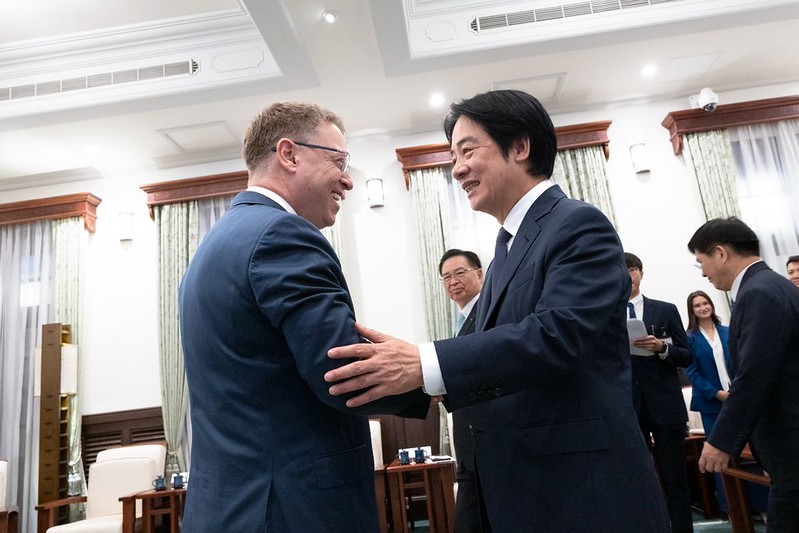
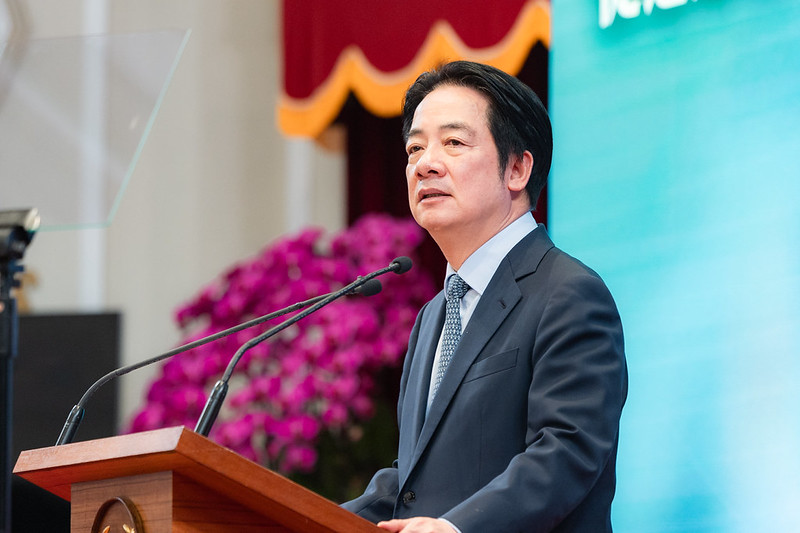
On the morning of October 8, President Lai Ching-te met with a delegation led by United States Senator Michael Bennet. In remarks, President Lai stated that peace and stability in the Taiwan Strait bear on the stability and development of the first island chain and the Indo-Pacific region. The president said that Taiwan is determined to enhance its self-defense capabilities and to safeguard peace through strength, and will continue to increase its investment in national defense so as to achieve the goals of military-civilian cooperation and all-out defense. He expressed hope that Taiwan and the US will work together to build a non-red supply chain for drones and deepen cooperation in space and industry, and jointly build a more peaceful, secure, and prosperous Indo-Pacific region.
A translation of President Lai's remarks follows:
On behalf of the people of Taiwan, I extend a warm welcome to Senator Bennet and all our distinguished guests. I want to thank Senator Bennet in particular for his steadfast support for Taiwan over many years, and for the many actions he has taken to help Taiwan strengthen its self-defense capabilities and to advance the Taiwan-US partnership.
In February this year, Senator Bennet joined senators and representatives from both parties in a letter supporting Taiwan's increased investment in national defense. In March, he introduced the First Island Chain Deterrence Act, which addresses the delivery of US arms to Taiwan and to partners along the first island chain. And in July, he helped advance the Six Assurances to Taiwan Act, supporting the further codification of America's key, longstanding commitments to Taiwan. For all of this, on behalf of the people of Taiwan, I express my heartfelt gratitude.
These actions send a very important message: Peace and stability in the Taiwan Strait are not Taiwan's concern alone, but bear on the stability and development of the entire first island chain and the Indo-Pacific region. By coming to Taiwan himself just before our National Day, Senator Bennet has demonstrated that support through concrete action. This reflects both his friendship toward Taiwan and his staunch support for us, and it does a great deal for the stability of Taiwanese society.
Taiwan is determined to enhance its self-defense capabilities and to safeguard peace through strength. Our overall defense budget has already surpassed 3 percent of GDP this year, reaching 3.2 percent. Next year's defense budget will account for 3.9 percent of GDP and for more than 20 percent of total central government expenditure. We expect that figure to reach 5 percent of GDP by 2030.
In increasing our investment in national defense, what matters is not simply a larger budget, but a change in the way Taiwan defends itself. Taiwan is actively bringing in artificial intelligence, unmanned vehicles, space technology, and new communications and command systems, accelerating innovation in defense technology so as to build a smarter, more distributed, and more resilient defense system and to achieve our goal of asymmetric warfare capabilities. I also want to thank members of both parties in the US House of Representatives and Senate and the US government for their strong support as Taiwan builds up its defense capabilities. We look forward to Taiwan and the US working together to build a non-red supply chain for drones, and to more industrial exchange and cooperation.
In addition to strengthening our defense capabilities, Taiwan is also actively promoting whole-of-society defense resilience. We hold the Han Kuang exercises, our most important annual military exercises, together with the Urban Resilience Exercises, which form part of whole-of-society defense resilience. By conducting them at the same time and under the same conditions, we aim to achieve the goals of military-civilian cooperation and all-out defense.
Senator Bennet comes from Colorado, an important hub of US space technology. He places great importance on technological innovation, has long followed the development of the space industry, and continues to advance the Taiwan and American Space Assistance Act. Last year, FORMOSAT-8, Taiwan's first indigenously developed optical remote-sensing satellite constellation, began formal deployment. Looking ahead, we hope to have Senator Bennet's support in building a closer partnership in the space age through deeper Taiwan-US cooperation.
In closing, I want to thank Senator Bennet once again for visiting and exchanging views with us on a range of important Taiwan-US issues. Your visit just before our National Day is especially meaningful. Taiwan will continue to stand side by side with the US as we work together to build a more peaceful, secure, and prosperous Indo-Pacific region.
Senator Bennet then delivered remarks, first thanking President Lai for his warm words and welcome. He said that the delegation had excellent meetings this week with security officials and legislative leaders, all of whom underscored their support for the Taiwan-US partnership. He said he looked forward to hearing the president's ideas on what more the two sides can do together, and that the delegation would take those ideas back to Washington, where there is strong bipartisan support for Taiwan.
Senator Bennet said that Taiwan is one of the world's strongest and most dynamic democracies, and that the resilience of the Taiwanese people and their determination to build a free and open society are a central pillar of a free and open Indo-Pacific. In his meetings during this visit, he said, he heard clarity about the threats Taiwan faces. He added that the shared commitment of Taiwan's leaders to preserving and protecting democracy is more powerful than any political disagreements.
Senator Bennet commended the Legislative Yuan's approval of the special budget for military procurement of more than US$24 billion, as well as the more-than US$7 billion approved for building unmanned systems in Taiwan. The conflicts in Ukraine and the Middle East have demonstrated the importance of these systems, he said, and producing them in Taiwan will effectively strengthen Taiwan's deterrence.
Senator Bennet stated that there is strong bipartisan support in the US Congress for maintaining peace and stability in the Taiwan Strait, including through the sale of the defensive weapons necessary for Taiwan to maintain a sufficient self-defense capability. He will continue to work with his colleagues in Congress, he said, to ensure the provision of the support they have authorized and appropriated. He emphasized that full implementation of and adherence to the Taiwan Relations Act and the Six Assurances remains the foundation and framework for US policy toward Taiwan, and that it offers the surest path to peace and stability in the Taiwan Strait and across the entire Indo-Pacific.
Senator Bennet said he is pleased that his home state of Colorado and Taiwan are building ever closer cooperation in such sectors as space, quantum technology, photonics, agriculture, and semiconductors. He said he will continue his bipartisan work in the Senate to strengthen Taiwan-US space cooperation and to enhance deterrence across the Indo-Pacific.
Senator Bennet emphasized that freedom and democracy are not givens in this world, and that this is particularly true in the Indo-Pacific. The American people stand with Taiwan, he said, as do members of both parties in Congress, and they will continue to support Taiwan's democracy, security, and prosperity. Taiwan does not stand alone, he said, and never will.
The delegation was accompanied to the Presidential Office by American Institute in Taiwan Taipei Office Acting Deputy Director Judy Kuo.