News & activities
 News releases
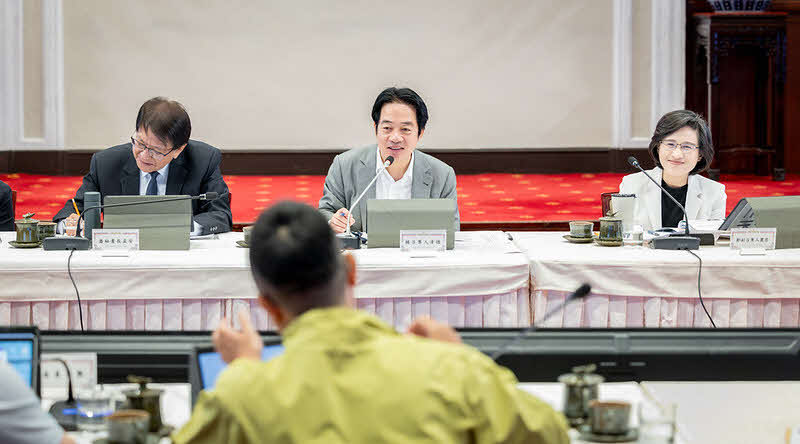
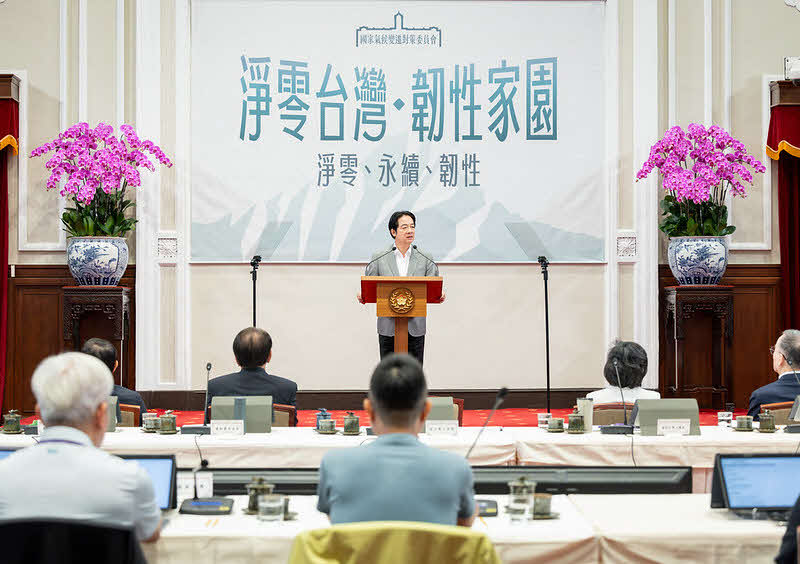
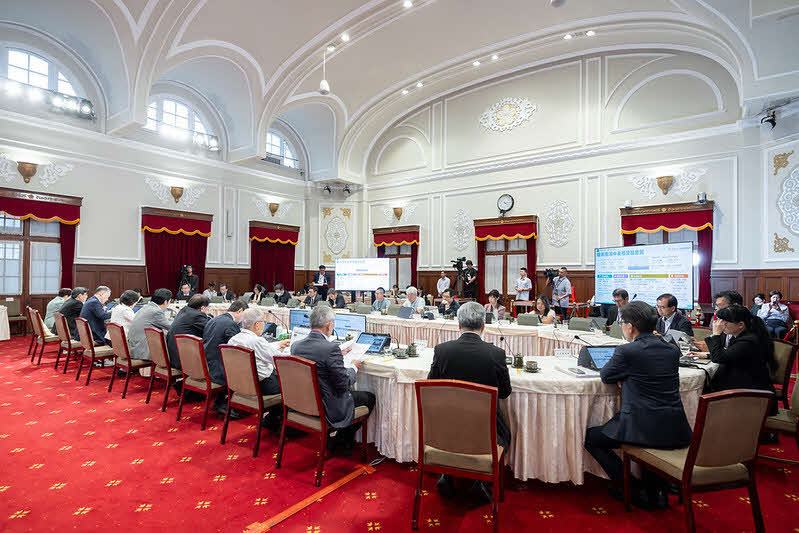
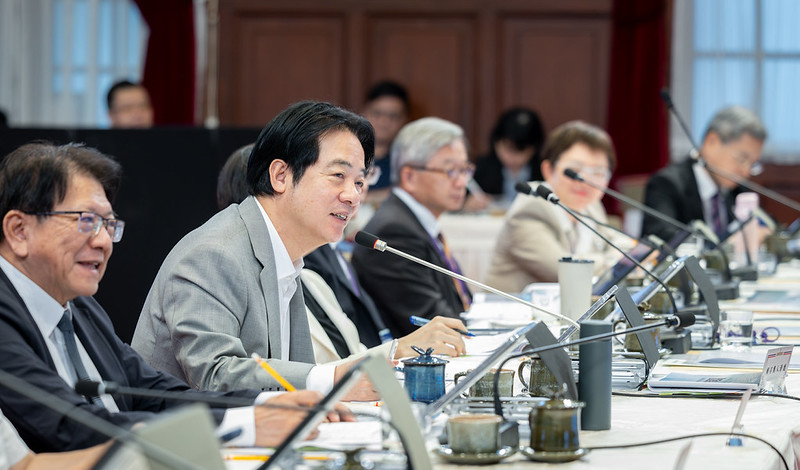
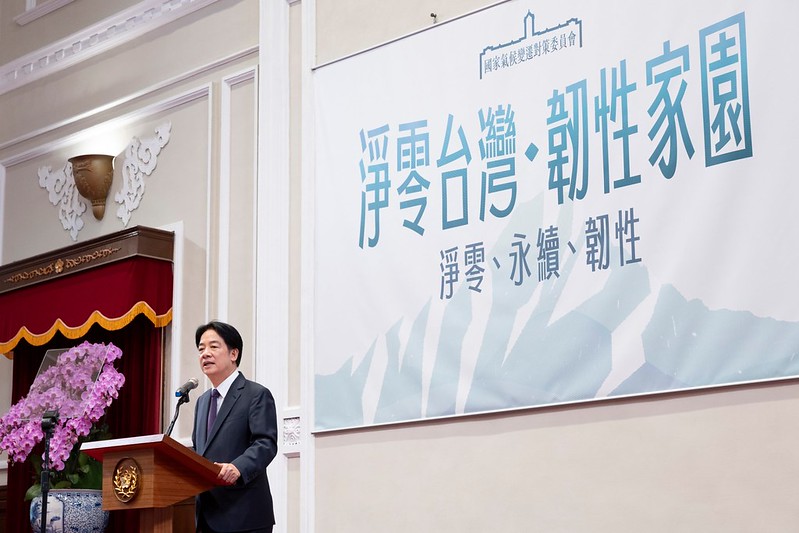
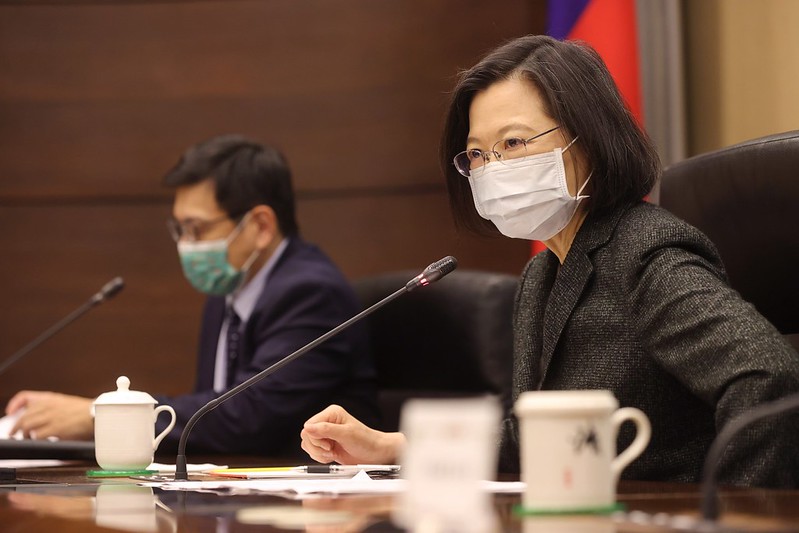
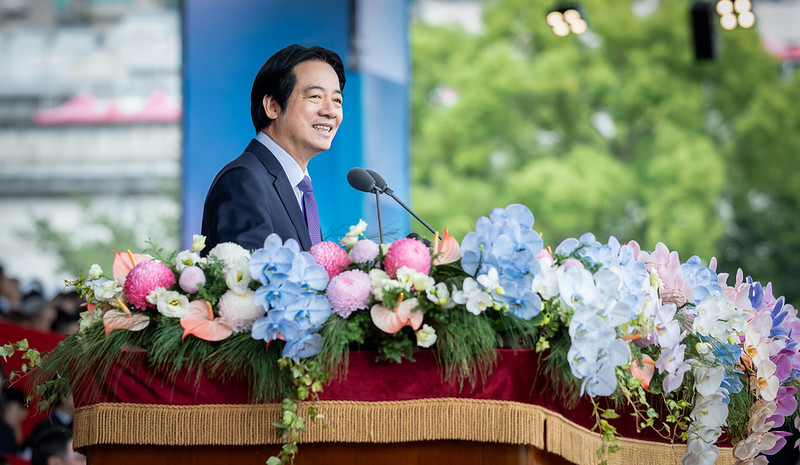
On the afternoon of October 22, President Lai Ching-te presided over the ninth meeting of the National Climate Change Committee. In his opening statement, President Lai said that faced with the impact of climate change, the nation must raise both its capacity to respond and its resilience; to this end, he proposed two key strategies: combining immediate response with long-term adaptation to safeguard people's health and safety, and enhancing the resilience of our transportation systems while accelerating the transition to green transportation. He expressed hope that through the joint efforts of the central government, local governments, and the private sector, people will receive more comprehensive care under extreme climate conditions and that critical transport facilities will keep operating safely and steadily when disaster comes, carrying Taiwan toward a safe, resilient, and sustainable future in which it is highly competitive.
A translation of President Lai's opening statement follows:
Today marks the ninth meeting of the National Climate Change Committee. Autumn has arrived, yet heat warnings have gone up in many cities and counties in recent days – a sign that our climate challenges are far from over.
In September, the World Meteorological Organization issued another warning: El Niño is expected to strengthen further over the coming months and peak by the end of the year, quite possibly setting a record high and becoming a "super El Niño," with climatic impacts carrying into next year.
As sea surface and air temperatures continue to rise, the entire world faces the challenge of extreme weather. The United Nations has repeatedly emphasized that extreme heat is a threat to society as a whole, one that requires a concerted response across government agencies, with particular attention to caring for vulnerable groups, ensuring safe working environments, and preparing early for heat protection.
At today's meeting, the Ministry of Environment (MOENV) will deliver a report on Taiwan's comprehensive heat adaptation promotion strategy to respond to global heatwaves, and the Ministry of Transportation and Communications (MOTC) will deliver a report on the energy transition and adaptation actions in transportation.
Faced with the impact of climate change on our lives and the economy, the nation must enhance its resilience and its capacity to respond. To this end, I am putting forth two key strategies:
The first is to combine immediate response with long-term adaptation to safeguard the health and safety of our people.
High temperatures directly affect people's lives and health. Outdoor workers, older people who live alone, children, and people suffering from chronic diseases especially need timely assistance from the government. As extreme heat becomes the new norm, we must strengthen cooperation between the government and the private sector, across ministries, and across regions, and establish heat protection mechanisms founded on prevention and joint response.
We have now linked up over 10,000 "cool spots"nationwide, giving people places close by where they can escape the heat. Some participating businesses and shops have gone so far as to post notices at their doors telling anyone who feels uncomfortable from the heat that they are welcome to come inside, sit in the air conditioning, and rest, with no obligation to purchase anything.
To all the private businesses and venues that have answered the call of this policy, I extend my sincerest gratitude.
Last month, the MOENV brought together 50 organizations from central government, local government, and the health care system to complete Taiwan's first full-scale exercise based on a scenario of extreme heat at 40 degrees Celsius, testing our capacity to treat heat-related injuries, care for vulnerable groups, and respond at critical facilities.
Drawing on the results of that exercise, the government will further refine heat protection and response mechanisms and incorporate them into the fourth phase of the National Climate Change Adaptation Action Plan, comprehensively strengthening heat warnings, worker protection, community care, and cross-ministry response.
At the same time, we will carry forward the national green cover adaptation strategy proposed in April at this committee's seventh meeting, giving priority to areas that are hot and insufficiently shaded, so that natural green cover becomes a protective canopy and our environment becomes safer and more livable.
Since we introduced the urban forest policy at the seventh meeting, this committee has held over 30 public briefings around the country, attended in person by more than 4,000 people, who offered over 1,000 comments.
These voices have reinforced our conviction that urban forests are not simply a matter of planting trees. They are a fundamental choice about how a city responds to climate change, how it cares for the health of its residents, and how it lives alongside nature. I would also like to express my heartfelt thanks to every participant.
The administrative team is currently consolidating feedback from all sides and expects to present, by the end of the year, a national urban forest promotion plan. At the same time, under the direction of Vice Premier Cheng Li-chiun (鄭麗君), a draft version of specialized legislation on urban forests has entered the deliberation stage.
This is a plan and a legislative proposal born out of open government processes and shaped by the participation of the people themselves. We hope to take this as a starting point from which Taiwan's urban forests move from idea to institution and from scattered efforts to nationwide action.
I want to emphasize that in promoting urban forests we are doing more than filling gaps in regulations and plans; we are putting into practice the core value of respect for life. I hope that through the joint efforts of the central government, local governments, and civil society, Taiwan's cities will become places where both people and trees can thrive.
Trees are a city's best natural air conditioning and our most vital line of defense against extreme heat. Shade brings more than comfort – it is a fundamental guarantee of people's health and quality of life.
I look forward to a day when everyone in Taiwan can step out of their front door and walk in shade; when every family and every group of friends can rest, have a picnic, and gather under the trees. An urban landscape of that kind should become an environmental right enjoyed equally by every person in Taiwan.
That is the purpose behind our urban forest effort: to make trees part of urban infrastructure, and to make shade a natural, everyday part of life for everyone.
The second key strategy is to enhance the resilience of our transportation systems and accelerate the transition to green transportation.
Taiwan is an island nation with a high concentration of population and industry. Transport by land, sea, and air is not only the lifeblood of its economic development – it is the cornerstone for maintaining the functioning of society and disaster response.
In terms of transportation resilience during a disaster, when road and rail links in eastern Taiwan were severed, the MOTC immediately activated maritime backup to maintain essential movement. That experience demonstrated the importance of integrating diverse transportation systems and establishing backup mechanisms.
Going forward, we will comprehensively strengthen the protection, recovery capabilities, and system integration of critical infrastructure, so that when disaster strikes, emergency relief, daily necessities, and critical supply chains can all keep moving, thereby boosting the resilience of our transportation systems across the board.
On the transition to green transportation, the share of city buses that are electric has now exceeded 40 percent. We want to draw private capital investment into green transportation infrastructure and create an environment friendly to vehicle electrification. In the next step, we will fully integrate urban cooling into road networks to build routes that combine shade, comfort, and safety, and encourage the public to walk, cycle, or take public transit more often.
We will continue expanding our efforts on sustainable aviation fuel and green port infrastructure, helping the relevant industries align with international practices and seize the initiative in the net-zero transition.
Ladies and gentlemen, these two key strategies complement each other, reaching from people's most immediate everyday experiences to the nation's overall economy and transportation. We want to ensure that people receive more comprehensive care under extreme climate conditions and that critical transport facilities can keep operating safely and steadily when disaster comes.
Climate governance requires the joint efforts of the central government, local governments, and the private sector. I hope today's discussion will build broader consensus and produce concrete, workable directions for action. Let us work together to carry Taiwan toward a safe, resilient, and sustainable future in which it is highly competitive.
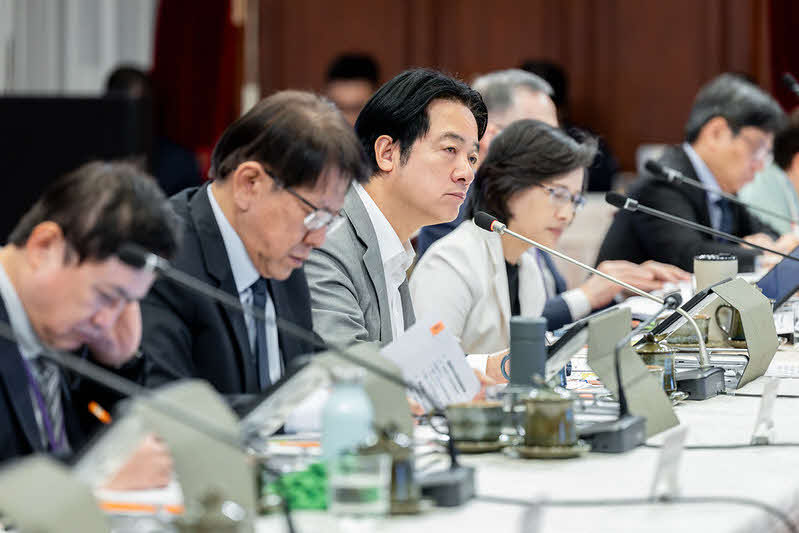
Following his statement, President Lai heard the abovementioned reports from Minister of Environment Peng Chi-ming (彭啓明) and Deputy Minister of Transportation and Communications Lin Kuo-shian (林國顯). Afterward, the president exchanged views with the committee members regarding the content of the reports.