News & activities
 News releases
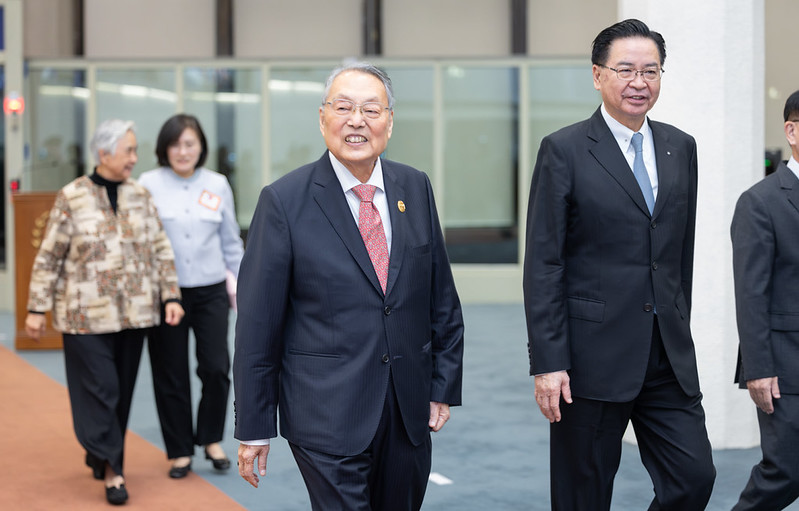
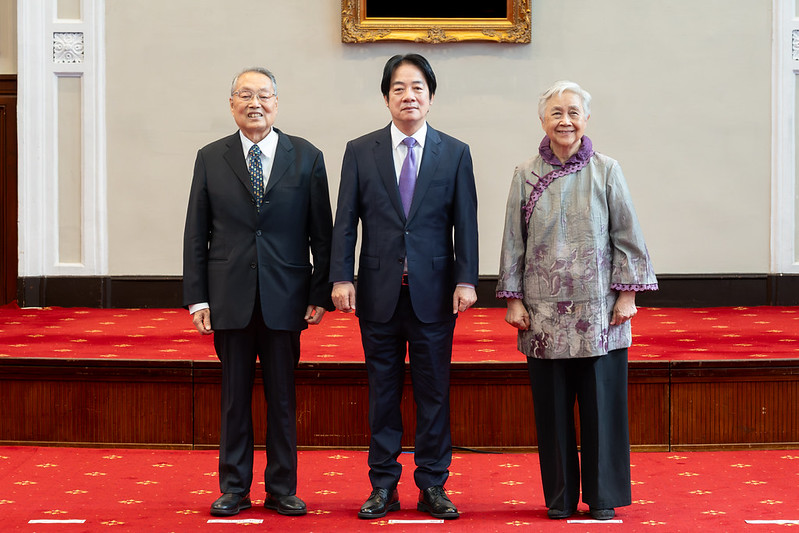
The 2026 APEC Economic Leaders’ Meeting (AELM) concluded on the morning of November 19. Acer Group Founder and Honorary Chairman Stan Shih (施振榮) attended the summit in full as leader’s representative for Taiwan, engaging with leaders from many countries and sharing Taiwan’s development experience in areas such as technological innovation, industrial transformation, and talent cultivation. Leader’s Representative Shih demonstrated Taiwan’s importance in the global economic and trade system and fulfilled the three major tasks entrusted to him by President Lai Ching-te.
In remarks at the AELM, Leader’s Representative Shih said that he was glad to gather once again with fellow economic leaders to consider the region’s future development and how they might work together to create a better tomorrow. This year’s meeting took as its theme “Building an Asia-Pacific Community to Prosper Together” and focused on three core priority areas: openness, innovation, and cooperation.
Leader’s Representative Shih said that when he attended the APEC meetings in Sydney in 2007 as leader’s representative, he proposed ADOC 2.0, the APEC Digital Opportunity Center initiative. Its goal, he explained, was to transform the digital divide into digital opportunities, helping more people make good use of technology to improve their lives and open up opportunities to earn a living and to develop.
Leader’s Representative Shih pointed out that while AI today brings even greater opportunities for development, it also raises concerns regarding employment, social inequality, technological misuse, and human agency. As leaders, he said, they share a common responsibility to guide the AI industry toward benefiting humanity and promoting the common well-being of society.
Drawing on his many years of experience in business management and insights gained from lifelong learning, Leader’s Representative Shih said he wanted to put forward a core idea: AI should be guided from “intelligence” toward “wisdom.” Intelligence can help accomplish tasks, he explained, whereas wisdom helps us judge what things are worth doing, whom the work should serve, and what long-term impacts and consequences must be taken into account.
Leader’s Representative Shih said that the “New Wangdao” management philosophy he advocates is built on three major core beliefs: value creation, balance of interests, and sustainable development. He expressed hope that in the future, AI will not only possess powerful computing capability and intelligence but also continue to advance, under human guidance, toward wisdom. Guided by this philosophy, he proposed three areas of cooperation worthy of joint effort.
First, expanding opportunities through openness. Carrying forward the spirit of ADOC, economies should share AI learning resources and practical experience through public-private partnerships to help small- and medium-sized enterprises, workers, and underserved communities enhance their ability to utilize AI, so that the digital divide does not further evolve into an AI divide.
Second, addressing humanity’s genuine needs through innovation. Economies should promote exchanges and cooperation between technology developers and professionals in sectors such as education, healthcare, manufacturing, and commerce, integrating technology with industry practices to jointly solve real-world problems.
Third, integrating complementary strengths through cooperation. Referring to this concept as “Super Specialization and Wisdom-Based Collaboration,” Leader’s Representative Shih said that whether among different economies, enterprises, and professional fields, or between humans and AI, all parties should leverage their respective strengths to complement one another and generate greater synergy through wisdom-based collaboration.
Leader’s Representative Shih said that although he retired from Acer in 2004, retirement never means that one stops learning. To this day, he said, he continues to explore, learn, and reflect on how he can contribute more to the world.
In closing, Leader’s Representative Shih emphasized that the sustainable development of AI also depends on the stability and resilience of global semiconductor supply chains. He said that we will continue to work with friends and partners across all sectors to ensure that a resilient semiconductor ecosystem continues to drive global technological progress and economic prosperity.