To the central content area
:::
:::

News & activities

News releases

2023-02-06
President Tsai meets Swiss parliamentary delegation

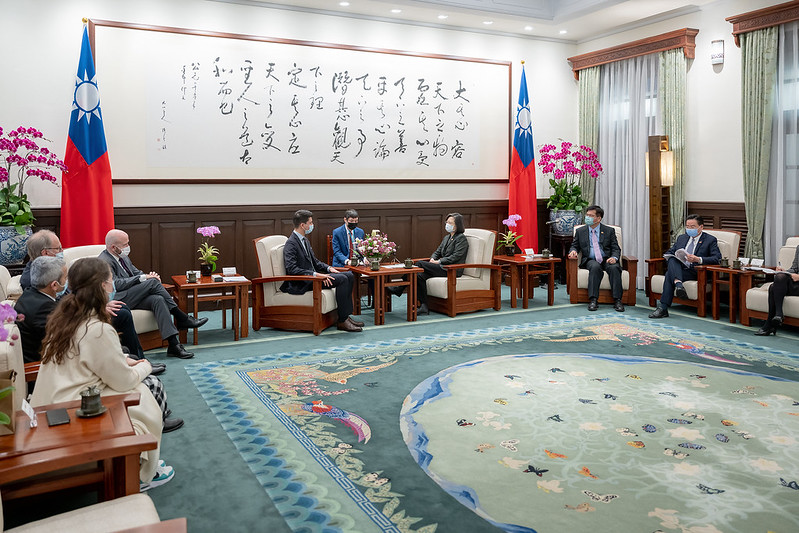
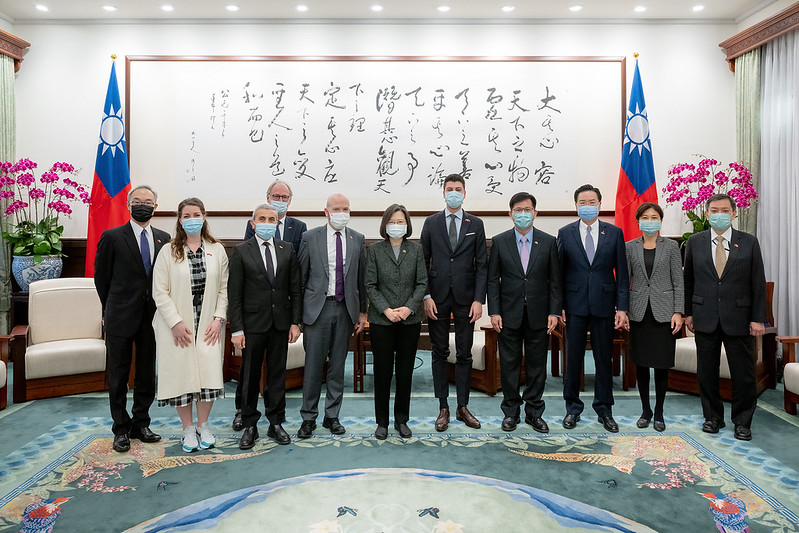
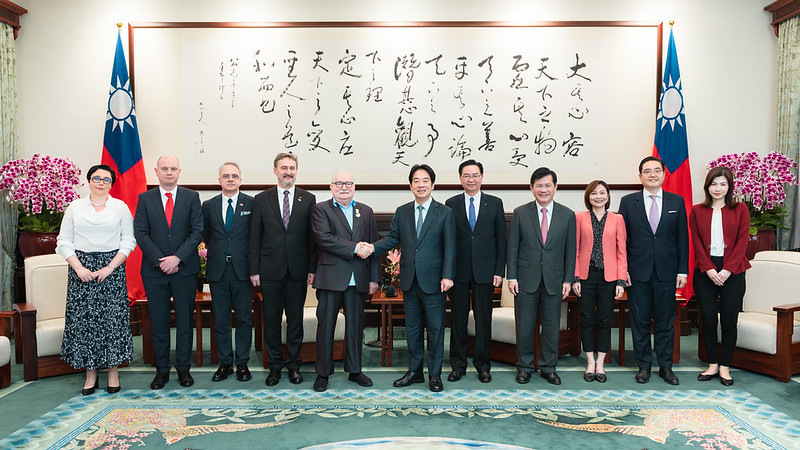
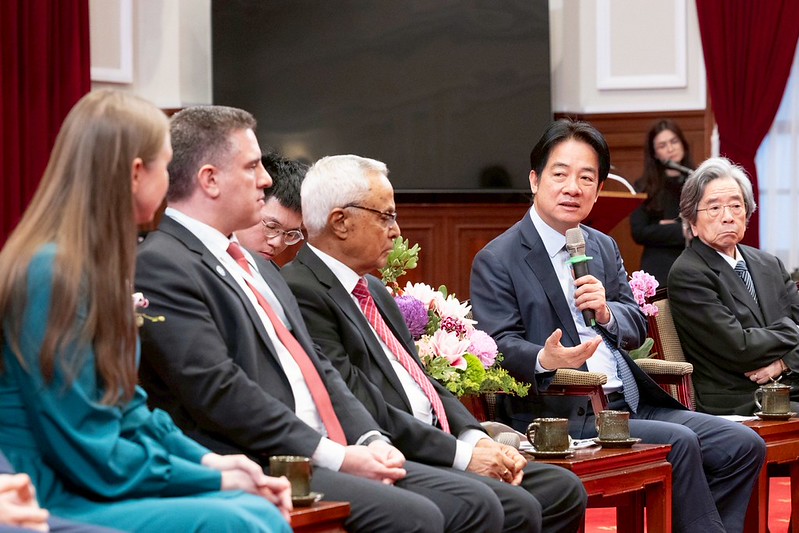
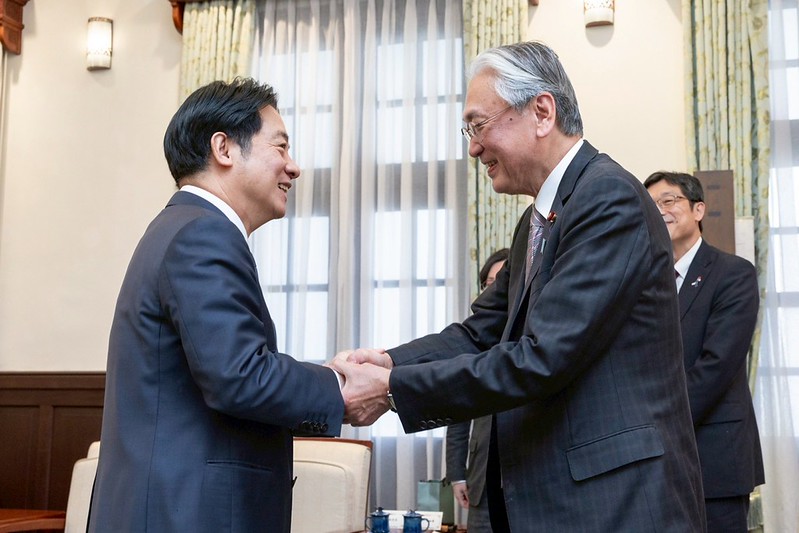
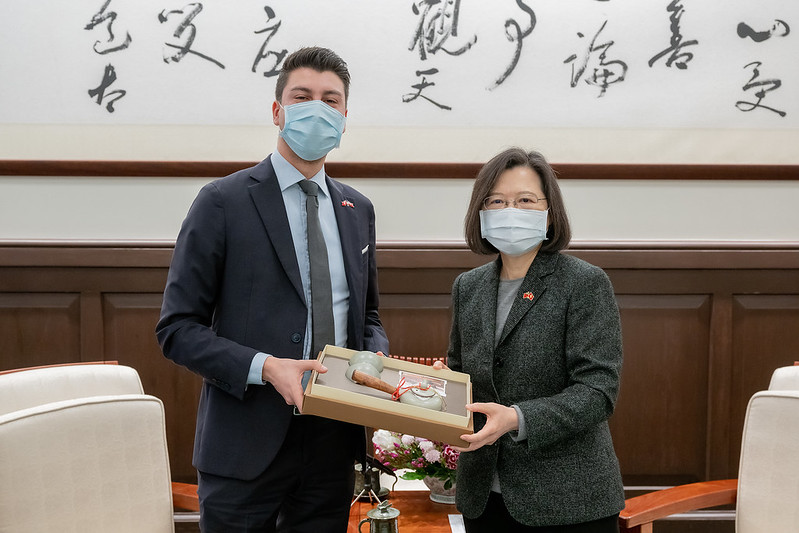
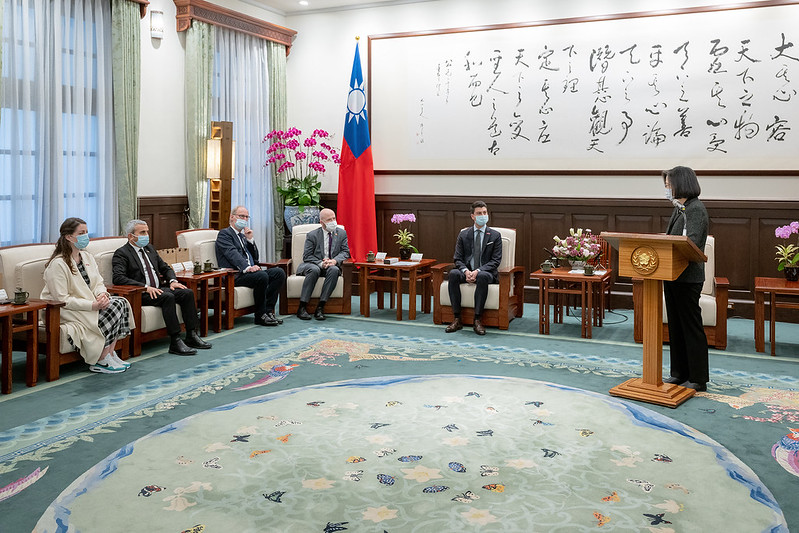
On the morning of February 6, President Tsai Ing-wen met with a delegation from the Switzerland-Taiwan parliamentary friendship group of the Swiss Federal Assembly. In remarks, President Tsai said that in addition to being like-minded partners that share the values of freedom and democracy, Taiwan and Switzerland are trade-oriented nations with industries that possess complementary strengths. The president expressed hope that Taiwan and Switzerland can continue to deepen economic ties and jointly safeguard supply chains underpinned by democratic values. She also said that she looks forward to strengthening our cooperation across the board and continuing to advance our bilateral relations to contribute further to democratic resilience around the world.

A translation of President Tsai's remarks follows:

I welcome you all to Taiwan. Your delegation comprises members of the Swiss National Council from different political parties, parliamentary committees, and linguistic regions. This symbolizes the rich diversity of Switzerland's society and culture. You are also dear friends of Taiwan. I am very grateful for your longstanding friendship with Taiwan and for the importance that you place on our country.

In recent years, our bilateral relations have grown closer. Taiwan-related issues have also garnered more attention in the Swiss parliament. National Council Members Fabian Molina, Nicolas Walder, and Mustafa Atici have submitted important Taiwan-friendly motions in the Swiss parliament. You have all used interpellations to call for stronger bilateral exchanges and cooperation. And you have also signed joint letters supporting Taiwan's international participation.

I would like to once again thank you all for your staunch support for Taiwan. Taiwan and Switzerland are like-minded partners that share the values of freedom and democracy. We are also both trade-oriented nations and the industries we have developed possess complementary strengths.

Going forward, we hope to continue deepening our economic and trade ties and jointly maintain the security of supply chains underpinned by democratic values. We also look forward to strengthening cooperation in all other fields, including joint efforts to combat disinformation and bolster cybersecurity.

As Taiwan stands on the frontline of the defense of democracy, we will work resolutely to maintain regional peace and stability. Faced with the sustained expansion of authoritarianism, we also call on all democratic allies to continue to deepen partnerships and work together to safeguard our way of life.

In closing, I look forward to you all gaining a deeper understanding of Taiwan through this visit. Let us continue to advance bilateral relations between Taiwan and Switzerland and contribute further to democratic resilience around the world. I wish you all a pleasant and fruitful trip.

Co-president of the Switzerland-Taiwan Parliamentary Friendship Group of the Swiss Federal Assembly Molina then delivered remarks, a transcript of which follows:

The terrible war against Ukraine is a turning point. Not only but especially for Europe, for the war has shown us how fragile a rules-based multilateral world order is and how thin the thread is on which peace hangs.

The Russian war of aggression has major implications on the humanitarian situation in Europe and for the global economy. And it is a call to all peoples and their leaders to strengthen dialogue, to seek cooperation, to promote world peace, democracy, and multilateralism. Authoritarianism and war must not prevail.

It is in this context that the trip of our delegation consisting of Nicolas Walder, Yves Nidegger, Mustafa Atici, and Léonore Porchet takes place. On behalf of the Switzerland-Taiwan parliamentary friendship group, I would like to express my sincere gratitude for the invitation, the hospitality, and the dialogue, which is more important today than ever. It is a great honor for us to be here.

Switzerland and Taiwan have a lot in common. Not only are both vibrant democracies that share the values of the rule of law and human rights, but we also both have high and beautiful mountains and deeply rooted traditions. At the same time, both Switzerland and Taiwan are dependent on immigration, research, and technological innovation, as neither of us has any significant raw materials. And our two democracies have made much of these conditions with a great deal of inventiveness and pragmatism. It is in the spirit of this inventiveness and pragmatism that we should improve and deepen relations in our mutual interest.

In the spirit of Swiss foreign policy that is capable of action and forward-looking, the Swiss National Council has instructed our government in 2021 to examine how Switzerland's existing relations with Taiwan can be gradually deepened in the interest of business, politics, science, and culture. We want to follow up on this during our visit.

Switzerland has a seat on the United Nations Security Council in 2023 and 2024. Our country has assumed a special responsibility for world peace during these two years. It's also in that spirit that we are visiting Taiwan this week, it is absolutely essential that the existing differences and tensions between Taiwan and the PRC are resolved peacefully and through dialogue. Anything less would be unacceptable.

On behalf of the entire delegation, I would like to thank you once again very much Madam President for today's meeting and the fruitful discussions with the Taiwanese authorities. Friendship between peoples is the best recipe for a better future.

Co-president of the Switzerland-Taiwan Parliamentary Friendship Group Walder then delivered remarks, a transcript of which follows:

It is my pleasure to follow my colleague Fabian Molina in bringing another expression of our friendship and support to the Taiwanese people, who are waging a courageous and just struggle to be allowed to remain autonomous and democratic.

I would like also to express all my gratitude for your invitation today. It is a great honor, Madam President, to be here today and have the opportunity to address a few words to you in order to emphasize the friendship that links Switzerland and Taiwan.

I'm speaking today in the name of our parliamentary friendship group that I'm happy to co-chair. We are here a delegation of five members out of a parliamentary group that is one of the most successful, with more than 15 percent of all members of parliament participating. It shows how important is [sic] Taiwan to us.

The success of the group is also linked to the excellent and very appreciated collaboration we are having with your representatives in Bern. Dr. [David W.F.] Huang (黃偉峰) of course but also Madam May Chou (周美鳳) who is accompanying us today, and all the team of the representation.

I'm as well speaking here as a representative of the French speaking minority in Switzerland, and I assure you that it's not every day [sic] simple to be part of a minority in a country dominated by Swiss Germans.

All jokes aside, minorities benefit in Switzerland [from] equal rights and respect, exactly like in Taiwan. In both our lands minorities can practice their language; they can live their cultural traditions, express their personalities and orientations without fear. When you belong to a minority, you particularly appreciate those rights.

Finally, I'm also speaking here as a citizen of Geneva, a town well known internationally for its role to promote peace, democracy, and human rights. Because if our friendship is based on our economic, academic, cultural, and scientific exchanges, it is also built – of course it has been said and you mentioned it, Madam President – on our shared values.

Values of freedom that respect human rights and values of free entrepreneurship that underpin the liberal democracy that we know and appreciate as much in Taiwan as in Switzerland. Shared values that today make Taiwan Switzerland's seventh largest economic partner in Asia. This is far from negligible, especially since there is a strong potential, it has been said, to increase our exchanges.

It is in this sense that our Parliamentary Assembly, as mentioned by Fabian Molina, requires from our government a report listing all the opportunities to develop the relation and exchanges between Taiwan and Switzerland.

Based on this report, we will insist that our government works concretely in the direction of strengthening our relations, for example, on establishing an economic partnership agreement with Taiwan, but also on using its influence among the international community to promote a closer inclusion of Taiwan in the international organizations such as the World Health Organization.

Today, in addition to ethical issues, the increasingly frontal questioning of international law by important actors like Russia and the People's Republic of China poses major threats of destabilizing the world.

In the face of such threats, it is our duty and in our strategic interest to draw closer to like-minded countries – those countries that share the values of democracy, freedom and justice, countries that are open to the world, to dialogue, to economic cooperation, and to cultural exchanges. Exactly like Taiwan.

That's why we can assure you, Madam President, Mr. Minister, that our friendship group will use all opportunities to recall the strong ties between Taiwan and Switzerland and to support your right to remain democratic.

Finally, let me again express all my gratitude for the invitation and the hospitality you are offering us this week. Long live Taiwan, Switzerland, and our friendship. Thank you very much.
 

Related News
Details
2025-12-03
Presidential Office thanks US President Trump for signing Taiwan Assurance Implementation Act  
The Presidential Office extends its sincere appreciation to United States President Donald Trump, who on December 2 (US EST) formally signed the Taiwan Assurance Implementation Act, which stipulates that the US Secretary of State shall conduct a review of the Department of State’s guidance that governs relations with Taiwan, including related documents, and reissue such guidance not less than every five years, as well as submit an updated report to Congress not later than 90 days after completing the review. Presidential Office Spokesperson Karen Kuo (郭雅慧) stated that the entry into force of the Taiwan Assurance Implementation Act carries great significance in that it affirms the value of US interaction with Taiwan, supports closer Taiwan-US relations, and stands as a firm symbol of our shared values of democracy, freedom, and respect for human rights. Spokesperson Kuo also indicated that in addition to Taiwan and the US sharing the fundamental values of freedom and democracy, a robust Taiwan-US relationship is a cornerstone for maintaining peace and stability in the Indo-Pacific region. Going forward, Taiwan will continue to maintain close contact with the US, deepen our partnerships across many sectors, and serve as a steady force for global prosperity and development. As a responsible member of the international community, Taiwan will work hand in hand with the US and other like-minded countries in the region to ensure peace, prosperity, and stable development in the Indo-Pacific.  
Details
2025-11-26
President Lai pens Washington Post article on boosting defense spending to protect Taiwan’s democracy  
On November 25, an op-ed penned by President Lai Ching-te entitled “I will boost defense spending to protect our democracy” was published by The Washington Post, explaining to a global audience Taiwan’s firm resolve to strengthen its self-defense capabilities. The article also notes that Taiwan’s government will continue to boost military investment and recently introduced a historic US$40 billion supplementary defense budget, underscoring its commitment to defending Taiwan’s democracy. In addition to investing in the national defense industry and cutting-edge technologies, Taiwan is accelerating the development of the T-Dome, a multilayered, integrated defense system designed to protect Taiwan from PLA missiles, rockets, drones, and combat aircraft. Taiwan will also expand cooperation with like-minded countries to support a shared deterrence architecture across the Indo-Pacific. Furthermore, Taiwan will broaden coordination both domestically and with international partners, and improve collaboration between government, military, and civic groups so that society can better respond to disasters, both manmade and natural. The president emphasized that Taiwan and the United States share the conviction of peace through strength, and that Taiwan will ensure its sovereignty, democracy, and freedom are defended through robust, decisive action. The following is the full text of President Lai’s article: For more than four decades, the enduring foundations laid by the 1979 Taiwan Relations Act and reinforced by President Ronald Reagan’s Six Assurances have guided Taiwan and the United States in jointly upholding peace and stability across the Taiwan Strait. Together, we have recognized that safeguarding freedom and prosperity in the Indo-Pacific requires clarity and strength. Today, these principles remain as vital as ever. The People’s Republic of China’s unprecedented military buildup, combined with intensifying provocations in the Taiwan Strait, East and South China Seas and across the Indo-Pacific, have highlighted the fragility of peace in the region. Beijing’s willingness to alter the status quo by force has become increasingly evident. We are grateful that President Donald Trump has made clear the importance of American leadership around the world. The international community is safer today because of the Trump administration’s pursuit of peace through strength. A strong and engaged America remains a cornerstone for global stability, keeping potential conflict at bay. Taiwan is equally committed to keeping the Indo-Pacific region safe. Despite record People’s Liberation Army incursions into Taiwan’s vicinity — and military drills probing past what is known as the First Island Chain, extending from Japan to the Philippine archipelago — Taiwan has remained steadfast, acting with firm resolve against the threats and challenges faced. To further make good on our commitments, I am significantly increasing Taiwan’s defense budget. In response to growing pressure from Beijing, our defense spending, which has already doubled in recent years, is expected to rise to 3.3 percent of gross domestic product by next year. I am committed to lifting this baseline to 5 percent by 2030, representing the largest sustained military investment in Taiwan’s modern history. As part of this effort, my government will introduce a historic $40 billion supplementary defense budget, an investment that underscores our commitment to defending Taiwan’s democracy. This landmark package will not only fund significant new arms acquisitions from the United States, but also vastly enhance Taiwan’s asymmetrical capabilities. In doing so, we aim to bolster deterrence by inserting greater costs and uncertainties into Beijing’s decision-making on the use of force. My message here is clear: Taiwan’s dedication to peace and stability is unwavering. No country will be more determined in safeguarding Taiwan’s future than our own. Looking forward, we will also invest in cutting-edge technologies and expand Taiwan’s defense industrial base. Partnering with like-minded countries, we will leverage Taiwan’s manufacturing strengths to reinforce defense supply chains, accelerate the deployment of advanced systems and rapidly respond to emerging threats — all while creating new jobs at home and abroad. As part of this, I am accelerating the development of ‘T-Dome,’ a multilayered, integrated defense system designed to protect Taiwan from PLA missiles, rockets, drones, and combat aircraft. Together with other AI-driven and unmanned platforms, these capabilities bring us closer to the vision of an unassailable Taiwan, safeguarded by innovation and technology. Furthermore, we will broaden coordination both domestically and with international partners. Last year, we established a top-level Whole-of-Society Defense Resilience Committee, improving collaboration between government, military, and civic groups so that our society can better respond to disasters, both manmade and natural. These preparations will continue to intensify. We will continue to pursue closer security ties with trusted partners and allies. We are grateful that the international community has continued to speak out forcefully for peace across the Taiwan Strait. Recent statements from Japan, the U.S., Europe, South Korea, Australia, New Zealand and the Group of Seven have all contributed to deterrence in the region. We will further cooperate across maritime, cybersecurity, resilience and other domains that support a shared deterrence architecture across the Indo-Pacific. Cross-strait stability is best served when we heighten the costs of military escalation, while minimizing the threshold of de-escalation. The risks of conflict must always outweigh the price for peace. This is underscored by the pace of our defense reforms and my firm determination to uphold the cross-strait status quo. While we will continue to pursue opportunities for cross-strait dialogue, with the understanding that our democracy and freedom remain nonnegotiable, we remain grounded by more than wishful thinking, as some have suggested. We will ensure that Taiwan’s security and sovereignty are defended not just by rhetoric but through robust, decisive action. Both presidents Trump and Reagan have understood the significance of peace through strength. Standing on the front lines of democracy, this is a lesson we live by each and every day. While there is much at stake, Taiwan’s resolve has never been stronger. Working together with America and like-minded democracies, we are confident that peace will prevail.
Details
2025-11-25
President Lai meets Eswatini House of Assembly Speaker Jabulani Mabuza
On the morning of November 25, President Lai Ching-te met with a delegation led by Speaker of the House of Assembly Jabulani Mabuza of the Kingdom of Eswatini. In remarks, President Lai thanked Eswatini for speaking out in support of Taiwan at international forums over the years. The president noted that cooperation between Taiwan and Eswatini has been fruitful in areas such as agriculture, public health, education, women’s empowerment, and renewable energy. He expressed hope that we will continue working together to make Eswatini an important base for linking Taiwan with African markets, creating even more opportunities for cooperation and spurring progress and prosperity in our nations and around the world. A translation of President Lai’s remarks follows: I extend a warm welcome to Speaker Mabuza, who is leading a delegation to Taiwan after his last visit in 2018, and also to the members of the House of Assembly, who are here for the first time. Your presence is a demonstration of Eswatini’s strong support for Taiwan and a sign that diplomatic ties between our countries continue to deepen. On behalf of the people of Taiwan, I would like to express my gratitude to you all. I also want to thank Speaker Mabuza for signing an economic cooperation agreement with Taiwan on behalf of the government of Eswatini when he visited in 2018 in his capacity as minister of commerce, industry and trade. The agreement laid a solid foundation for bilateral economic and trade interactions. I am confident that this visit will give Speaker Mabuza and the delegation a more comprehensive understanding of Taiwan and create greater opportunities for bilateral exchanges and collaboration. Over the past few years, cooperation between Taiwan and Eswatini has been fruitful in areas such as agriculture, public health, education, women’s empowerment, and renewable energy. In particular, our two countries are working together to build a strategic oil reserve facility, which will not only enhance Eswatini’s energy security but also advance its sustainable development. Eswatini is Taiwan’s key ally in Africa. Home to a stable investment environment and an outstanding talent pool, Eswatini is also an important member of the Southern African Customs Union and the African Continental Free Trade Area. Taiwan sees enormous potential for further developing the partnership with Eswatini. Moving forward, we will continue to encourage more companies in Taiwan to expand their global presence and market worldwide, and make Eswatini an important base for linking Taiwan with African markets. This will create even more opportunities for cooperation. On behalf of the people of Taiwan, I would also like to express heartfelt thanks to Eswatini for speaking out in support of Taiwan at international forums over the years. At this year’s United Nations General Assembly, His Majesty King Mswati III called to end the misinterpretation of UNGA Resolution 2758 and include Taiwan so that the UN can fulfill its mandate that no country is left behind. This staunch backing gives Taiwan additional strength to collaborate and deepen partnerships with Eswatini and other like-minded countries. I look forward, with the efforts of our esteemed guests, to continued development, spurring progress and prosperity in our nations and around the world. In closing, I once again thank Speaker Mabuza for leading this delegation to Taiwan. Please convey greetings from Taiwan to the king and queen mother. I wish you all a smooth and successful visit. Speaker Mabuza then delivered remarks, saying that it is his singular honor for him to stand here today as the speaker of the Kingdom of Eswatini. He then conveyed warm greetings from His Majesty King Mswati III and the Indlovukazi and the people of Eswatini, extending their sincerest appreciation for the unwavering support and friendship that Taiwan has consistently demonstrated towards their nation. He remarked that their visit to Taiwan has been a remarkable journey filled with insightful meetings, enriching cultural exchanges, and a deepened understanding of Taiwan’s remarkable achievements in various fields. He noted that they are particularly impressed by Taiwan’s technological advancement, vibrant democracy, commitment to social welfare, and environmental sustainability, adding that these are qualities they admire and aspire to emulate in their own development endeavors in Eswatini. Speaker Mabuza said that President Lai’s leadership and vision for Taiwan’s future are truly inspiring, and that the emphasis on innovation, education, and people-centered policies resonates deeply with their own national aspirations. He stated that as we navigate the challenges of our time, from climate change to economic inequality, they believe our nations can learn from each other and work together to find solutions that benefit not just our peoples, but the global community at large. Speaker Mabuza pointed out that diplomatic relations between our two countries are a testament to our shared values of sovereignty, mutual respect, and cooperation. He stated that Eswatini cherishes the strong bonds we have forged over the years and is committed to further strengthening those ties. Whether through economic partnership, cultural exchanges, or collaborative efforts in areas such as healthcare and technology, he said, they see vast potential for growth and mutual benefit.  Speaker Mabuza expressed hope of continuing our fruitful relationship and exploring new avenues of cooperation so that together, we can build a brighter future for our citizens and contribute positively to regional and global peace and prosperity. In closing, the speaker once again thanked Taiwan for the warm hospitality and for being a steadfast friend to the Kingdom of Eswatini. The delegation also included House of Assembly Members Lindiwe Mamba, Joseph Souza, Jabulane M. Simelane, and Allen Vilane.
Details
2025-11-18
President Lai hosts state banquet for Prime Minister Feleti Teo of Tuvalu
At noon on November 18, President Lai Ching-te hosted a state banquet in honor of Prime Minister of Tuvalu Feleti Teo and his wife. In remarks, President Lai thanked Tuvalu for supporting Taiwan at numerous international venues. The president indicated that Taiwan and Tuvalu have made excellent progress in cooperation in recent years, signing many significant agreements which have helped lay a formidable foundation for their diplomatic ties. He expressed hope for continued cooperation to promote democracy, peace, and prosperity. A translation of President Lai’s remarks follows: I once again warmly welcome Prime Minister Teo, Madame Tausaga Teo, and their delegation to Taiwan. When I visited Tuvalu last year, I was deeply impressed by its natural beauty and the hospitality of its people. I hope that our distinguished guests will also gain a deeper understanding of Taiwan on this trip. Frequent exchanges help strengthen the bonds of friendship as we pave the way to a better future. On behalf of the people of Taiwan, I would like to especially thank Tuvalu for taking concrete action at various international venues in staunch defense of Taiwan’s right to international participation. At the Pacific Islands Forum Leaders Meeting in September this year, thanks to Prime Minister Teo’s full support, Taiwan’s right to take part and its contributions were acknowledged in the forum communiqué. At this year’s United Nations General Assembly, Prime Minister Teo also advocated for Taiwan, stressing that UNGA Resolution 2758 does not preclude Taiwan’s meaningful participation in the UN system and calling for its inclusion in the UN. Since Prime Minister Teo took office over a year ago, Taiwan and Tuvalu have continued to expand exchanges and make excellent progress in cooperation across many domains. We have signed numerous agreements, including today’s Taiwan-Tuvalu Kaitasi Treaty, the Agreement on Diversifying Fisheries Cooperation, and the Letter of Intent on Sports Exchange and Cooperation, which have helped lay a formidable foundation for our diplomatic ties. I once again thank Tuvalu for its staunch support. Let us work closely together to defend democracy, maintain peace, and contribute to the prosperity and development of both countries. In closing, I wish Prime Minister Teo the best of health and success in his endeavors. May diplomatic relations between Taiwan and Tuvalu go from strength to strength, and may our friendship continue to flourish. Prime Minister Teo then delivered remarks, stating that it has been a day of profound significance, starting with a magnificent military parade and followed by a substantive, fruitful, and highly productive bilateral meeting with President Lai. The meeting was followed, he said, by the signing of the historical Kaitasi Treaty that delivers on the pledge that he and President Lai made during the latter’s state visit to Tuvalu in December last year to further strengthen and enhance the relationship between Tuvalu and Taiwan. The prime minister noted that two other agreements were also signed, signifying further cooperation between Tuvalu and Taiwan in the areas of diversification of fisheries cooperation and sports and cultural exchanges. The moment that both sides shared, the prime minister said, reminded them once again of the enduring friendship, mutual respect, and shared values that unite Tuvalu and the Republic of China (Taiwan). Prime Minister Teo went on to state that the banquet symbolizes more than just an occasion for sharing a meal and drink, but the bond of family, cooperation, and shared purpose that underpin the new kaitasi relationship between Tuvalu and Taiwan. It also reflects a bond of friendship grounded in mutual respect, loyalty, and trust, he said. The prime minister then reaffirmed Tuvalu’s unwavering friendship and commitment to strengthening its partnership with Taiwan in the years ahead. He stated that Tuvalu continues to stand steadfastly in support of Taiwan’s effort to reengage fully in international relations. Prime Minister Teo expressed hope that cooperation will continue to grow, guided by the principles of the kaitasi, which are shared destiny, shared responsibility, and a shared future, including respect for the principle of democracy and the rule of law. He concluded his remarks by stating that they look forward to continuing this journey together as trusted partners. Also in attendance at the banquet was Tuvalu Ambassador Lily Tangisia Faavae.
Details
2025-11-18
President Lai and Prime Minister Feleti Teo of Tuvalu hold bilateral talks and witness signing of agreements
On the morning of November 18, President Lai Ching-te, accompanied by Vice President Bi-khim Hsiao, met with Prime Minister Feleti Teo of Tuvalu at the Presidential Office following a welcome ceremony with military honors for him and his wife. The leaders also witnessed the signing of Taiwan-Tuvalu Kaitasi Treaty, the Agreement on Diversifying Fisheries Cooperation, and the Letter of Intent on Sports Exchange and Cooperation. In remarks, President Lai expressed hope that Taiwan will continue to expand and diversify exchanges and strengthen our cooperative partnership with Tuvalu as we jointly contribute even more to the world. A translation of President Lai’s remarks follows: Last December, I visited the beautiful country of Tuvalu on my first overseas trip as president. I want to thank Prime Minister Teo for the warm hospitality accorded to me by his government and the Tuvaluan people. I am delighted to meet in discussion with you again today. Taiwan and Tuvalu are members of the Austronesian family as well as staunch partners. After his appointment last year, Prime Minister Teo announced 21 policy priorities, of which strengthening diplomatic relations with Taiwan was listed as a key policy goal. Since taking office as president, I have actively promoted the Diplomatic Allies Prosperity Project. By sharing Taiwan’s experience, we aim to deepen collaboration with our allies and other like-minded countries to jointly advance prosperity and development. During my visit to Tuvalu last year, I signed a joint communiqué with Prime Minister Teo on advancing the comprehensive partnership between Taiwan and Tuvalu. Our two nations designated representatives to form a team of experts to enhance our cooperative projects and strengthen bilateral ties. Thanks to the efforts of that team, we will momentarily be signing the Kaitasi Treaty between Taiwan and Tuvalu. Our countries are like family. The word kaitasi, which connotes kinship, symbolizes the deep bonds of friendship and mutual support that we share. As we move forward, the treaty will lay the foundation for further bilateral collaboration, enabling us to continue deepening our partnership in the economy, food security, medicine and public health, and other areas. Today, our countries are also signing an agreement on diversifying fisheries cooperation and a letter of intent on sports exchange and cooperation. During my trip to Tuvalu last year, Prime Minister Teo highlighted the issue of strengthening fisheries cooperation, which is also a priority for me. After that visit, Taiwan sent a fact-finding mission to Tuvalu and both sides worked to reach a consensus, leading to the signing of today’s agreement and bringing our bilateral ties into a new chapter. We are also enhancing talent development and exchanges in sports in the hope that both countries will engage more with the world and enhance our international visibility by participating in sports. Taiwan will continue to expand and diversify exchanges with Tuvalu to promote mutual prosperity and development. Let us show the international community the depth of our friendship and the strength of our cooperative partnership as we contribute even more to the world.  Prime Minister Teo then delivered remarks, first expressing his thanks for the splendid reception extended to him and his delegation. He expressed his excitement that, less than a year after President Lai’s state visit to Tuvalu in December last year, when the two leaders pledged to further strengthen the Tuvalu-Taiwan partnership by establishing a team of experts, they are delivering on that pledge today by witnessing the signing of the Kaitasi Treaty between Taiwan and Tuvalu. This treaty, he said, will be the first treaty of its kind between Tuvalu and Taiwan, and it will be launched on a legal platform, giving rise to legal commitments instead of merely political commitments. Prime Minister Teo pointed out that the treaty uses the word kaitasi, which in Tuvaluan literally means “eat together” but carries a far more significant traditional value of shared ownership and shared responsibility. He further explained that the treaty commits to establish a new and innovative assistance mechanism to ensure predictability and sustainability in Taiwan’s future support to Tuvalu’s national development priorities while also consolidating cooperation on climate action, economic development, food security, health, education, and cultural exchanges. In addition, he said, they will also be signing an agreement on diversifying fisheries cooperation, which will expand opportunities in the purse seine and longline fisheries and related activities; and a letter of intent on sports exchange and cooperation, which will strengthen youth development and cultural ties. Prime Minister Teo expressed gratitude for the almost five decades of support that Taiwan has provided to Tuvalu in the areas of education and scholarships, health and medical services, fisheries partnership, agriculture and food security, infrastructure development, and cultural, sports, and people-to-people exchanges. The prime minister stated that Tuvalu is committed and will continue to advocate strongly for the inclusion and participation of Taiwan in the United Nations and its specialized agencies. He mentioned that as the UN celebrated its 80th anniversary of existence this year, he reminded the United Nations General Assembly in September of this year of the hypocrisy and injustice of the UN system advocating for the principle of “not leaving anyone behind” while not finding a place for the voice of the more than 23 million citizens of Taiwan in the UN systems. Likewise, he added, at the regional annual meeting of the Pacific Islands Forum (PIF) in September this year in the Solomon Islands, he fought hard and successfully for Taiwan to remain engaged in the work of the PIF as it has done so since 1992. Prime Minister Teo, emphasizing that climate change and climate-induced sea-level rise remain the greatest existential threats to Tuvalu’s future survivability, expressed Tuvalu’s gratitude to Taiwan for supporting adaptation efforts through their Tuvalu Coastal Adaptation Project and for committing to recognize Tuvalu’s future statehood and sovereignty regardless of the impact of climate change. He concluded by expressing hope that the Kaitasi Treaty will set the firmest of foundations for decades of cooperation ahead. After the bilateral talks, President Lai and Prime Minister Teo witnessed the signing of the Kaitasi Treaty between Taiwan and Tuvalu, the Agreement on Diversifying Fisheries Cooperation, and the Letter of Intent on Sports Exchange and Cooperation by Minister of Foreign Affairs Lin Chia-lung (林佳龍), Minister of Agriculture Chen Junne-jih (陳駿季), and Minister of Sports Lee Yang (李洋). The delegation was accompanied to the Presidential Office by Tuvalu Ambassador Lily Tangisia Faavae and her husband.
Details
2025-11-26
President Lai holds press conference on national security action plans to safeguard democratic Taiwan
On the morning of November 26, President Lai Ching-te convened a high-level national security meeting regarding action plans to safeguard democratic Taiwan. Following the meeting, the president held a press conference to address intensifying threats from China against Taiwan and the Indo-Pacific region, introducing two major action plans: to uphold national sovereignty with a comprehensive democratic defense, and to bolster defense capabilities while developing a robust, full-spectrum defense industry. President Lai stated that the national security team and executive agencies will take action to demonstrate to the world Taiwan’s firm resolve and will to safeguard the nation and maintain the status quo. He said that the government aims to build defense capabilities, economic strength, and democratic defense mechanisms sufficient for Taiwan to protect itself, comprehensively responding to urgent national security threats and sparing no effort to safeguard democratic Taiwan. The president emphasized that democracy is not a provocation, and Taiwan’s existence is no excuse for aggressors to disrupt the status quo. Safeguarding democratic Taiwan, he said, is the shared responsibility of the government, ruling and opposition parties, and all the people of Taiwan. He expressed hope that all citizens will unite to safeguard the nation and the freedom of Taiwan’s people. A translation of President Lai’s remarks follows: Earlier today, I convened a high-level national security meeting to hear a briefing from our team regarding the current national security situation. The Beijing authorities have recently been comprehensively advancing attempts to turn democratic Taiwan into “Taiwan, China.” This has already posed a severe threat to our national security and Taiwan’s freedom and democracy. After thorough discussion, we have formulated a concrete strategic response: two national security action plans to safeguard democratic Taiwan, which I will now present. As the international community has noted, China’s threats against Taiwan and the Indo-Pacific region are intensifying. Recently, hybrid threats, including various types of military provocations, maritime gray-zone tactics, and disinformation and cognitive operations, have occurred continuously in and around Japan, the Philippines, and the Taiwan Strait, causing deep unease and disturbance for all parties in the region, including Taiwan. Furthermore, the Beijing authorities have set the goal of completing military preparations to attempt unification with Taiwan by force by 2027, and are accelerating preparations for an attempted invasion. They continue to ramp up military exercises and gray-zone aggression around Taiwan with the ambition to annex Taiwan by militarily forcing unification or surrender. Aside from its use of military force, China is also escalating legal, psychological, and public opinion warfare in its effort to erase Taiwan’s sovereignty from the world stage. By opposing independence, urging for unification, and engaging in transnational repression, it is attempting to encroach upon the jurisdiction of the Republic of China government and create a false impression of their substantive “governance” over Taiwan. China is expanding its united front infiltration and division tactics within Taiwan, with the aim of obscuring the national identity of our citizens and weakening our unity, all to forcibly impose their goals of “one country, two systems” and “governance by ‘patriots’” in Taiwan. The purpose of these actions is to take a free and prosperous Taiwan, a Taiwan that shines on the world stage, a democratic Taiwan, and lock it in an authoritarian cage under the label “Taiwan, China.” This would allow them to achieve their ambition of annexing Taiwan and dominating the Indo-Pacific region. To address this situation, which is more severe than ever, our national security team has formulated two major action plans to fully address urgent national security threats and safeguard democratic Taiwan. The first of these is to uphold national sovereignty with a comprehensive democratic defense. I want to reiterate that democratic Taiwan is a sovereign, independent nation; that among people here and in the international community, some call this land the Republic of China, some call it Taiwan, and some, the Republic of China Taiwan; that the Republic of China and the People’s Republic of China are not subordinate to each other; that Taiwan resists annexation or encroachment upon its sovereignty; and that the future of the Republic of China Taiwan must be decided by the 23 million people of Taiwan. This is the status quo that we must uphold. Therefore, we firmly oppose China’s distortion of United Nations General Assembly Resolution 2758 and its manipulation of historical World War II documents to falsify historical facts and falsely claim that Taiwan is part of the People’s Republic of China. We remain highly vigilant to the reality that while accelerating preparations to attempt unification with Taiwan by military force, China is also intensifying its push – internationally, across the strait, and in various fields – for an ostensibly “peaceful” unification that is in reality a forced unification, with the goal of bringing Taiwan under the jurisdiction of China. When it comes to national security, there is no room for compromise. National sovereignty and the core values of freedom and democracy are the foundation of Taiwan’s establishment. This struggle is not about ideology, and even less is it about unification versus independence. Rather, it is about defending democratic Taiwan and refusing to submit and become “Taiwan, China.” This is the shared position of the Taiwanese people. To uphold our sovereignty and build a strong democratic defense, we will take the following concrete actions: First, our national security team will work with the relevant agencies to establish a permanent task force to formulate action plans centered around democratic Taiwan versus “Taiwan, China.” Through strategic international and domestic communication, historical narrative, and counter-lawfare, these plans will help link Taiwan society and friends and allies to show the world that democratic Taiwan has the determination and will to defend itself and resolutely maintain the status quo. They will also comprehensively counter Beijing’s hegemonic actions that attempt to eliminate the sovereignty of the Republic of China and take away the freedom of Taiwan’s people, all of which disrupt the status quo. Second, facts and truth are the foundation upon which democratic countries build social trust and strengthen national identity. The Executive Yuan will assess China’s intervention, interference, and possible impact during major acts of governance and elections. By revealing the facts and ensuring the circulation of correct information, we will enhance the understanding and awareness of all sectors of society regarding Beijing’s interference in our internal affairs and its promotion of forced unification, strengthen our national identity, and achieve internal unity in facing external forces. Third, the 17 major strategies to counter China’s united front infiltration and national security threats that were released and implemented in March this year have already yielded initial results. The government will continue to implement those strategies and accelerate the promotion of legislation for 10 national security laws and related administrative measures to strengthen our protection of national security. Fourth, the Executive Yuan, along with the National Security Council (NSC), will take concrete measures and effective countermeasures against China’s transnational repression of Taiwan’s people, including: establishing a reporting, liaison, and protection system for victims; strengthening strategic communication with friendly and allied countries and international organizations to enhance transnational cooperation to protect potential victims; and improving the legal system and severely punishing local collaborators who assist China in carrying out transnational suppression, harming our nation and its citizens. Fifth, opinion polls show that the people of Taiwan have always overwhelmingly opposed China’s “one country, two systems” model for Taiwan. Through government policy declarations, Legislative Yuan resolutions, and collective action by political parties and civil society groups, it should be established that for Taiwan society, the “one country, two systems” model crosses a red line. On that basis, institutional norms should be established for exchanges and political dialogue between domestic political parties, legal entities, or civil society organizations and China, while using the principles of democratic governance and transparency to prevent China from exploiting Taiwan’s internal conflicts to promote forced unification. Next is an explanation of the second action plan: bolstering defense capabilities while developing a robust, full-spectrum defense industry. Peace is won through strength, and investing in national defense is investing in security, and investing in peace. Faced with China’s ever-increasing military threats and hegemonic ambitions toward the region and Taiwan, democratic countries in the Indo-Pacific region such as Japan, Korea, the Philippines, and even Australia are gradually forming a consensus on island chain defense and responsibility sharing, making more national defense investments, and strengthening their response to China’s threats. As the most important and critical link in the first island chain of defense, Taiwan must not become a gap in regional security. Taiwan must show determination, and take on greater responsibility for self-defense by enhancing national defense more quickly, dealing with threats through indigenous defense and joint deterrence. Three major strategies – denial, resilience, and the adoption of smart technologies – will be used to achieve the following three phased goals: The first goal is to achieve a high level of combat readiness for our armed forces’ joint combat units by 2027 to effectively deter threats from China. The second goal is to further build highly resilient and comprehensive deterrent defense capabilities by 2033. Our ultimate goal is to build national defense capabilities that can defend democratic Taiwan indefinitely. For this, we will take the following concrete actions: First, in response to development trends in global defense, Taiwan will systematically increase defense spending. Defense spending, as it is defined by NATO, will exceed 3 percent of GDP next year, and will reach 5 percent of GDP by 2030, demonstrating our determination to defend the nation. Second, to build key combat capabilities for future warfare scenarios, the Ministry of National Defense (MND) has completed the planning and budgeting for a special act on procurement for enhancing defense, resilience, and asymmetric capabilities. Over the next eight years (2026-2033), we plan to invest NT$1.25 trillion to develop an advanced defense system including three major features: the T-Dome, a multi-layered air defense system with high-level detection and effective interception; the introduction of advanced technologies and AI to form a resilient defense system that enables efficient decision-making and precision strikes; and enhanced indigenous defense capabilities, expanding the defense industry for economic and security benefits. Third, the Executive Yuan will complete their review of the draft act and submit it to the Legislative Yuan. It will also instruct the Ministry of Finance and the Directorate-General of Budget, Accounting and Statistics to properly manage funding sources and finances to avoid crowding out other budget items. Fourth, in view of the successful integration and rapid iteration of new technologies, the MND will comprehensively optimize and strengthen equipment procurement mechanisms, accelerate acquisition and military development timelines, and ensure anti-corruption measures are in place to prevent delays. Fifth, while introducing advanced equipment and continuously developing asymmetric capabilities and defense resilience, the MND will to its utmost to implement comprehensive and timely reforms to optimize military force structure and develop new training methods, tactics, and logistical support. Increasing defense spending not only enhances military capabilities and national security, but also strengthens defense industry development and boosts national income. In addition to foreign procurement, this special budget will allocate a significant portion to domestic construction projects, commercial purchasing, and commissioned production, creating substantial economic output and employment opportunities. With Taiwan’s strong capabilities in high tech and manufacturing, including an integrated ecosystem of semiconductors, ICT, and AI, as well as precision machinery and related foundational industries, the country can play a significant role in the global advanced defense and military industry. This can also drive the transformation and upgrading of domestic industries and the economy, enabling more engineers and technology professionals to help strengthen national defense, fulfilling our goal of building a strong nation with prosperous citizens. Sixth, the government will promptly formulate an action plan for defense and military industry development. On this basis, we will develop a comprehensive strategy to further advance Taiwan’s industry and economy. Seventh, to support cooperation with friends and allies and build non-red supply chains, we will strengthen measures on the protection of high tech to fully safeguard and utilize advanced technologies. Eighth, the NSC, together with the MND and relevant agencies, will strengthen public communication, build consensus, and secure the support and recognition of our people, guided by the principle of investing in defense, peace, and Taiwan’s economic future. My fellow citizens, China has many scenarios for annexing Taiwan, but the greatest threat of all is not their military force, but our giving in. Under China’s united front offensive, some individuals regard upholding democracy and enjoying freedom as a provocation to China, mistakenly believing that if the people of Taiwan are willing to give up some freedoms or sacrifice some sovereignty, and humbly accept the transformation of democratic Taiwan into “Taiwan, China,” it could somehow secure “peace.” History, however, has shown that compromising with aggressors only leads to endless war and oppression. In 1938, many in Europe believed that if Czechoslovakia ceded some territory to the fascists, it could secure a generation of peace. Instead, it triggered the full outbreak of World War II, bringing untold suffering and tragedy. In 1951, the people of Tibet thought that by signing the Seventeen Point Agreement with Beijing, they could preserve their culture and way of life. Instead, their snowy nation became a red plateau under communist control. Democracy is not a provocation, and Taiwan’s existence is no excuse for aggressors to disrupt the status quo. As a democratic country, our ruling and opposition parties may hold differing views, but we sincerely hope that in safeguarding democracy and freedom of the Republic of China Taiwan and ensuring national sovereignty, we can oppose any actions that disrupt the status quo of peace and stability in the region. Protecting democratic Taiwan and preventing Taiwan from being forcibly annexed or reduced to “Taiwan, China” must be the shared responsibility of the government, ruling and opposition parties, and all the people of Taiwan. We must all unite to safeguard our nation and the freedom of Taiwan’s people. Our national security team and administrative agencies will now take action to build defense capabilities, economic strength, and democratic defense mechanisms sufficient for Taiwan to protect itself – laying an unshakable foundation to secure Taiwan’s safety and national sovereignty. For Taiwan, for the Republic of China, let us all take action together! Thank you. May Taiwan be blessed! Let’s keep going, Taiwan!
Go Top