

News & activities
 News releases
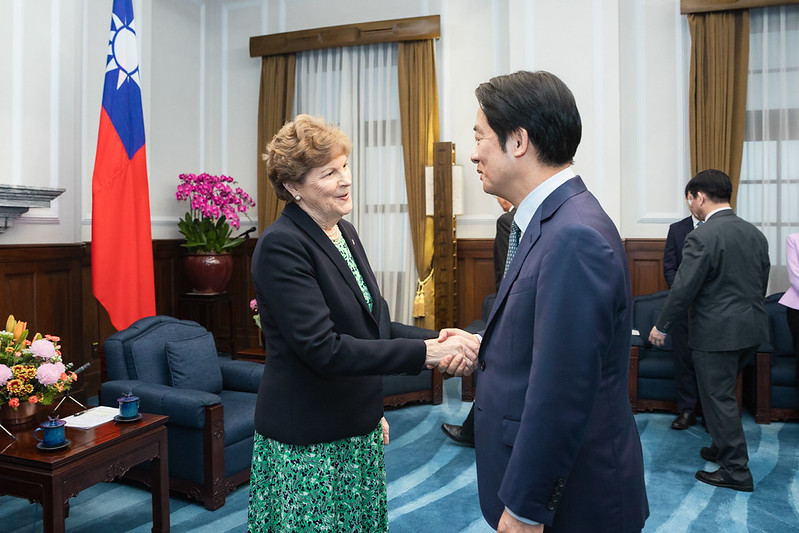
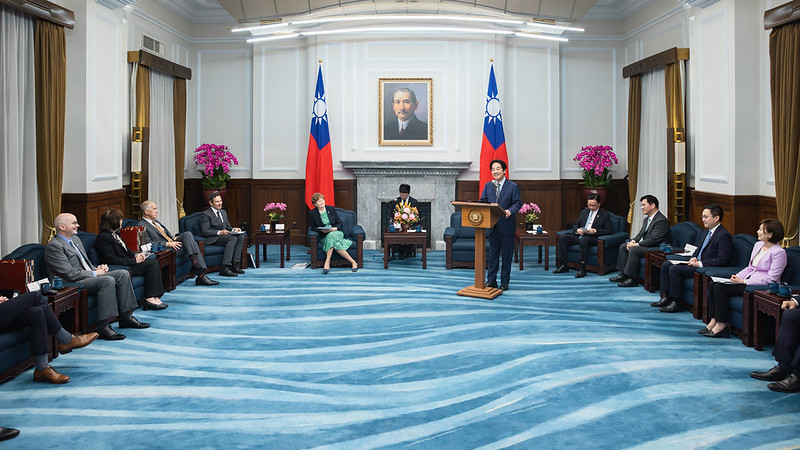
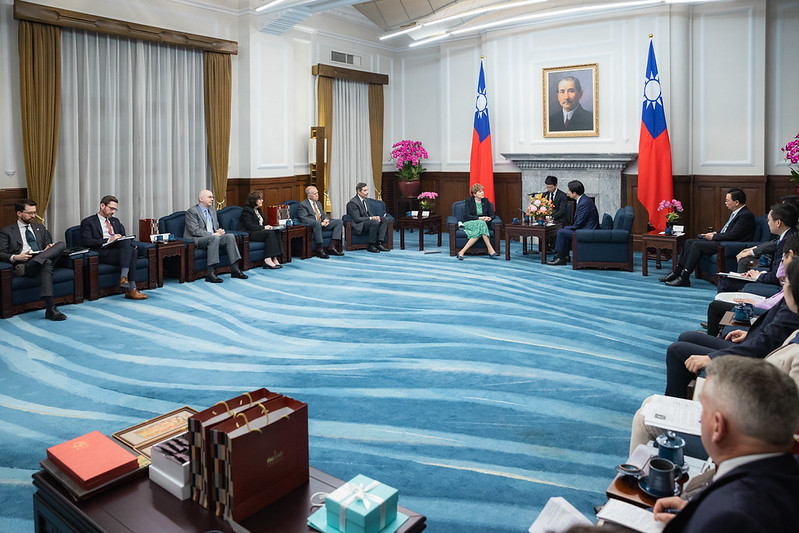
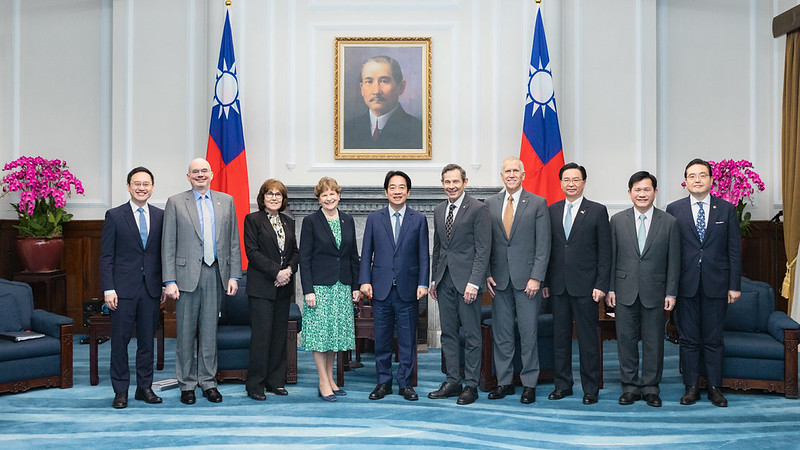
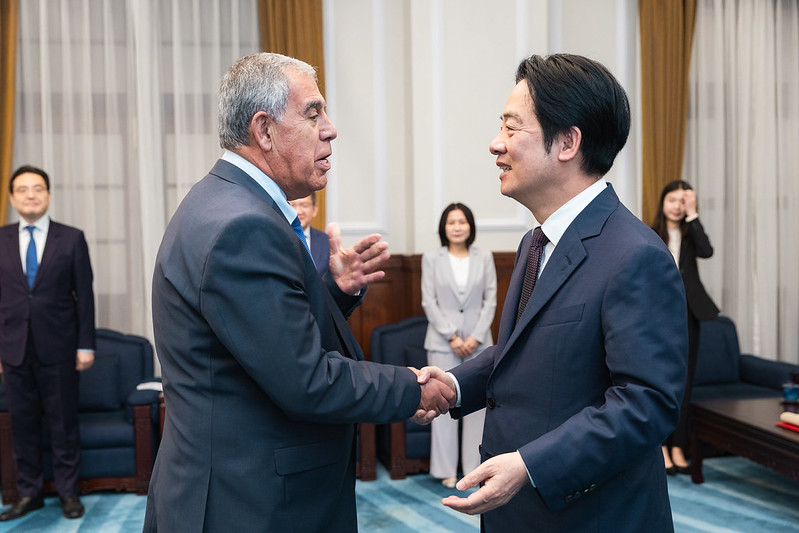
On the morning of March 30, President Lai Ching-te met with a bipartisan delegation from the United States Senate Committee on Foreign Relations led by Ranking Member Jeanne Shaheen of the Democratic Party and Senator John Curtis of the Republican Party. In remarks, President Lai thanked the four senators in the delegation for their visit to Taiwan at such a critical juncture, which demonstrates staunch support through concrete action and underscores the rock-solid friendship between Taiwan and the US. He also extended appreciation to members of the US Congress from both sides of the political aisle for their individual and collective actions in support of Taiwan's special defense budget, as well as for following the Legislative Yuan's deliberation process. The president indicated that the legislation for the special defense budget can withstand rigorous scrutiny and is backed by over 60 percent of Taiwan's public, but that the deliberation has suffered delays due to political factors. President Lai called on the Legislative Yuan to support the budget across party lines, signaling to the international community – especially the US government and Congress, who have long supported Taiwan – that Taiwan is firmly committed and determined to continue advancing its self-defense capabilities, and is undaunted by threats.
A translation of President Lai's remarks follows:
First, on behalf of all the people of Taiwan, I extend a sincere welcome to the four senators. This is the first visit to Taiwan for Senators Shaheen, Thom Tillis, and Jacky Rosen. Senator Curtis is visiting again after four years. I understand that he also served as a missionary to Taiwan in the 1980s. In 2022, I met with Senator Curtis by videoconference while transiting through the US on my way to Honduras. Later that same year, we also met in person at the Presidential Office during his visit to Taiwan. I am delighted to have this opportunity to engage in in-depth exchanges with all of our guests today, and I thank the US for its bipartisan support and profound friendship for Taiwan.
All of you have long focused on Indo-Pacific regional security and spared no effort in supporting Taiwan. You also continue to introduce and cosponsor numerous pieces of Taiwan-friendly legislation in Congress. All of you are truly steadfast friends of our nation. I would also like to thank those in the executive and legislative branches of the US government from across the political spectrum for continuing to conduct military sales to Taiwan and bolster bilateral cooperation in accordance with the Taiwan Relations Act and the Six Assurances, providing our nation with unwavering and long-term support.
The latest US National Security Strategy clearly indicates that Taiwan is a vital hub for peace and prosperity in the Indo-Pacific. Taiwan fully understands that peace can only come through strength. In face of the growing threat of authoritarianism, the core principles of our national security policy are to strengthen our self-defense capabilities, deepen security cooperation with the US and other friends and allies, and strive to maintain the status quo of peace and stability across the Taiwan Strait.
To demonstrate our resolve to defend ourselves, Taiwan is systematically increasing defense spending. This year's defense budget, as defined by NATO, will surpass 3 percent of GDP, and we expect to reach 5 percent of GDP by 2030. Last November, I announced that we will promote an eight-year, US$40 billion special defense budget. The primary objectives of this are to build the T-Dome, a sophisticated, multi-layered missile defense system; to integrate AI into our national defense; and to develop our indigenous defense industry and advance self-sufficiency in national defense.
To comprehensively enhance our asymmetric capabilities and achieve the goal of effective deterrence, this special budget was put forward following thorough evaluations and planning by the Ministry of National Defense, as well as consultations with the US regarding military procurement. Furthermore, to bolster defense self-sufficiency, build up technological capabilities in defense, and make the defense industry a new driving force for economic growth, the special budget includes investments in our indigenous defense industry and incorporates various collaborative projects between Taiwan and the US in the AI and defense sectors.
The special defense budget proposed by our government is a tightly integrated, comprehensive, and pivotal initiative to rapidly increase our defense capabilities and effectively counter potential threats. It also serves as a core program to accelerate transformation and upgrading of our domestic industries and economy. Only by ensuring that defense and the economy reinforce each other can we bolster our overall national strength. Therefore, I have repeatedly stressed that we must pass this special budget in full and without further delay.
I would like to point out that the legislation for the defense budget, which is currently under deliberation in the Legislative Yuan, can withstand rigorous scrutiny and is backed by over 60 percent of Taiwan's public. However, due to political factors, the legislative review has suffered delays. An example is our HIMARS purchase from the US. The letter of offer and acceptance was originally set to expire at the end of this month. We are grateful to the US government for agreeing to a slight extension, which assists Taiwan in continuing the procurement of this weapons system. However, should any delay occur, it would have a very serious impact on the urgent need to enhance our asymmetric capabilities.
I would like to extend special appreciation to the four senators visiting today, as well as other members of Congress from both sides of the political aisle, for their individual and collective actions in support of the special defense budget that Taiwan's government has proposed. I am also grateful for your concern and candid advice regarding the Legislative Yuan's deliberation on the associated legislation. Your deep understanding of and continued concern for Taiwan's security have demonstrated to the people of Taiwan the paramount importance of this treasured friendship.
I want to assure you and all of our friends in the US that my government's resolve and commitment to enhancing our self-defense capabilities, strengthening Taiwan-US cooperation, and ensuring national security remain unwavering. Your visit to Taiwan at this critical juncture is a powerful demonstration of support through concrete action, once again underscoring the rock-solid friendship between Taiwan and the US.
At this important moment, I also call on the Legislative Yuan to support the government's comprehensive special defense budget plan across party lines. This will signal to the international community – especially the US government and Congress, who have so steadfastly supported Taiwan – that we are firmly committed and determined to advance our self-defense capabilities and that we are undaunted by the threats we face. This would be the best possible manifestation of the saying that help comes to those who help themselves.
This year marks the 250th anniversary of the founding of the US, as well as the 30th anniversary of Taiwan's first direct presidential election. The Declaration of Independence not only asserted the profound significance of unalienable rights; it also proved that the course of history can be altered through the free will of the people. As Taiwan transitioned from authoritarianism to democracy, many risked their liberty and even their lives striving for freedom and human rights precisely because they held these same convictions. The free and prosperous societies that Taiwan and the US have today did not come about by accident; they are the hard-won results of the struggle of countless individuals. At this time of celebration, we must cherish more than ever our friendship, which transcends borders, and safeguard our shared values.
In closing, I would like to once again thank the US for its bipartisan support for Taiwan. I look forward to continuing to work hand in hand with all of our guests to deepen the Taiwan-US friendship. I wish everyone a smooth and successful visit.
Ranking Member Shaheen then delivered remarks, a transcript of which follows:
Thank you, Mr. President, for the opportunity to meet today. We are here, as you've heard, as part of a bipartisan delegation from the United States Senate, including members of the Senate Foreign Relations Committee, Finance Committee, [and] the Armed Services Committee. We're also pleased to be joined by the director of the [American Institute in Taiwan Taipei Office], Raymond Greene. Thank you for being here as well. We are here to underscore the strong and enduring commitment to Taiwan in the United States Congress. That commitment is grounded in the Taiwan Relations Act and decades of support for peace and stability in the Taiwan Strait. Maintaining that stability is a shared effort.
We recognize and welcome the steps Taiwan has taken to strengthen its own defense and resilience. They are critical to sustaining deterrence. Beyond our security cooperation, we also value the continued deepening of the economic and people-to-people ties that underpin our partnership. Our economic relationship in particular is a foundation for prosperity in both the United States and Taiwan. American families benefit from the lower costs because of our robust trade with Taiwan, and our workers benefit from the tens of billions of dollars in investment that we've seen across America from Taiwanese firms. Simply put, the stability and strength of this relationship is deeply in the interest of both of our peoples. I look forward to continuing to build on our partnership together. Thank you again for your leadership, and I appreciate the opportunity for this discussion.
Senator Curtis then delivered remarks, a transcript of which follows:
Taiwan, where I lived for three years as a young man, today sits at the crossroads of democracy, global technology, and international security. I've witnessed firsthand the progress Taiwan has made by embracing freedom, democracy, and capitalism. I often point out to my colleagues that when I lived here in 1979, Taiwan was under martial law. Last week it celebrated 30 years as a full, vibrant democracy.
When I lived here, the Taiwan GDP per capita was about US$3 thousand. Today, you are one of the wealthiest countries in the world. When I lived here, I remember knocking on doors as a young missionary and seeing Christmas lights made in each home. Each home would do one step of the process and then it would move to the next home. Today, the world runs on the most advanced Taiwanese semiconductors.
Taiwan's stability and security matter to America. US-Taiwan relations grow stronger every day. Taiwan has made real progress on strengthening its defense, whole-of-society preparedness, and energy security, especially over the last year. That seriousness is noticed in Washington, DC, and your efforts on the special defense budget are also noticed and supported with vast support. Congress plays a leading role in the Taiwan relations as it has since the Taiwan Relations Act passed just days before I arrived in Taiwan in 1979. This support is reinforced by our congressional visit here to be with you today.
On a personal note, President Lai, you are a transformational leader. It is not by accident that Taiwan has progressed so much since my last visit. As I watch your leadership, I'm impressed and feel that Taiwan is blessed to be under your leadership. Our bipartisan delegation is happy to be here, and we thank you for hosting us and look forward to a great couple of days here in Taiwan.