

News & activities
 News releases
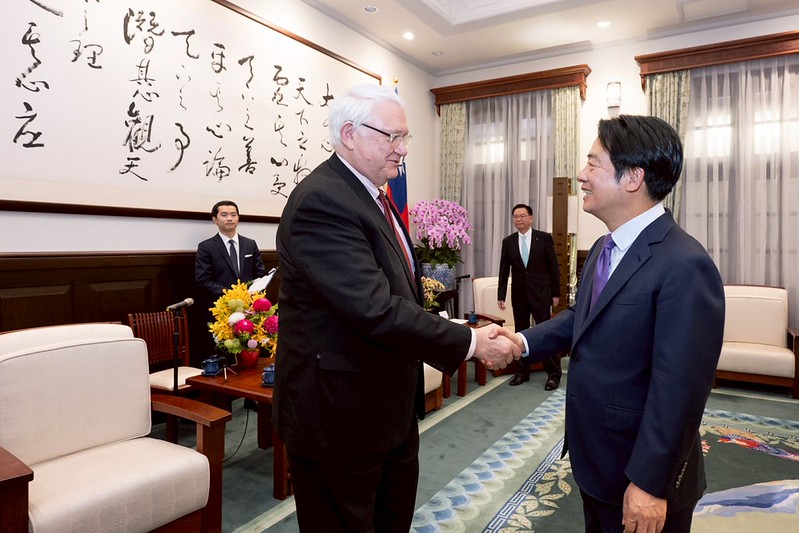
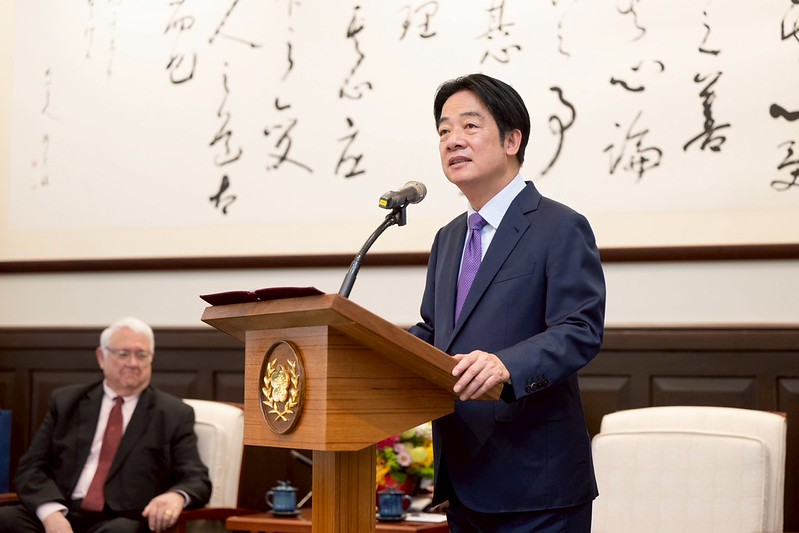
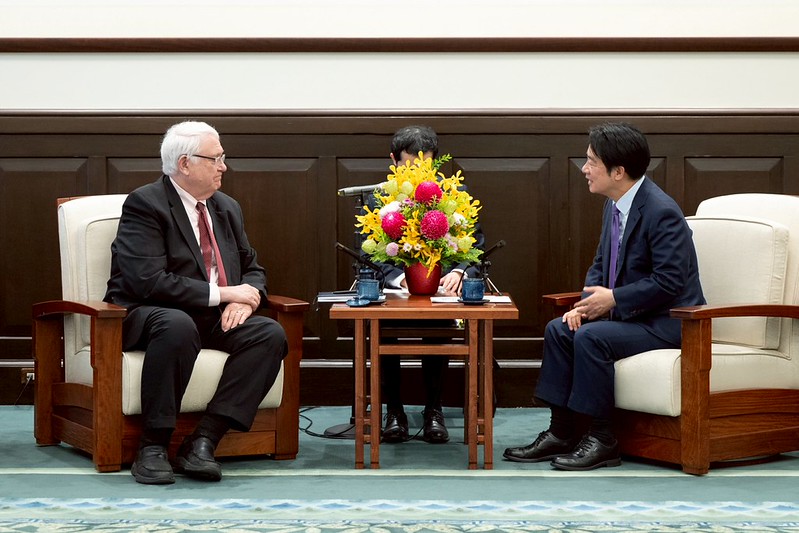
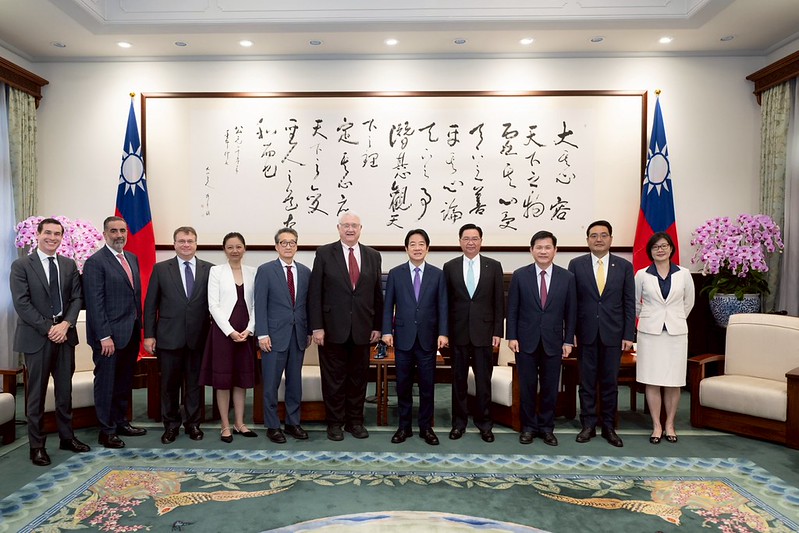
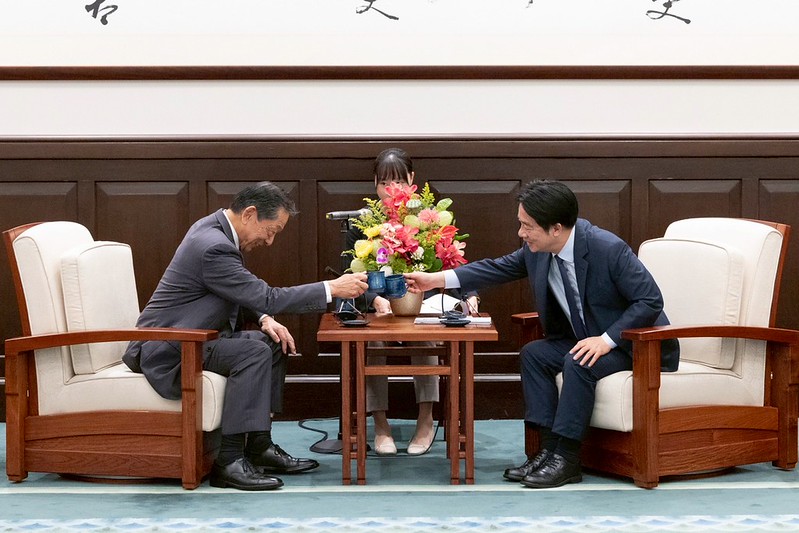
On the morning of April 21, President Lai Ching-te met with a delegation led by the Center for Strategic and International Studies (CSIS). In remarks, President Lai stated that Taiwan stands on democracy's frontline of defense and, in the face of authoritarian threats, will continue bolstering national defense capabilities and building up whole-of-society defense resilience to ensure peace through strength. The president also expressed gratitude to the US government for reiterating the importance of peace and stability across the Taiwan Strait, and expressed his hope that Taiwan and the US continue promoting exchanges and cooperation in many fields as they advance together on the path of freedom, democracy, and prosperity.
A translation of President Lai's remarks follows:
I warmly welcome our old friend CSIS President and CEO John Hamre and his delegation. I am also delighted to once again see our other CSIS friends, Geopolitics and Foreign Policy Department President Victor Cha and China Power Project Director Bonny Lin. On behalf of the people of Taiwan, I want to welcome you all and thank you for your friendship and long-time dedication to issues related to Taiwan.
Taiwan stands on democracy's frontline of defense. For the Taiwanese people, authoritarian threats are a part of daily life. The CSIS acts like a powerful spotlight. Through its illuminating wargame simulations, political analyses, and op-eds in international media outlets, it shows the world that cross-strait peace and stability are crucial to global prosperity. Thanks to your long-term attention, Taiwan has not been alone on the world stage. And it has made authoritarian regimes think twice before acting.
Whether in terms of Taiwan's national security, Indo-Pacific peace and stability, or democratic development around the globe, the people of Taiwan firmly believe in peace through strength, and that strength is the "moat" that protects peace. That is why our government is actively bolstering our national defense capabilities and building up our whole-of-society defense resilience. Taiwan's defense spending, as defined by NATO, has surpassed three percent of GDP this year, and we expect it to reach 5 percent of GDP by 2030. The government has also proposed an eight-year, US$40 billion special defense budget to accelerate acquisition and modernization of equipment. Taiwan is showing the world its determination to defend itself and safeguard peace and stability in the Indo-Pacific.
I would like to take this opportunity to thank the US government for providing support and abiding by its commitments to Taiwan in accordance with the Taiwan Relations Act and the Six Assurances, and for reiterating the importance of peace and stability across the Taiwan Strait during the US-Japan leaders' summit last month.
We look forward to Taiwan and the US continuing to promote exchanges and cooperation in many fields. This February, we concluded the sixth annual Taiwan-US Economic Prosperity Partnership Dialogue. The scope of issues covered was the most diverse and comprehensive to date; topics included strategic alignment on supply chain security, critical mineral supply chains, and other key areas of collaboration. We also signed the Joint Statement on the Pax Silica Declaration and Taiwan-US Economic Security Cooperation. This highlighted our mutual partnership and will help us jointly expand the scope of future ties.
This year marks the 30th anniversary of Taiwan's first direct presidential election and the 250th anniversary of US independence. On April 10, we celebrated the 47th anniversary of the Taiwan Relations Act. It is thanks to friends like those here with us today, who greatly value Taiwan, that bilateral relations have continued to deepen as we have advanced together on the path of freedom, democracy, and prosperity.
I understand that after returning to the US, President Hamre will hand over the baton of CEO to General Joseph Dunford, former chairman of the Joint Chiefs of Staff. We will never forget the staunch support extended to Taiwan by President Hamre and the CSIS team. Our door is always open to old friends. I invite President Hamre to visit us often. I also look forward to the opportunity to meet with General Dunford. In closing, I wish you a successful and rewarding trip.
President Hamre then delivered remarks. He mentioned that the first international trip he took after joining CSIS was to Taiwan and that Taiwan will be the last international trip he will take in office, adding that he is deeply grateful to see his old friends. The last time he brought a delegation was three years ago, he said, which happened to be at the same time then-Vice President Lai was campaigning for the presidential election. They had been scheduled to meet with the then-vice president for five minutes, he said, but they ended up having an hour-long exchange full of penetrating questions, which left a deep impression on the delegation.
During their visit three years ago, President Hamre said, there were always two questions asked in every meeting: The Taiwan side would ask, "Will the US come and defend us?" And the American side would ask, "Will Taiwan defend itself?" He emphasized that he is gratified to see how President Lai has led this forward progress, and that Taiwan has made a major commitment to defending itself, not only in buying important equipment, but also in strengthening civilian resilience, which President Hamre finds impressive.
President Hamre mentioned that Admiral Samuel Paparo, commander of the United States Indo-Pacific Command, is leaning forward in important ways because he knows that Taiwan is an important partner. That is why President Hamre said he feels very good about what President Lai has accomplished in these last two years. He admitted that there is still much to do, such as having the legislation in place to be able to pay for the military procurement, but he thinks that it will come. He explained that he is hopeful because he thinks the citizens of Taiwan know that it is part of their defense and that the stronger they prepare, the greater the deterrence.
In closing, President Hamre said that when he sees the flag of Taiwan, he sees it as the flag of freedom in Asia, and that is why there needs to be a commitment to Taiwan's security and prosperity. He said that he thinks of Taiwan as a second home and will always have it in his heart. He stated, speaking for his colleagues, that they are very committed to the success and the security of Taiwan.