

News & activities
 News releases
2016-11-10
President Tsai meets noted foreign participants in third Constitutional Court Simulation
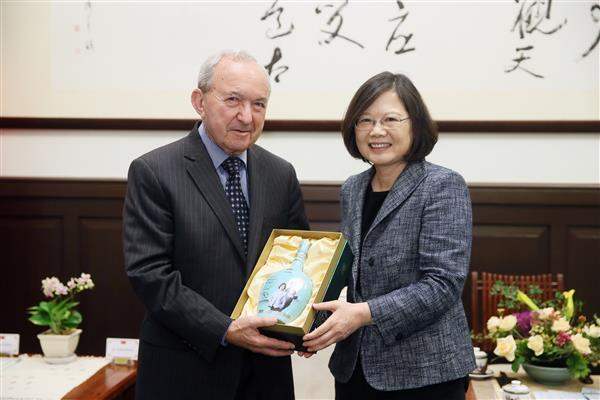
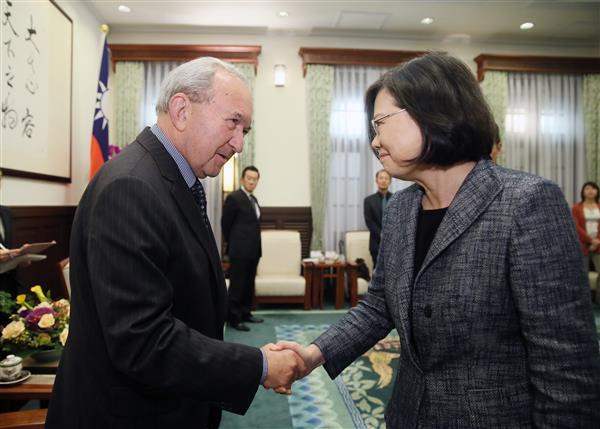
On the afternoon of November 10, President Tsai Ing-wen met with a group from abroad comprising a constitutional court justice and well known legal scholars who were in Taipei to take part in the third Constitutional Court Simulation. The president spoke to the visitors about her experiences with transitional justice, and expressed hope that exchanges of opinions will enable Taiwan's society to think about transitional justice with deeper knowledge and a better grasp of related concepts. Perhaps one day, she said, Taiwan will also have an opportunity to contribute its experience to the international community.
In remarks, President Tsai noted that the Constitutional Court Simulation was founded by Hsu Yu-hsiu (許玉秀), a former Justice of the Constitutional Court here in Taiwan, and this year's Simulation will feature an oral arguments procedure focusing on White Terror cases that occurred when Taiwan was under authoritarian rule. Everyone in the group now visiting Taiwan, she said, has made use of their legal expertise to promote transitional justice, and it is an honor to have them here.
President Tsai pointed out that many countries, after transitioning to democracy, have used the human rights protection principles established by their constitutions, or used court judgments and administrative measures, to examine the systems that wrought human rights abuses during periods of authoritarian rule. The legacies of authoritarian rule in Taiwan have never been properly dealt with, and collective tensions and stresses that built up over a long period of time restricted space for rational public discourse, resulting in a bottleneck choking the development of democratic politics in Taiwan. That is why we have to promote transitional justice.
President Tsai stated that the various countries which have sought transitional justice have all encountered different problems, and that the measures they've adopted have varied quite a bit. Taiwan's historical background and political structure are rather unique. Therefore, she said, in addition to learning from the experiences of other countries, Taiwan also has to consider its own particular circumstances in order to find the right way to pursue justice. For this reason, Taiwan has adopted a broad definition of transitional justice by including within its scope such objectives as restoration of the historical truth from the perspective of indigenous peoples and improvement of their social and economic rights.
President Tsai indicated that the government is currently organizing a commission consisting mostly of indigenous members in order to mend relations between indigenous peoples and the state. And in the next phase, the government will join forces with civil society to establish a Truth and Reconciliation Commission that will focus on transitional justice with regard to the period of authoritarian rule. As we work on this task, she said, the most important thing of all is to base our actions on a solid understanding of truth and facts.
The president also stressed that government agencies involved in this work are already preparing to sort through political case files from the period of authoritarian rule, with an eye to making good as soon as possible on the government's pledge to complete a fact-finding report.
Included in the delegation were former Justice Richard Goldstone of the Constitutional Court of South Africa and Mrs. Goldstone, Professor Susanne Karstedt from Griffith University in Australia, Professor Javier Couso from Universidad Diego Portales in Chile, Associate Professor Nelson Camilo Sanchez from Universidad Nacional de Colombia in Bogota, and Associate Professor Alexei Trochev from Nazarbayev University in Kazakhstan. The visitors were accompanied to the Presidential Office by Executive Secretary Yeh Hung-ling (葉虹靈) of the Taiwan Association for Truth and Reconciliation to meet President Tsai. Also present at the meeting was Deputy Secretary-General to the President Yao Jen-to (姚人多).
In remarks, President Tsai noted that the Constitutional Court Simulation was founded by Hsu Yu-hsiu (許玉秀), a former Justice of the Constitutional Court here in Taiwan, and this year's Simulation will feature an oral arguments procedure focusing on White Terror cases that occurred when Taiwan was under authoritarian rule. Everyone in the group now visiting Taiwan, she said, has made use of their legal expertise to promote transitional justice, and it is an honor to have them here.
President Tsai pointed out that many countries, after transitioning to democracy, have used the human rights protection principles established by their constitutions, or used court judgments and administrative measures, to examine the systems that wrought human rights abuses during periods of authoritarian rule. The legacies of authoritarian rule in Taiwan have never been properly dealt with, and collective tensions and stresses that built up over a long period of time restricted space for rational public discourse, resulting in a bottleneck choking the development of democratic politics in Taiwan. That is why we have to promote transitional justice.
President Tsai stated that the various countries which have sought transitional justice have all encountered different problems, and that the measures they've adopted have varied quite a bit. Taiwan's historical background and political structure are rather unique. Therefore, she said, in addition to learning from the experiences of other countries, Taiwan also has to consider its own particular circumstances in order to find the right way to pursue justice. For this reason, Taiwan has adopted a broad definition of transitional justice by including within its scope such objectives as restoration of the historical truth from the perspective of indigenous peoples and improvement of their social and economic rights.
President Tsai indicated that the government is currently organizing a commission consisting mostly of indigenous members in order to mend relations between indigenous peoples and the state. And in the next phase, the government will join forces with civil society to establish a Truth and Reconciliation Commission that will focus on transitional justice with regard to the period of authoritarian rule. As we work on this task, she said, the most important thing of all is to base our actions on a solid understanding of truth and facts.
The president also stressed that government agencies involved in this work are already preparing to sort through political case files from the period of authoritarian rule, with an eye to making good as soon as possible on the government's pledge to complete a fact-finding report.
Included in the delegation were former Justice Richard Goldstone of the Constitutional Court of South Africa and Mrs. Goldstone, Professor Susanne Karstedt from Griffith University in Australia, Professor Javier Couso from Universidad Diego Portales in Chile, Associate Professor Nelson Camilo Sanchez from Universidad Nacional de Colombia in Bogota, and Associate Professor Alexei Trochev from Nazarbayev University in Kazakhstan. The visitors were accompanied to the Presidential Office by Executive Secretary Yeh Hung-ling (葉虹靈) of the Taiwan Association for Truth and Reconciliation to meet President Tsai. Also present at the meeting was Deputy Secretary-General to the President Yao Jen-to (姚人多).
Related News
2026-02-28
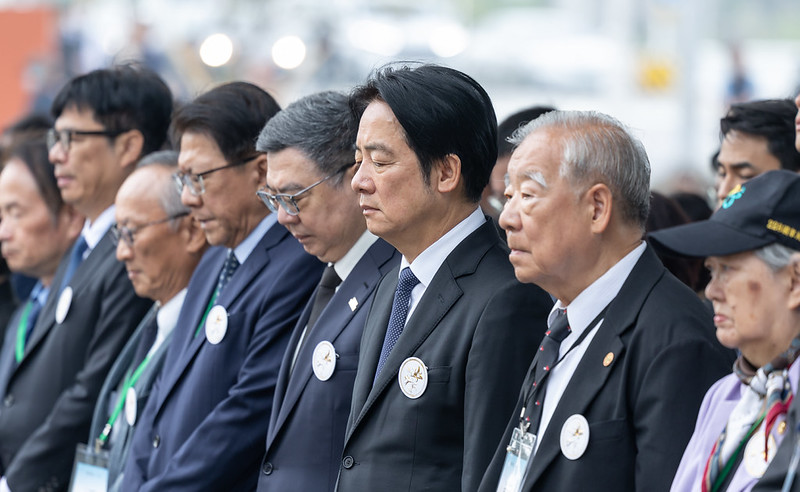
President Lai attends ceremony marking 79th anniversary of 228 Incident
On the morning of February 28, President Lai Ching-te attended the nation’s main memorial ceremony marking the 79th anniversary of the...
2025-02-28
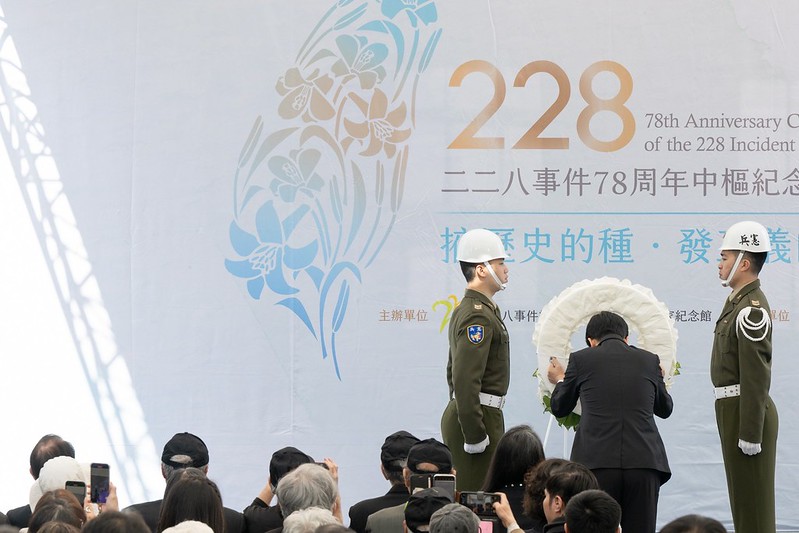
President Lai attends ceremony marking 78th anniversary of 228 Incident
On the morning of February 28, President Lai Ching-te attended the nation’s main memorial ceremony marking the 78th anniversary of the...
2024-05-10
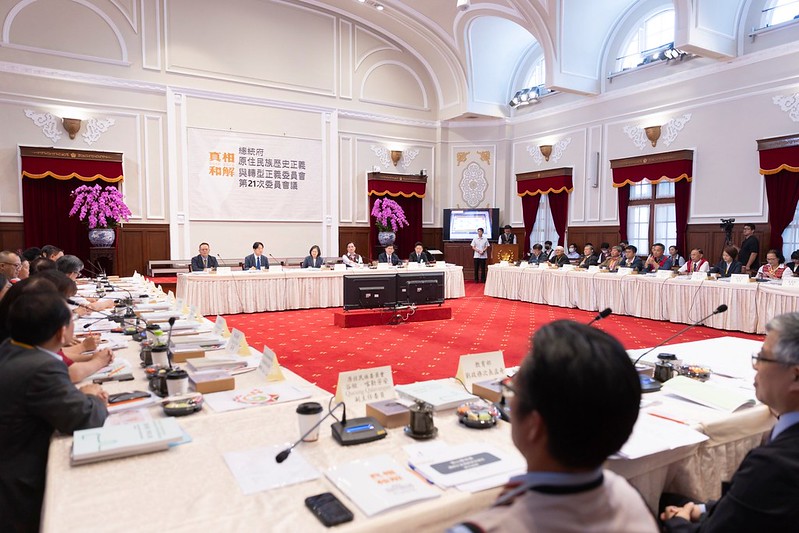
President Tsai presides over 21st meeting of Presidential Office Indigenous Historical Justice and Transitional Justice Committee
On the afternoon of May 10, President Tsai Ing-wen presided over the 21st meeting of the Presidential Office Indigenous Historical Justice a...
2024-02-28
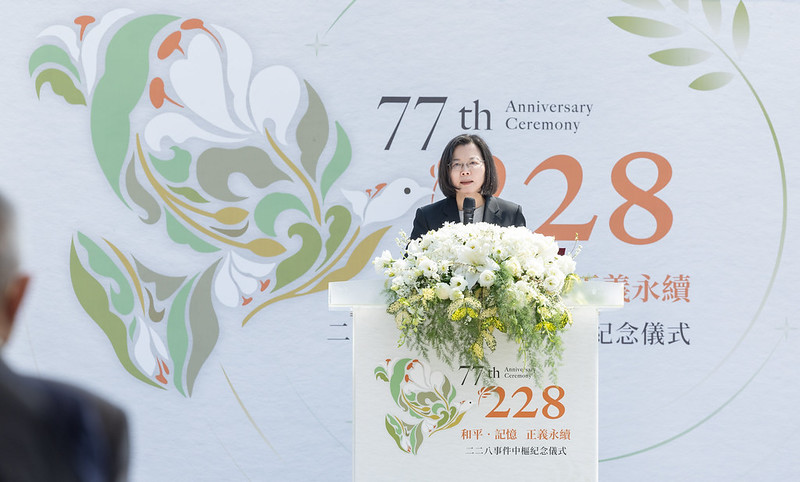
President Tsai attends ceremony marking 77th anniversary of 228 Incident
On the morning of February 28, in Chiayi County, President Tsai Ing-wen attended the nation's main memorial ceremony marking the 77th an...
2023-12-04
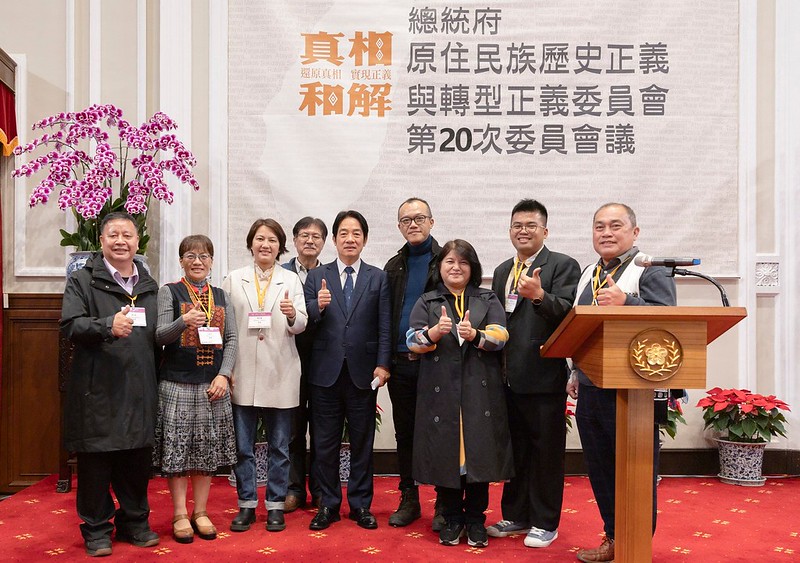
News release following 20th meeting of Presidential Office Indigenous Historical Justice and Transitional Justice Committee
On December 4, President Tsai Ing-wen convened and presided over the 20th meeting of the Presidential Office Indigenous Historical Justice a...