

News & activities
 News releases
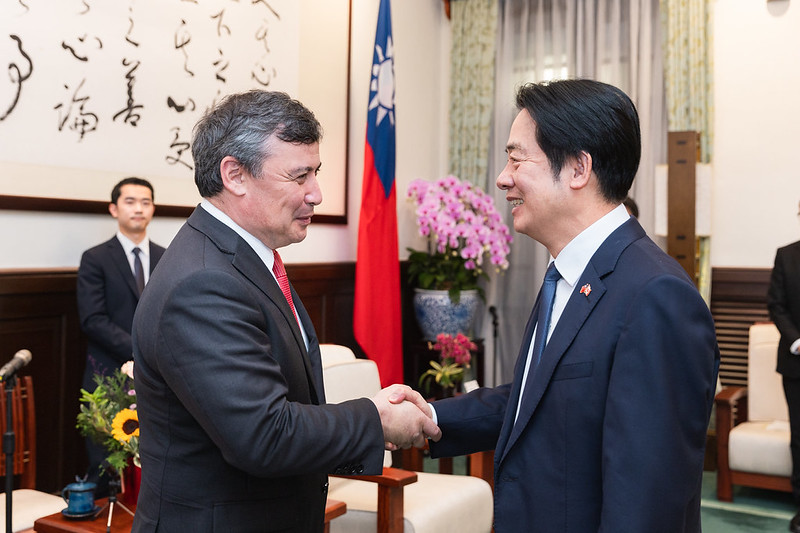
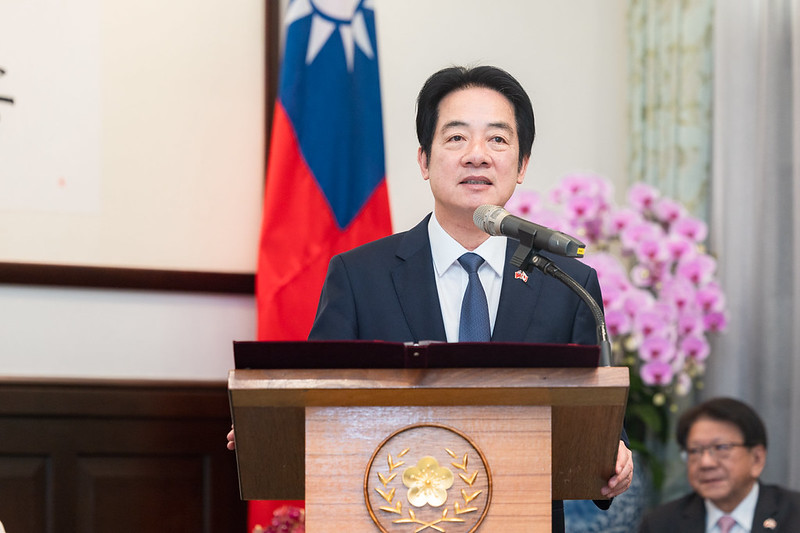
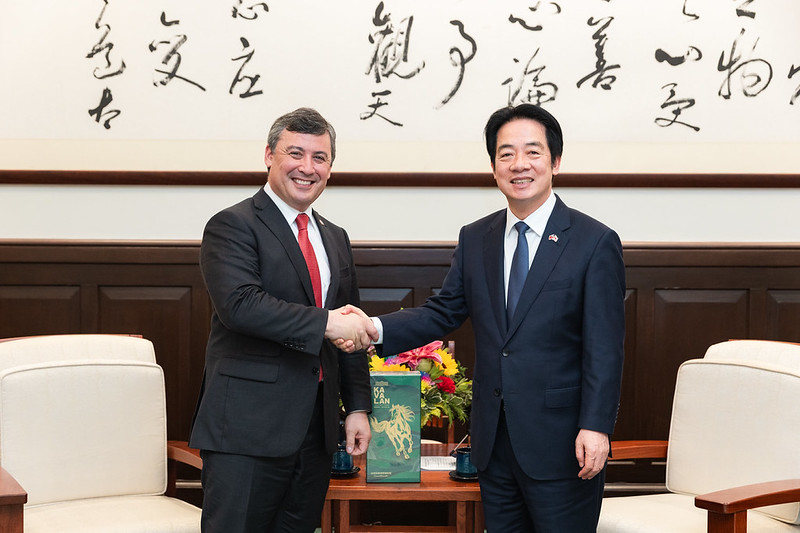
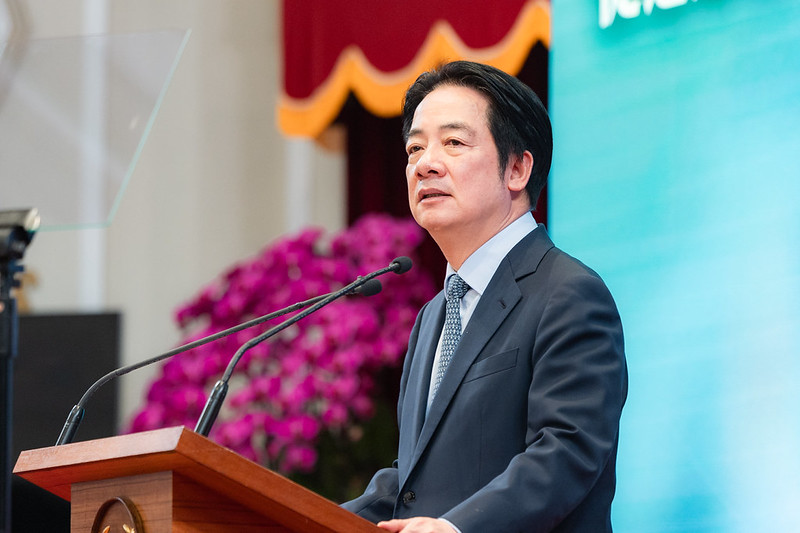
On the afternoon of May 20, President Lai Ching-te met with Michael Chong (莊文浩), conservative shadow minister for foreign affairs and vice-chair of the Standing Committee on Foreign Affairs and International Development of the House of Commons of Canada. In remarks, President Lai thanked Canada for backing Taiwan's international participation and expressed his utmost respect for Vice-Chair Chong's staunch defense of democracy and human rights. The president said that Taiwan and Canada have in recent years deepened cooperation in such areas as trade and the economy, technology, health, and security, and expressed hope of continuing to institutionalize bilateral cooperation. He also expressed hope that Taiwan can work with democratic partners to resist authoritarian expansion, so as to create a more democratic and prosperous future.
A translation of President Lai's remarks follows:
I would like to extend a very warm welcome to Vice-Chair Chong, who is visiting us once again. I remember vividly meeting with the vice chair three years ago, when he brought us a precious gift – the House of Commons report entitled Canada and Taiwan: A Strong Relationship in Turbulent Times. The report emphasizes that “the PRC has a ‘one China principle' that is markedly different from Canada's ‘one China policy'” and maintains that “the future of Taiwan must only be the decision of the people of Taiwan.”
Furthermore, Vice-Chair Chong introduced a motion in the House of Commons declaring China's actions against the Uyghurs to be genocide. For this, he was sanctioned by the Chinese government, thus becoming a victim of transnational repression and foreign interference. Over the years, he has been a staunch defender of democracy and human rights and remains undaunted by authoritarian coercion. For this, I would like to express my utmost respect. At the same time, thanks to Vice-Chair Chong's firm support, Taiwan-Canada relations have grown closer over the past three years. I would like to thank Canada's House of Commons for unanimously passing a motion two years ago backing Taiwan's international participation and rejecting China's distortion of United Nations General Assembly Resolution 2758.
Last year, Canadian lawmakers from both the ruling and opposition parties spoke in the House and stood by our delegation at an international press conference to emphasize that Taiwan's participation in the International Civil Aviation Organization (ICAO) would bring important contributions to global aviation safety.
Moreover, over the past three years, Taiwan and Canada have signed numerous agreements and MOUs to advance bilateral investment, technological innovation, and health cooperation, and to combat illegal maritime activities. These efforts have laid an even stronger foundation for bilateral exchanges and collaboration.
In particular, Taiwan and Canada have complementary economic and industrial structures. I hope that by combining Taiwan's semiconductor manufacturing and Canada's innovative AI technologies, we can continue to institutionalize bilateral economic, trade, and technological cooperation and create business opportunities that benefit the people of both countries. I also look forward to Canada's support for Taiwan's bid to join the Comprehensive and Progressive Agreement for Trans-Pacific Partnership (CPTPP), so that we can jointly contribute to regional prosperity and development.
In closing, I once again thank Vice-Chair Chong for taking time out of his busy schedule to visit Taiwan and for not bowing to external pressure. This demonstrates his staunch support and that Taiwan and Canada are showing the world that the democratic alliance is determined to work together to resist authoritarian expansion. Global democracy is stronger when we stand together. Let us work hand in hand to create a more democratic and prosperous future.
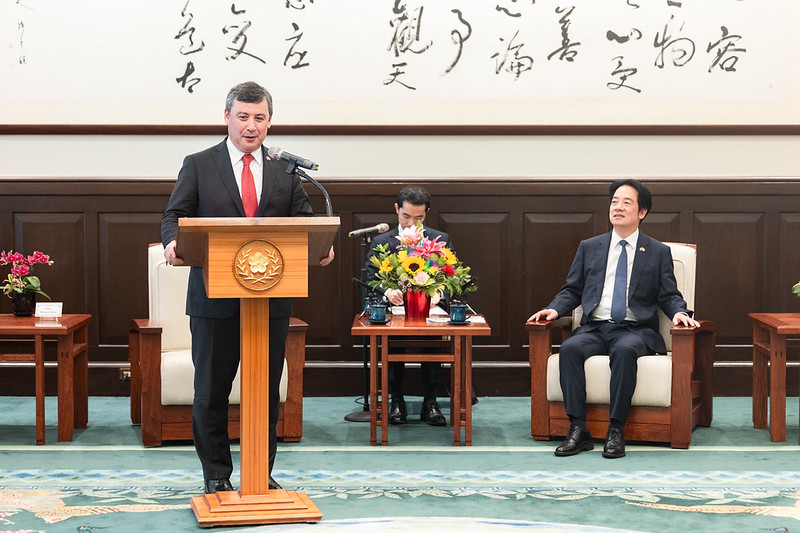
Vice-Chair Chong then delivered remarks, saying it is good to see President Lai after three years. He then congratulated President Lai on the second anniversary of his inauguration. He pointed out that there is a bipartisan consensus in Canada on support for Taiwan. He said that the purpose of his trip is twofold: First, to show solidarity with Taiwan, which, like Ukraine, is a democracy on the front lines of threats from authoritarian states; and second, to assert Canadian sovereignty. He elaborated on the second purpose, saying that China's ambassador to Canada recently said that Canadian MPs should no longer travel to Taiwan, which is a long-standing practice of MPs regardless of party. He emphasized that he is in Taipei to say that Canadian MPs do not take direction from a foreign government as to where they travel internationally.
Vice-Chair Chong stated that solidarity with Taiwan is also the long-standing position of Canada, and that any cross-strait discussions must be done by both parties in a voluntary, non-coercive way, through dialogue and discussion and not through threats and violence. He also stated that they support Taiwan's aspirations to participate in international fora and in international events taking place around the globe, which is why they have long called for Taiwan's participation in the World Health Assembly and why they also support Taiwan's participation in other international fora, such as those being hosted by ICAO.
Vice-Chair Chong stated that they are opposed to the weaponization of those organizations by Beijing. He noted that they in Canada have been subjected to misuse of organizations such as INTERPOL, which is why they always have to be on guard to ensure that these international fora and these international organizations are not used against free societies and democracies. He expressed their belief that in order to maintain peace and security in the Indo-Pacific region, Canada and Taiwan must continue the dialogue, the visits, and the deepening and broadening of ties, which is what the two sides have done in recent decades.
The delegation was accompanied to the Presidential Office by Canadian Trade Office in Taipei Executive Director Marie-Louise Hannan.