

News & activities
 News releases
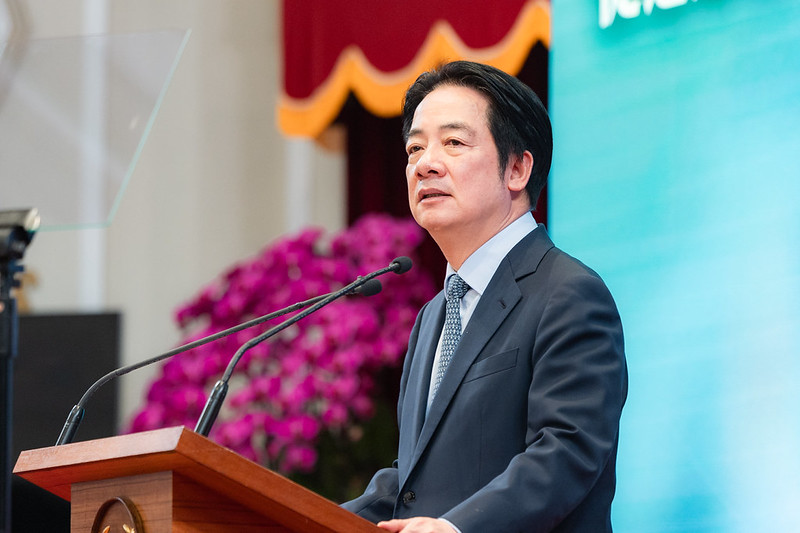
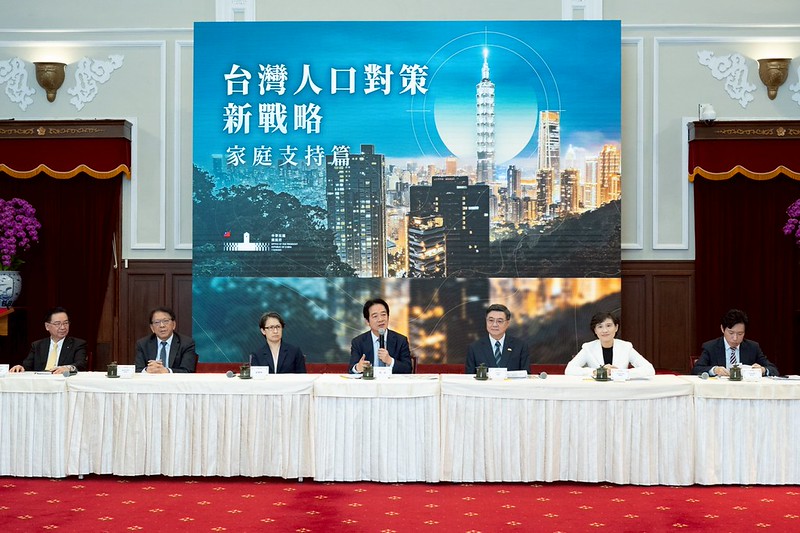
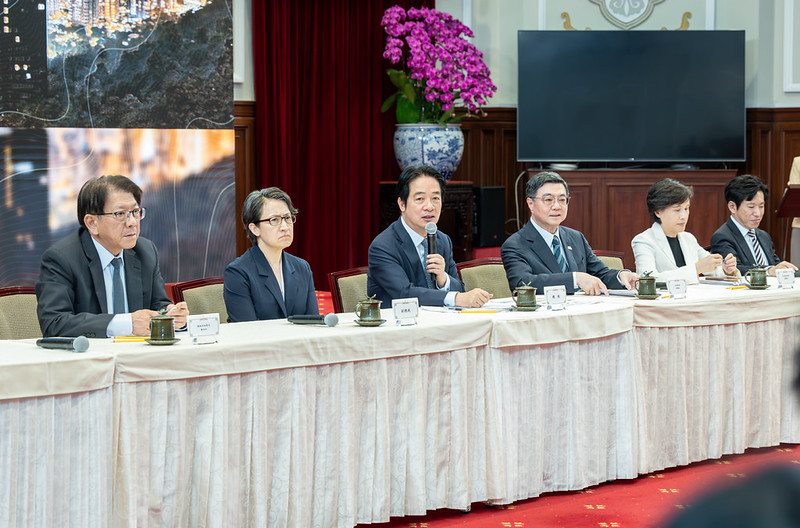
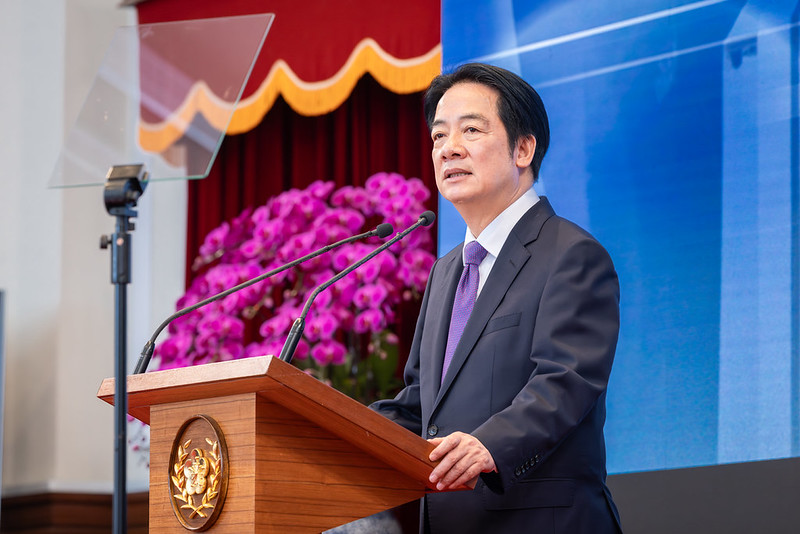
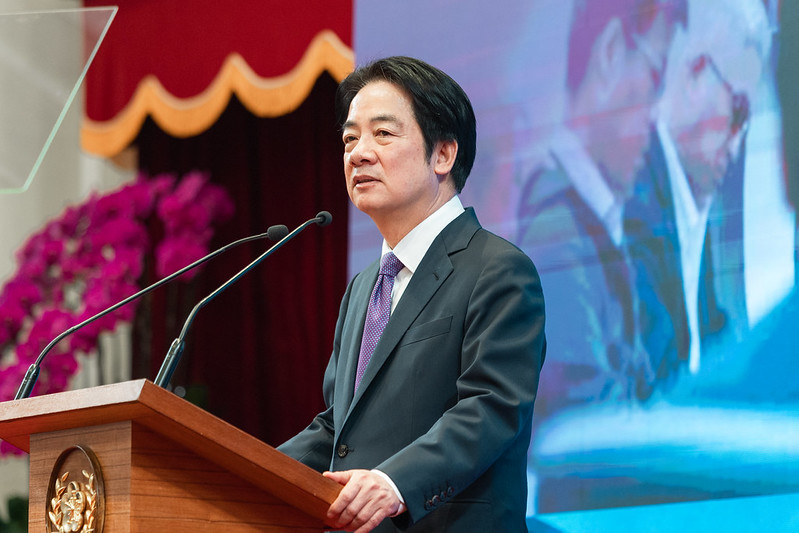
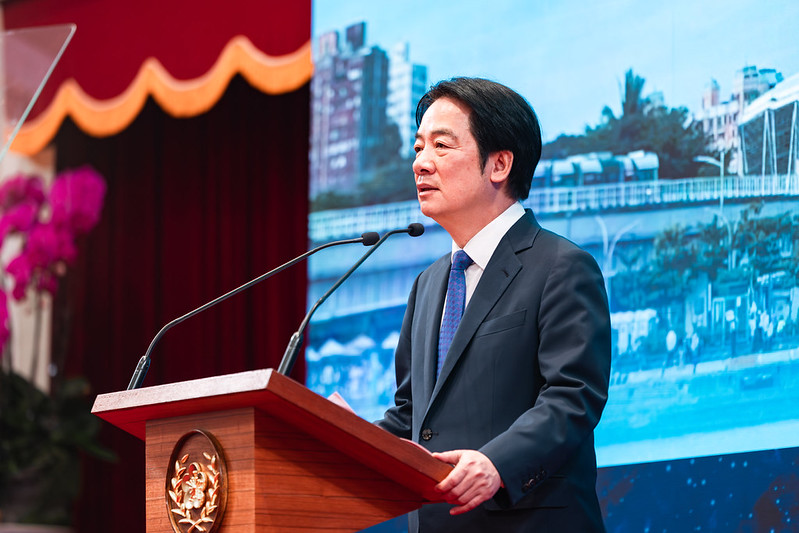
On the morning of May 27, President Lai Ching-te convened a high-level national security meeting on the new population strategy for Taiwan in the area of family support, following which he held a press conference. In remarks, President Lai introduced the strategy, saying that the government will promote 18 measures targeting three major stages of the family – childbirth, childrearing, and education. He added that these measures will derive from four key strategies – increased subsidies, lighter loads, greater flexibility, and expanded care – and address five priority areas – a secure start for families, strengthened childcare, investing more in education, family-friendly workplaces, and easing housing pressures. The strategy, he stated, will move Taiwan fully beyond subsidy-based childcare and toward a publicly supported childcare model. The president emphasized that the government, standing right by the side of families, will provide greater support to the younger and future generations of Taiwan.
President Lai stated that the government will ensure that the fruits of national economic growth substantially support every citizen, every family, and every generation. In that way, he added, all people can share in the dividends of a growing economy, and together lay a stronger foundation for Taiwan's long-term, sustainable development. The president expressed hope that the ruling and opposition parties will come together in unity to support this version proposed by the administration, which balances family support with fiscal responsibility, and build a resilient, sustainable Taiwan together.
A translation of President Lai's remarks follows:
Earlier today, I convened a high-level national security meeting. Having heard a report from the Executive Yuan, I will now unveil our new population strategy for Taiwan, specifically in the area of family support.
This action plan comprises 18 measures targeting three major stages of the family – childbirth, childrearing, and education. These measures will derive from four key strategies – increased subsidies, lighter loads, greater flexibility, and expanded care – and address five priority areas – a secure start for families, strengthened childcare, investing more in education, family-friendly workplaces, and easing housing pressures.
The Executive Yuan team just provided a summary of the policy content. Now, I will explain to our citizens how, by taking this key step, Taiwan is moving toward a publicly supported childcare model.
For many years now, raising children was seen as a responsibility of the individual and the family, the burden of which fell more heavily on one gender in particular . Today, we want to lift that burden from the shoulders of the individual and transfer it to a support system, distributing it across the nation, the society, and business.
Our goal is to make the care of children more equitable and mutually supportive between the parents, and to facilitate a better balance between employees and employers. Only when workplaces are more family friendly will parents no longer need to choose between work and family. This, then, will allow people to marry and build their families while realizing their personal goals – the best of both worlds.
We want to provide greater support to the younger and future generations of Taiwan at all stages and across all aspects of raising a family, whether it is starting a family, having a baby, raising children , or navigating the workplace. People who want to get married, have children, and watch their children grow up no longer have to do it all alone – the government will be there, right by your side.
First, to ensure a secure start for families, we have proposed four policies to provide substantial economic and care support.
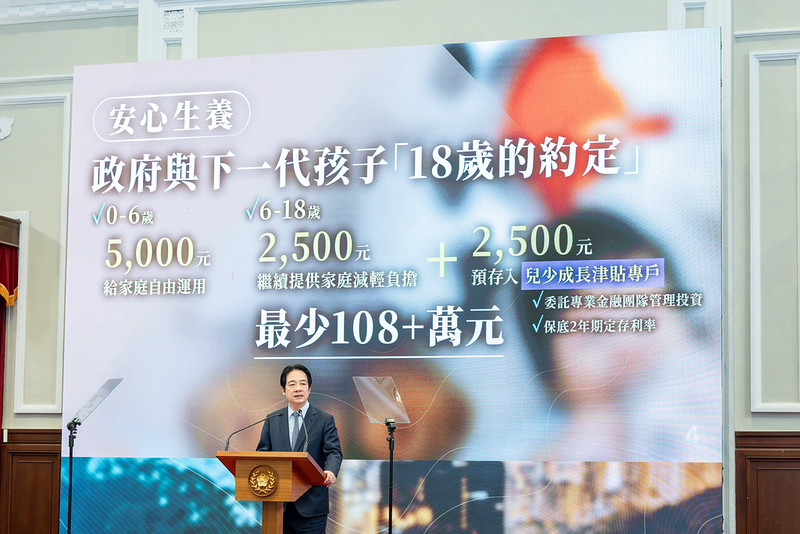
First is the government's pledge to the next generation, the “age-18 pledge.” We will comprehensively roll out an allowance, provided from birth through age 18, of NT$5,000 per person per month.
For children ages 0–6, the NT$5,000 allowance is given directly to the family to use at its own discretion, so that the government will be right beside you as you raise your child.
Once the child reaches age 6, and up to age 18, the allowance will be divided into two halves, one half continuing to go directly to the family to lighten the load of childrearing, the other being deposited by the government into a children's growth investment account.
The funds deposited into the account will be invested and managed on behalf of the beneficiary by a professional financial team commissioned by the government, and a minimum return will be guaranteed at the two-year fixed deposit rate. The funds in the account can be withdrawn when your child reaches age 18 – a coming-of-age gift from the government.
The fruits of economic growth should not only be shared among all citizens, but across generations. Investing in one child is investing in a whole family's future.
We hope that the nation's support can go beyond the moment a child is born and extend into the growth of that child into adulthood. Once the child comes of age, the funds are theirs to use – for higher education, professional training, finding employment, and entrepreneurship, supporting all the major stages of the next part of life.
At the same time, we must provide even greater support to disadvantaged children. In addition to allowances from birth to adulthood , we will continue to promote savings accounts for the educational development of children and youth from disadvantaged households . Parents or guardians can choose to deposit NT$500, NT$1,000, or NT$1,250 each month, and the government will match that amount on a one-to-one basis. Simply put, for every sum a parent saves, the government will contribute an equal amount, doubling the total savings. This can continue until the child turns 18, providing disadvantaged youth with an extra boost as they enter adulthood.
For families coping with infertility, we will expand and increase subsidies for assisted reproduction to provide continued support. Furthermore, as soon as a child is born, the government will provide a maternity insurance benefit. Regardless of the type of insurance, every birth will be topped up to NT$100,000. This is the government's way of showing our care and helping mothers during the postpartum recovery period.
Second, regarding strengthened childcare, we have proposed three measures to build a comprehensive support network that spans from postpartum care to affordable childcare services.
Our newly introduced allowances for ages 0–18 will be implemented in tandem with version 2.0 of our national childcare policy for ages 0–6 to provide overlapping benefits.
In other words, the NT$5,000 monthly allowances for ages 0–18 will be provided in addition to the existing childcare allowances for ages 0–6 . These allowances stand at NT$5,000 for the first child, NT$6,000 for the second, and NT$7,000 for the third. Similarly, these allowances can be combined with subsidies for publicly funded and quasi-public daycares . We will also continue to implement our policy capping monthly fees at NT$1,000 for public preschools, NT$2,000 for non-profit preschools, and NT$3,000 for quasi-public preschools.
The central and local governments will also continue to work hand in hand to expand the capacity of affordable childcare services, ensuring that finding childcare is no longer a matter of families searching for resources on their own, relying on luck, or waiting for an open slot. Currently, the public sector across both the central and local levels has established a total of 206 childcare facilities. Moving forward, we will further refine regulations and review available space to promote workplace childcare facilities shared across agencies, thereby expanding childcare services across government organizations and state-owned enterprises.
We also look forward to partnering with enterprises to help support the children of their employees. To encourage businesses to provide childcare services, we have already introduced various corporate childcare support programs this year. These include offering up to NT$5 million in subsidies for companies to build new childcare facilities, as well as incorporating family-friendly workplace support measures into the ESG evaluation metrics for publicly listed companies.
In addition, we are further expanding support for businesses by offering a 200 percent tax deduction on childcare expenses. We hope to foster a more supportive workplace culture, ensuring that the dream of balancing work and childcare under one roof is no longer out of reach for parents.
Third, regarding investing more in education, we will implement four programs and leverage our nation's strength to invest in the next generation, ensuring that every child has a fair opportunity to thrive.
From compulsory education through higher education, the government will help ease the financial burden on parents and guardians. We will continue to implement tuition-free education for our 12-year basic education system, subsidize tuition and fees for private college and university students, and provide campus housing allowances for higher education students, giving them a strong foundation for their academic journey.
We also hope to see students enter society with fewer burdens weighing them down. For young people still shouldering student loans, we will launch a new relief initiative: a one percentage point interest rate cut, and a one-year loan extension. Through this initiative, we aim to help young people step gracefully into the next stage of their lives and more boldly pursue their dreams.
Fourth is family-friendly workplaces. An advanced country must never force anyone, especially women, to choose between career and family. This is why we have proposed five key measures to promote a family-friendly culture at workplaces.
After the birth of a child, the biggest dilemma families often face is how to balance work and childcare. To give parents more breathing room, we will boost benefits across the board by extending marriage leave, maternity leave, and paternity leave.
Notably, maternity leave will be increased from the current eight weeks to 12 weeks. We fully understand that many working mothers are concerned that being away from their positions for an extended period could impact their career development. Therefore, these four additional weeks will be fully flexible. Based on their recovery progress and personal preferences, mothers can freely choose whether to return to work early.
Additionally, we will extend the eligibility age for childcare support from 3 to 6 years old, upgrading infant care leave into a broader childcare leave. We are also doubling the maximum limit for flexible single-day leave, increasing it from 30 to 60 days.
We recognize that what parents need most on the journey of raising kids is not superpowers, but strong teamwork. The responsibility of caring for children should never be left up to a mother alone. To support fathers and ensure that both parents are able to share the responsibilities of childcare, the government has also launched the 6+3 parental leave allowance program.
As long as both parents take a full six months of unpaid parental leave, each will be eligible to receive an additional three months of allowances. We are also raising the cap on the employment insurance salary brackets, allowing for a maximum monthly payout of over NT$40,000. We hope this enables more fathers to take leave with peace of mind, so that they can stand as their partners' strongest allies.
As children grow up, managing drop-offs, pick-ups, and daily care, especially for those 12 and under, poses a challenge. To address this, the government is introducing a flexible reduced hours system. Under this system, parents with childcare needs can choose to leave work an hour early, or utilize flexible working hours to pick up and drop off their children without altering their total hours.
Most importantly, the government will fully subsidize any wages lost due to reduced working hours. We want everyone to have peace of mind while being there for their children; the nation will cover the salary shortfall.
Of course, we I completely understand the challenges businesses face. When employees take leave, companies still need to maintain operations. Therefore, the government will provide enterprises with interim cover allowances alongside subsidies to offset the recruitment and training costs of substitute personnel. We aim to forge a win-win for employees and employers so that businesses no longer view an employee's decision to have children as an operational burden, but rather as an opportunity to stand as steadfast pillars of support for working families.
We want to ensure that no one has to put their career on hold in order to welcome and raise a child. When both parents are able to stand by their children, family relationships grow more stable; only when our institutions support parents in sharing these responsibilities can Taiwan truly march toward a future of gender equality and family-friendly workplaces.
Fifth, we have proposed two measures to ease housing pressures so that people can focus on building their careers and growing their families.
The government will introduce a wide range of tax relief measures covering marriage, childbearing, and housing, while substantially expanding the supply of housing units for newlyweds and parents of young children. Forty percent of social housing will be set aside for that purpose, and private developers will be encouraged to provide more housing through floor area incentives.
Families with preschool-age children are eligible for lease terms of up to 12 years. In addition, starting this year, rental subsidies for families of newlyweds married within the past two years will be increased to 1.5 times the standard rate, with an additional 0.5 times per child born. These measures will help ease housing pressures for people hoping to marry and have children.
We will also expand the tax reductions for families with children. The Special Deduction for Pre-school Children, currently in force, will continue as before: the deducted amount for the first child is NT$150,000 per year, and the amount for the second child and every child thereafter is NT$225,000 per child per year. As an additional measure, we are adding tax exemptions for underage children. For each dependent underage child, there will be an additional exemption of NT$151,500.
There will also be an exemption of NT$151,500 for families that have a dependent elderly parent aged 70 or older. The Special Deduction for Pre-school Children, additional tax exemptions for underage children, and exemptions for dependent seniors aged 70 or older can be stacked. We will do all we can to help the “sandwich generation” look after children and elderly parents by lightening their load and giving them even greater support.
To make sure each of these measures is implemented effectively, I have asked the Executive Yuan to fast-track the legal framework for each measure entailing legislative amendments and to enhance communication with the Legislative Yuan. I also hope that both the ruling and opposition parties will support this version proposed by the administration, which balances family support with fiscal responsibility.
I have also asked the Executive Yuan to form a new population strategy implementation task force, to be convened by Premier Cho, which will regularly review the progress of all policy measures.
Lastly, I want to emphasize that the real meaning of the new population strategy in the area of family support is to move Taiwan fully beyond subsidy-based childcare and toward a publicly supported childcare model.
The government will ensure that the fruits of national economic growth substantially support every citizen, every family, and every generation. In that way, all people can share in the dividends of a growing economy, and together lay a stronger foundation for Taiwan's long-term, sustainable development.
My fellow citizens, I look forward to a Taiwan that, while possessing technological and economic strengths, has a comprehensive and secure family support system. In that system, every child is accompanied by steady investment from the state from birth to adulthood, and the decision to welcome a new life is no longer made under the shadow of anxiety, but grounded in confidence and hope for the future.
When the state is willing to bear the responsibility, young people are more empowered to pursue their dreams. When society is willing to offer its support, Taiwan's future can flourish without end. Let us stand united and build a resilient, sustainable Taiwan together. Thank you.