To the central content area
:::
:::

News & activities

News releases

2019-10-10
President Tsai delivers 2019 National Day Address

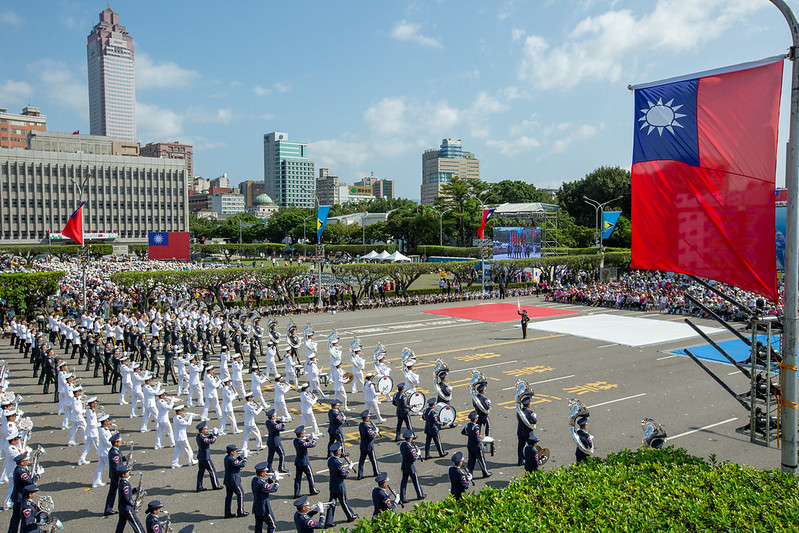
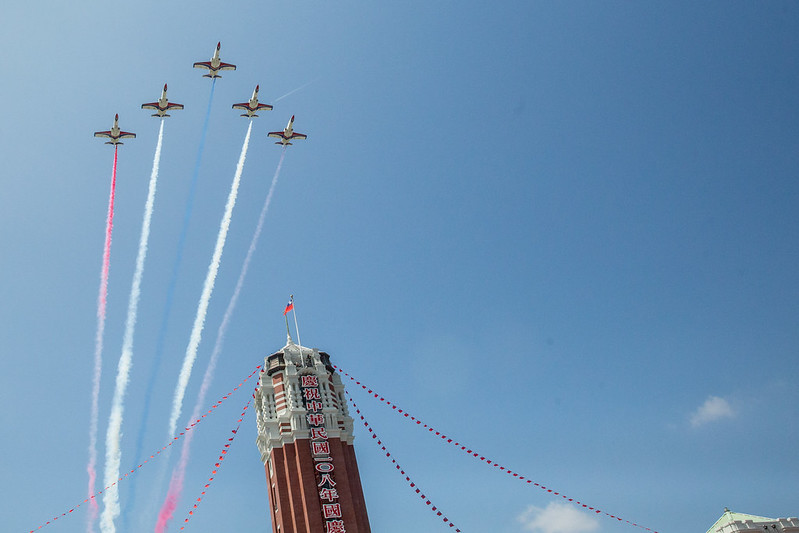
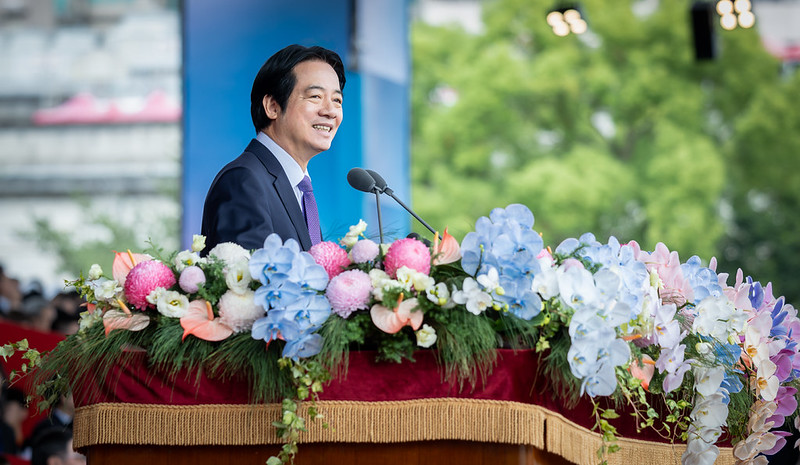
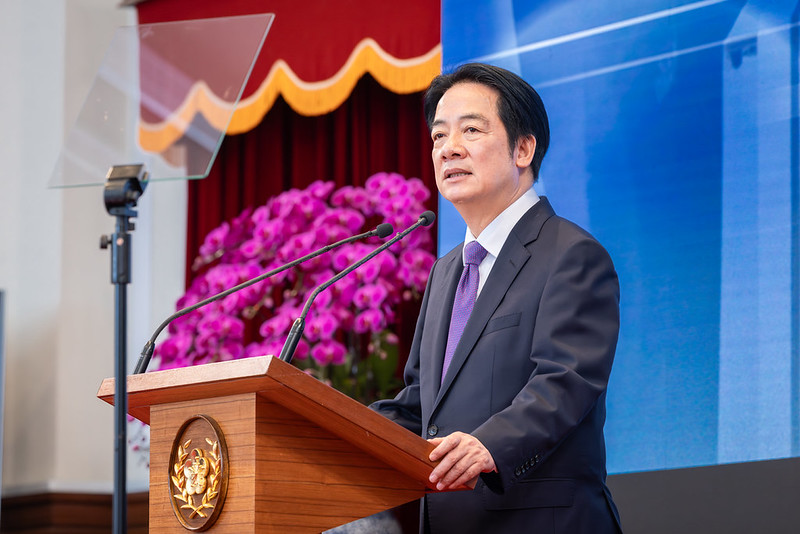
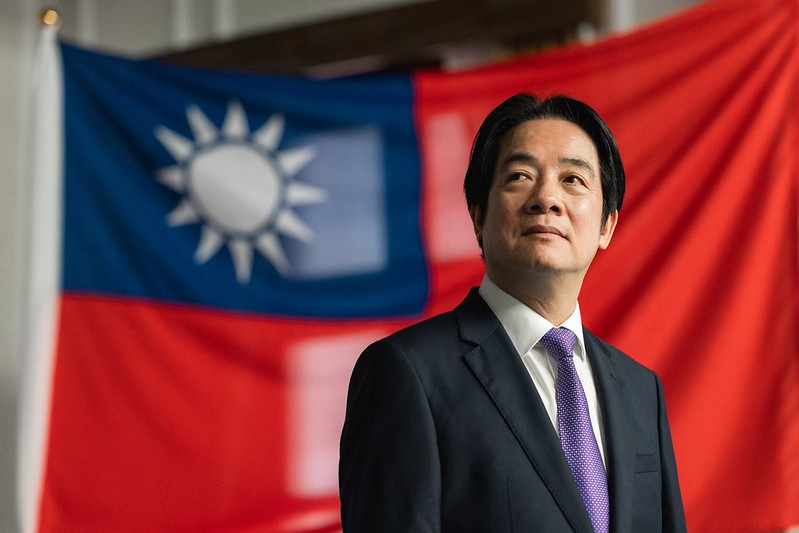
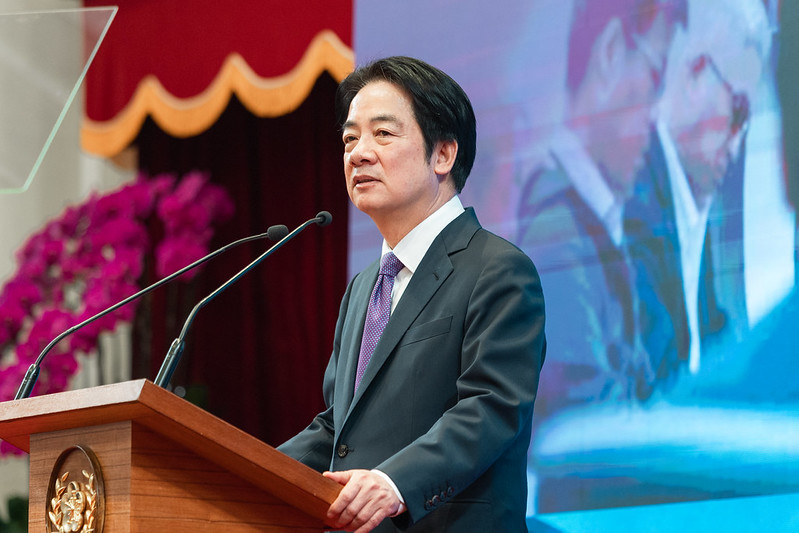
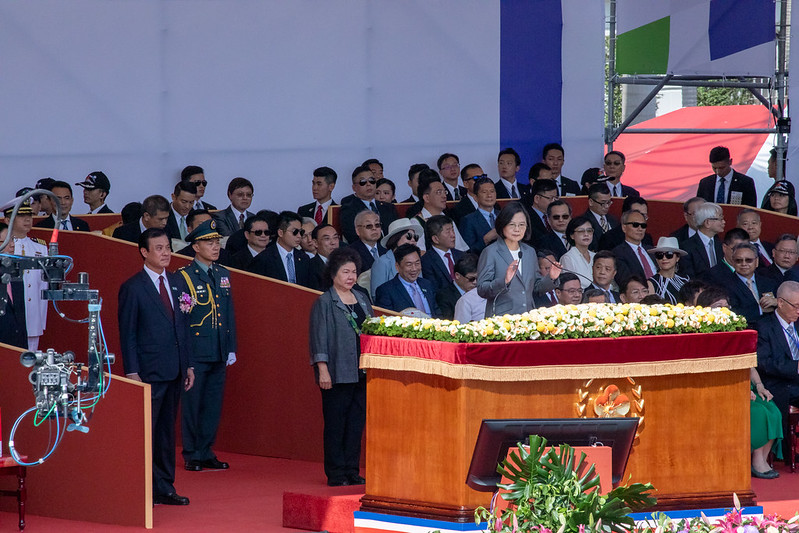
President Tsai Ing-wen on the morning of October 10 attended the ROC's 108th Double Tenth National Day Celebration in the plaza fronting the Presidential Office Building, and delivered an address entitled "Nation of Resilience, Forward into the World."

A translation of the president's address follows:

National Day Celebration Chairperson Su Jia-chyuan, distinguished guests, and my fellow citizens watching via TV or the Internet:

Good morning.

Today is the 108th National Day of the Republic of China. I would like to thank all our friends from around the world who have come to commemorate this day with us.

Today belongs to the 23 million people who call Taiwan home. I would also like to thank former President Ma Ying-jeou, former Vice President Annette Lu, former Vice President Wu Den-yih, and Chairs of Political Parties for joining us to celebrate National Day.

Last year, on National Day, I told everyone that Taiwan was in the midst of change. Changes in the global trade situation and the international political scene led to a future rife with challenges. I said that we must seek stability, adaptability, and progress, and build a stronger Taiwan.

Another year has quickly passed. The world is still changing fast, and the changes are even more dramatic. The US-China trade dispute continues. And not far from Taiwan, Hong Kong is on the verge of chaos due to the failure of "one country, two systems."

Nevertheless, China is still threatening to impose its "one country, two systems model for Taiwan." Their diplomatic offensives and military coercion pose a serious challenge to regional stability and peace.

My fellow citizens, when freedom and democracy are challenged, and when the Republic of China's existence and development are threatened, we must stand up and defend ourselves. The overwhelming consensus among Taiwan's 23 million people is our rejection of "one country, two systems," regardless of party affiliation or political position.

The Republic of China has stood tall on Taiwan for over 70 years. But if we were to accept "one country, two systems," there would no longer be room for the Republic of China's existence. As President, standing up to protect national sovereignty is not a provocation—it is my fundamental responsibility.

For 70 years, we have faced many serious challenges together. Rather than defeating us, these challenges have made us stronger and more determined.

We endured the August 23 Artillery War of 1958 in Kinmen, and the Taiwan Strait Crisis of 1996 together. Time and again, the people of Taiwan have faced diplomatic offensives and military coercion without ever backing down. Together, we have defended the land on which we stand and our national sovereignty.

We endured the panic following our withdrawal from the United Nations and repeatedly withstood the pressure of severed diplomatic ties. Yet the determination of the Taiwanese people to embrace the world has never wavered.

The oil crisis of the 1970s, the Asian financial crisis of 1997, the 2000 dot-com bubble, and the financial crisis of a decade ago—there are always economic challenges. Yet time and time again, Taiwanese businesspeople, willing to go out into the world armed with only a briefcase, and hardworking and innovative Taiwanese people, have turned crises into opportunities and kept our economy moving forward. 

We endured the August 7 Flood of 1959, the 921 Earthquake of 1999, the SARS outbreak of 2003, and Typhoon Morakot in 2009. The hardships of natural disasters and disease outbreaks have never defeated the Taiwanese people's will to survive. When our homeland is devastated, we rebuild it. When our land is damaged, we restore it. We wipe away our tears and stand up once again, because tomorrow is a new day, full of hope.

These shared memories exemplify the resilience of Taiwan's people, a resilience that led us to become one of the Four Asian Tigers, a resilience that led us on the arduous path of democratization to become an important global model of democracy.

After walking this path together, we cannot be divided amongst ourselves, regardless of party affiliation. No one has a patent on the Republic of China, and no one can monopolize Taiwan. The words "Republic of China (Taiwan)" are not the exclusive property of any one political party, and that is the overwhelming consensus of Taiwan society.

Looking to the future, there are many challenges awaiting us that we must overcome.

We are witnessing China's rise and expansion, as they challenge free, democratic values and the global order through a combination of authoritarianism, nationalism, and economic might. As the strategic forefront of the Indo-Pacific region, Taiwan has become the first line of defense for democratic values.

China is encroaching on us through their sharp power, but as a crucial member of the region, we know that Taiwan must fulfill its responsibilities to the international community. We will not act provocatively or rashly; rather, we will work with like-minded countries to ensure that the peaceful and stable cross-strait status quo is not unilaterally altered.

In order to accomplish this, we must remain united. Though disputes have risen in our society due to differences among ethnicities, generations, faiths, and political views, I am certain that we can find the greatest common denominator among us through dialogue. Experience tells us that conflict, dialogue, and united progress help to lead a country on the right path forward.

We must also hold firm our values of freedom and democracy. The Taiwanese people walked the difficult path to democratization together, and though it may sometimes be tumultuous, only democracy can ensure our hard-won freedom and offer the next generation the right to choose their own future.

We must also continue to build a stronger Taiwan. Over the past three years, we have strived to adjust our economic structure by assisting in industrial upgrade and transition and promoting international diversification. Even as the global economy continues to change rapidly, we are seeing explosive growth in investments. We are steadily moving in the right direction, and we must continue forward.

Over the past three years, we have strived to create a fair society. We have raised wages, cut taxes, and provided comprehensive care, so that everyone can reap the benefits of our economic growth. Looking to the future, our administration will continue working to reduce the burden on citizens and ensure everyone receives outstanding care by enhancing our Long-term Care 2.0 Plan and promoting the expansion of subsidies for early childhood education and care.

Over the past three years, we have developed our national defense industries and purchased advanced weapons, boosting military morale and enhancing our combat capabilities. We recently completed production of our first self-manufactured advanced training aircraft prototype, and domestically produced naval vessels will soon join our ranks as well. Our armed forces are duty-bound to defend our country and stand firm in upholding freedom and democracy.

Over the past three years, we have actively taken part in international affairs. Taiwan is responsible and willing to contribute, and we have become an indispensable force for good in maintaining regional peace and stability. We will continue to work hand-in-hand with like-minded countries to achieve more opportunities for substantive cooperation.

Our future path is clear, as are our goals.

First, we must ensure that the people continue to remain united under the banner of freedom and democracy to defend our sovereignty.

Second, we must continue to build a stronger Taiwan and bolster our economic capabilities to create a prosperous society and powerful country.

Third, we must actively engage with the world and overcome challenges, so that the Republic of China (Taiwan) can hold its head high on the international stage with bravery and confidence.

Last quarter, we reclaimed the top spot among the Four Asian Tigers for GDP growth. The World Economic Forum ranked us as one of the world's top four "super innovators," and our hi-tech and innovative industries are world-leading.

Taiwan's athletes, skills competitors, and countless creative designers and artists are shining on the international stage and bringing honor and pride to Taiwan.

Our self-developed FORMOSAT-5 and FORMOSAT-7 have both been launched into space, a testament to our prowess in aerospace technology. A team of scientists from Taiwan also contributed to capturing the world's first images of a black hole.

If we can go into space, and see a black hole 55 million lightyears away, how could we not have the courage to face the challenges ahead of us?

Our resilience has transformed history's trials into the power to grow and evolve. Our efforts have transformed natural disasters into opportunities for rebirth. Each day, our homeland is made better thanks to the efforts of all who call this place home.

On National Day, all citizens remain united under the banner of freedom and democracy. We will face the future with optimism and overcome challenges with determination. God bless Taiwan. Let's go, Taiwan. Let's go, Republic of China. Thank you.
Related News
Details
2025-12-04
President Lai interviewed by The New York Times DealBook Summit
In a recent interview via videoconference with The New York Times for its DealBook Summit, President Lai Ching-te responded to questions from host Andrew Ross Sorkin on topics including Taiwan’s national defense, cross-strait relations, Taiwan-US relations, the Russia-Ukraine war, and the semiconductor industry. The interview was broadcast in the early morning of December 4. The DealBook Summit is a major annual event held by The New York Times aimed at facilitating dialogue among leaders from various sectors and sharing their insights and analyses on international affairs. This year’s summit was held on December 3 (US EST) in New York, and included such speakers as Israeli Prime Minister Benjamin Netanyahu, United States Treasury Secretary Scott Bessent, California Governor Gavin Newsom, Palantir CEO Alex Karp, and Turning Point USA CEO and Chair of the Board Erika Kirk. The following is the full text of the interview: Q: Here’s where I want to start the conversation. You’ve just announced this past week that you’re introducing a US$40 billion special budget for military spending to buy more weapons from the US to try to deter China from invading Taiwan. What indicators, and perhaps new indicators, are you looking at that shows an increased threat to Taiwan? President Lai: We can see that China’s military drills targeted at Taiwan are becoming increasingly frequent and intense. They have even moved beyond the first island chain into the second, affecting the wider Indo-Pacific region. At the same time, China’s united front influence campaigns against Taiwan are also becoming more serious. In order to safeguard national security and fulfill our responsibility to maintain peace and stability across the Taiwan Strait, we have announced this special defense budget. We believe that peace is priceless, and war has no winners. While we aspire to peace, we cannot harbor illusions about it. Peace must be secured through strength. This is why we are increasing our defense budget and strengthening our national defense capabilities, while also cutting back our economic dependence on China. This includes improving our economic resilience. In 2010, 83.8 percent of Taiwan’s outbound investment went to China; last year, that figure had dropped to around 7 percent. We are also working side-by-side with other democracies to reinforce deterrence. Robust preparations are the best way to avoid war and achieve peace. Q: Let me ask you this: President Xi has said that his goal for China’s military is to be capable of taking Taiwan by force by 2027. You said that Beijing is accelerating these preparations for an attempted invasion. So what do you think China’s timeline is now? President Lai: We must ensure the best possible preparations for the worst-case scenarios. Whatever timeline the PLA may have, Taiwan’s fundamental principle is that we must be ready first – this is our basic principle. I also want to use this opportunity to reiterate to the international community that Taiwan will do everything necessary to protect itself and to safeguard regional peace and stability. We are grateful to the international community, including the G7, the president of the United States, Japan’s political leaders, and many others for their interest in cross-strait peace and emphasizing that stability in the Taiwan Strait is essential to global security and prosperity. Their shared position greatly contributes to stability in Taiwan and peace in the region. We hope Taiwan can continue working with the international community to uphold the rules-based international order. Q: Well, let me ask you about that because, Mr. President, last week you said the relationship between Taiwan and the US is rock-solid. How confident are you that the United States, and in particular President Trump, would come to the aid of Taiwan if China were to invade? President Lai: Although Taiwan and the United States do not have official diplomatic relations, Taiwan is deeply grateful to the US Congress for passing the Taiwan Relations Act and to President Ronald Reagan for the Six Assurances. For decades, successive US administrations and both parties in Congress have strongly supported Taiwan based on this foundation. Our relationship truly is rock-solid. Since President Trump took office, cooperation with Taiwan has not only continued but even expanded. We look forward to working with the United States through tariff negotiations – not only to help address their trade deficit, but also to deepen bilateral economic relations and strengthen our friendship. Q: We’ve all been watching what’s been happening play out in Ukraine between Ukraine and Russia. And there have been questions inside Ukraine about the support that the United States has provided or not in terms of how this ultimately gets settled. How do you view what’s happening in Ukraine right now and the role that the US is playing there? President Lai: Taiwan stands with the people of Ukraine. We hope this irrational and illegitimate war will be over as soon as possible so that the Ukrainian people will no longer have to suffer. However, in ending this war, we also hope that Ukraine’s national dignity and the well-being of its people will be respected, and future conflict will be prevented. Q: You talked about trade earlier. When you talk about the relationship between the US and Taiwan, one of the reasons that Taiwan is so valuable, such a strategic asset – and President Trump talks about it this way about Taiwan – is because of semiconductors. And one of the things that he says is that he hopes that the US is going to be manufacturing 40 to 50 percent of all semiconductors in the next couple of years with your help. Does that make Taiwan more valuable ultimately to the US or do you worry at all that it makes it less valuable to the US? President Lai: Taiwan’s semiconductor industry plays a crucial role, especially as we enter the future AI era. But I want to emphasize, with humility, that Taiwan’s semiconductor sector is a global asset. The industry functions as an ecosystem: the US excels in R&D, design, and has the world’s largest market; Japan provides materials and equipment; the Netherlands makes advanced lithography systems; Taiwan specializes in logic chip manufacturing; and Korea leads in flash memory chips. In other words, semiconductors are a global ecosystem – it requires worldwide cooperation to be effective. This is why our government supports TSMC and other Taiwanese semiconductor firms as they invest in the US, Japan, Europe, or wherever they believe is needed. This contributes to global progress and prosperity. As a result, we remain supportive as President Trump seeks investments from Taiwanese semiconductor companies and suppliers in the US. We hope Taiwan can support the reindustrialization of the US. President Trump wants the US to become the world center for AI, and we are willing to assist in this. As I said earlier, we hope Taiwan-US tariff negotiations will not only help reduce the US trade deficit, but also deepen bilateral economic cooperation, further integrate Taiwan’s industries with the American economic structure, and strengthen the Taiwan-US relationship. This will contribute to global prosperity and development. Q: Do you think that President Trump’s timeline, this idea that 40 to 50 percent of all semiconductors could be manufactured in the United States in the next two or three years, is realistic? President Lai: We understand President Trump’s sense of urgency; he wants the United States to maintain an edge in global competition. Whether this target of 40 to 50 percent can be achieved within this timeframe depends not only on Taiwan’s support but also on the US government’s ability to facilitate land acquisition, water and electricity supply, workforce and talent development, and investment incentives. If the US government manages to do this well and effectively, then this goal becomes much more achievable. Q: There’s a big debate in the United States right now about whether companies like Nvidia should be allowed to sell their most advanced chips to China. And there has not been a real answer yet here in the US. I’m curious what you think about that. Do you think that the most advanced chips should be allowed to be exported to China? President Lai: As Taiwan’s president, it would not be appropriate for me to comment on US domestic policy. But I can share an experience: Around the year 2000, Taiwan faced a similar debate about whether our advanced chip manufacturing capabilities should move to mainland China. There was an extensive and thorough discussion across society and among different political parties. The consensus was that it would be unwise and should not happen. Looking back, that decision was correct. Had Taiwan allowed its most advanced manufacturing to relocate to China, Taiwan would not be what it is today. Q: Final question for you. Your economy is red hot right now, in large part because of the AI boom. It’s a two-part question. I wonder whether you’re worried about an AI boom being an AI bubble. And I’m also curious how you think about the Chinese economy today and how that relates to how President Xi even views Taiwan, and when and if it would consider either invading or, through using the gray zone, trying to effectively cut off or control Taiwan. President Lai: There are many different views in the tech and economic communities. Some say AI could become a bubble; others say it may not. As a political leader, I believe the AI era will bring greater convenience to people’s lives, stimulate economic development, and contribute to global prosperity. That is why we must take steps to prevent AI from becoming a bubble. In other words, leaders around the world – especially those from countries with AI-related industries – should work together and take necessary measures to ensure AI develops sustainably and has a soft landing, so that it can drive long-term global growth. China’s economy is indeed struggling. Taiwan’s growth rate this year is projected to reach 7.37 percent, while international financial institutions estimate China’s growth to be only a little above 4 percent. We sincerely hope that as China faces economic pressures, President Xi Jinping will focus not on territorial expansion but on improving the well-being of the Chinese people. Taiwan is willing to help and to cooperate in addressing these economic challenges.
Details
2025-11-26
President Lai holds press conference on national security action plans to safeguard democratic Taiwan
On the morning of November 26, President Lai Ching-te convened a high-level national security meeting regarding action plans to safeguard democratic Taiwan. Following the meeting, the president held a press conference to address intensifying threats from China against Taiwan and the Indo-Pacific region, introducing two major action plans: to uphold national sovereignty with a comprehensive democratic defense, and to bolster defense capabilities while developing a robust, full-spectrum defense industry. President Lai stated that the national security team and executive agencies will take action to demonstrate to the world Taiwan’s firm resolve and will to safeguard the nation and maintain the status quo. He said that the government aims to build defense capabilities, economic strength, and democratic defense mechanisms sufficient for Taiwan to protect itself, comprehensively responding to urgent national security threats and sparing no effort to safeguard democratic Taiwan. The president emphasized that democracy is not a provocation, and Taiwan’s existence is no excuse for aggressors to disrupt the status quo. Safeguarding democratic Taiwan, he said, is the shared responsibility of the government, ruling and opposition parties, and all the people of Taiwan. He expressed hope that all citizens will unite to safeguard the nation and the freedom of Taiwan’s people. A translation of President Lai’s remarks follows: Earlier today, I convened a high-level national security meeting to hear a briefing from our team regarding the current national security situation. The Beijing authorities have recently been comprehensively advancing attempts to turn democratic Taiwan into “Taiwan, China.” This has already posed a severe threat to our national security and Taiwan’s freedom and democracy. After thorough discussion, we have formulated a concrete strategic response: two national security action plans to safeguard democratic Taiwan, which I will now present. As the international community has noted, China’s threats against Taiwan and the Indo-Pacific region are intensifying. Recently, hybrid threats, including various types of military provocations, maritime gray-zone tactics, and disinformation and cognitive operations, have occurred continuously in and around Japan, the Philippines, and the Taiwan Strait, causing deep unease and disturbance for all parties in the region, including Taiwan. Furthermore, the Beijing authorities have set the goal of completing military preparations to attempt unification with Taiwan by force by 2027, and are accelerating preparations for an attempted invasion. They continue to ramp up military exercises and gray-zone aggression around Taiwan with the ambition to annex Taiwan by militarily forcing unification or surrender. Aside from its use of military force, China is also escalating legal, psychological, and public opinion warfare in its effort to erase Taiwan’s sovereignty from the world stage. By opposing independence, urging for unification, and engaging in transnational repression, it is attempting to encroach upon the jurisdiction of the Republic of China government and create a false impression of their substantive “governance” over Taiwan. China is expanding its united front infiltration and division tactics within Taiwan, with the aim of obscuring the national identity of our citizens and weakening our unity, all to forcibly impose their goals of “one country, two systems” and “governance by ‘patriots’” in Taiwan. The purpose of these actions is to take a free and prosperous Taiwan, a Taiwan that shines on the world stage, a democratic Taiwan, and lock it in an authoritarian cage under the label “Taiwan, China.” This would allow them to achieve their ambition of annexing Taiwan and dominating the Indo-Pacific region. To address this situation, which is more severe than ever, our national security team has formulated two major action plans to fully address urgent national security threats and safeguard democratic Taiwan. The first of these is to uphold national sovereignty with a comprehensive democratic defense. I want to reiterate that democratic Taiwan is a sovereign, independent nation; that among people here and in the international community, some call this land the Republic of China, some call it Taiwan, and some, the Republic of China Taiwan; that the Republic of China and the People’s Republic of China are not subordinate to each other; that Taiwan resists annexation or encroachment upon its sovereignty; and that the future of the Republic of China Taiwan must be decided by the 23 million people of Taiwan. This is the status quo that we must uphold. Therefore, we firmly oppose China’s distortion of United Nations General Assembly Resolution 2758 and its manipulation of historical World War II documents to falsify historical facts and falsely claim that Taiwan is part of the People’s Republic of China. We remain highly vigilant to the reality that while accelerating preparations to attempt unification with Taiwan by military force, China is also intensifying its push – internationally, across the strait, and in various fields – for an ostensibly “peaceful” unification that is in reality a forced unification, with the goal of bringing Taiwan under the jurisdiction of China. When it comes to national security, there is no room for compromise. National sovereignty and the core values of freedom and democracy are the foundation of Taiwan’s establishment. This struggle is not about ideology, and even less is it about unification versus independence. Rather, it is about defending democratic Taiwan and refusing to submit and become “Taiwan, China.” This is the shared position of the Taiwanese people. To uphold our sovereignty and build a strong democratic defense, we will take the following concrete actions: First, our national security team will work with the relevant agencies to establish a permanent task force to formulate action plans centered around democratic Taiwan versus “Taiwan, China.” Through strategic international and domestic communication, historical narrative, and counter-lawfare, these plans will help link Taiwan society and friends and allies to show the world that democratic Taiwan has the determination and will to defend itself and resolutely maintain the status quo. They will also comprehensively counter Beijing’s hegemonic actions that attempt to eliminate the sovereignty of the Republic of China and take away the freedom of Taiwan’s people, all of which disrupt the status quo. Second, facts and truth are the foundation upon which democratic countries build social trust and strengthen national identity. The Executive Yuan will assess China’s intervention, interference, and possible impact during major acts of governance and elections. By revealing the facts and ensuring the circulation of correct information, we will enhance the understanding and awareness of all sectors of society regarding Beijing’s interference in our internal affairs and its promotion of forced unification, strengthen our national identity, and achieve internal unity in facing external forces. Third, the 17 major strategies to counter China’s united front infiltration and national security threats that were released and implemented in March this year have already yielded initial results. The government will continue to implement those strategies and accelerate the promotion of legislation for 10 national security laws and related administrative measures to strengthen our protection of national security. Fourth, the Executive Yuan, along with the National Security Council (NSC), will take concrete measures and effective countermeasures against China’s transnational repression of Taiwan’s people, including: establishing a reporting, liaison, and protection system for victims; strengthening strategic communication with friendly and allied countries and international organizations to enhance transnational cooperation to protect potential victims; and improving the legal system and severely punishing local collaborators who assist China in carrying out transnational suppression, harming our nation and its citizens. Fifth, opinion polls show that the people of Taiwan have always overwhelmingly opposed China’s “one country, two systems” model for Taiwan. Through government policy declarations, Legislative Yuan resolutions, and collective action by political parties and civil society groups, it should be established that for Taiwan society, the “one country, two systems” model crosses a red line. On that basis, institutional norms should be established for exchanges and political dialogue between domestic political parties, legal entities, or civil society organizations and China, while using the principles of democratic governance and transparency to prevent China from exploiting Taiwan’s internal conflicts to promote forced unification. Next is an explanation of the second action plan: bolstering defense capabilities while developing a robust, full-spectrum defense industry. Peace is won through strength, and investing in national defense is investing in security, and investing in peace. Faced with China’s ever-increasing military threats and hegemonic ambitions toward the region and Taiwan, democratic countries in the Indo-Pacific region such as Japan, Korea, the Philippines, and even Australia are gradually forming a consensus on island chain defense and responsibility sharing, making more national defense investments, and strengthening their response to China’s threats. As the most important and critical link in the first island chain of defense, Taiwan must not become a gap in regional security. Taiwan must show determination, and take on greater responsibility for self-defense by enhancing national defense more quickly, dealing with threats through indigenous defense and joint deterrence. Three major strategies – denial, resilience, and the adoption of smart technologies – will be used to achieve the following three phased goals: The first goal is to achieve a high level of combat readiness for our armed forces’ joint combat units by 2027 to effectively deter threats from China. The second goal is to further build highly resilient and comprehensive deterrent defense capabilities by 2033. Our ultimate goal is to build national defense capabilities that can defend democratic Taiwan indefinitely. For this, we will take the following concrete actions: First, in response to development trends in global defense, Taiwan will systematically increase defense spending. Defense spending, as it is defined by NATO, will exceed 3 percent of GDP next year, and will reach 5 percent of GDP by 2030, demonstrating our determination to defend the nation. Second, to build key combat capabilities for future warfare scenarios, the Ministry of National Defense (MND) has completed the planning and budgeting for a special act on procurement for enhancing defense, resilience, and asymmetric capabilities. Over the next eight years (2026-2033), we plan to invest NT$1.25 trillion to develop an advanced defense system including three major features: the T-Dome, a multi-layered air defense system with high-level detection and effective interception; the introduction of advanced technologies and AI to form a resilient defense system that enables efficient decision-making and precision strikes; and enhanced indigenous defense capabilities, expanding the defense industry for economic and security benefits. Third, the Executive Yuan will complete their review of the draft act and submit it to the Legislative Yuan. It will also instruct the Ministry of Finance and the Directorate-General of Budget, Accounting and Statistics to properly manage funding sources and finances to avoid crowding out other budget items. Fourth, in view of the successful integration and rapid iteration of new technologies, the MND will comprehensively optimize and strengthen equipment procurement mechanisms, accelerate acquisition and military development timelines, and ensure anti-corruption measures are in place to prevent delays. Fifth, while introducing advanced equipment and continuously developing asymmetric capabilities and defense resilience, the MND will to its utmost to implement comprehensive and timely reforms to optimize military force structure and develop new training methods, tactics, and logistical support. Increasing defense spending not only enhances military capabilities and national security, but also strengthens defense industry development and boosts national income. In addition to foreign procurement, this special budget will allocate a significant portion to domestic construction projects, commercial purchasing, and commissioned production, creating substantial economic output and employment opportunities. With Taiwan’s strong capabilities in high tech and manufacturing, including an integrated ecosystem of semiconductors, ICT, and AI, as well as precision machinery and related foundational industries, the country can play a significant role in the global advanced defense and military industry. This can also drive the transformation and upgrading of domestic industries and the economy, enabling more engineers and technology professionals to help strengthen national defense, fulfilling our goal of building a strong nation with prosperous citizens. Sixth, the government will promptly formulate an action plan for defense and military industry development. On this basis, we will develop a comprehensive strategy to further advance Taiwan’s industry and economy. Seventh, to support cooperation with friends and allies and build non-red supply chains, we will strengthen measures on the protection of high tech to fully safeguard and utilize advanced technologies. Eighth, the NSC, together with the MND and relevant agencies, will strengthen public communication, build consensus, and secure the support and recognition of our people, guided by the principle of investing in defense, peace, and Taiwan’s economic future. My fellow citizens, China has many scenarios for annexing Taiwan, but the greatest threat of all is not their military force, but our giving in. Under China’s united front offensive, some individuals regard upholding democracy and enjoying freedom as a provocation to China, mistakenly believing that if the people of Taiwan are willing to give up some freedoms or sacrifice some sovereignty, and humbly accept the transformation of democratic Taiwan into “Taiwan, China,” it could somehow secure “peace.” History, however, has shown that compromising with aggressors only leads to endless war and oppression. In 1938, many in Europe believed that if Czechoslovakia ceded some territory to the fascists, it could secure a generation of peace. Instead, it triggered the full outbreak of World War II, bringing untold suffering and tragedy. In 1951, the people of Tibet thought that by signing the Seventeen Point Agreement with Beijing, they could preserve their culture and way of life. Instead, their snowy nation became a red plateau under communist control. Democracy is not a provocation, and Taiwan’s existence is no excuse for aggressors to disrupt the status quo. As a democratic country, our ruling and opposition parties may hold differing views, but we sincerely hope that in safeguarding democracy and freedom of the Republic of China Taiwan and ensuring national sovereignty, we can oppose any actions that disrupt the status quo of peace and stability in the region. Protecting democratic Taiwan and preventing Taiwan from being forcibly annexed or reduced to “Taiwan, China” must be the shared responsibility of the government, ruling and opposition parties, and all the people of Taiwan. We must all unite to safeguard our nation and the freedom of Taiwan’s people. Our national security team and administrative agencies will now take action to build defense capabilities, economic strength, and democratic defense mechanisms sufficient for Taiwan to protect itself – laying an unshakable foundation to secure Taiwan’s safety and national sovereignty. For Taiwan, for the Republic of China, let us all take action together! Thank you. May Taiwan be blessed! Let’s keep going, Taiwan!
Details
2025-10-10
President Lai delivers 2025 National Day Address
President Lai Ching-te on the morning of October 10 attended the ROC’s 114th Double Tenth National Day Celebration in the plaza fronting the Presidential Office Building, and delivered an address titled “A New Taiwan Rises in a Time of Change.” A translation of the president’s address follows: National Day Celebration Chairperson Han Kuo-yu (韓國瑜), Vice President Bi-khim Hsiao, Premier Cho Jung-tai (卓榮泰), Her Excellency the Governor-General of Belize Froyla Tzalam and Mr. Daniel Mendez, His Excellency the Governor-General of St. Lucia Errol Charles and First Lady Anysia Charles, President of the Chamber of Deputies of the Republic of Paraguay Raúl Latorre, Japan-ROC Diet Members’ Consultative Council Chairman Furuya Keiji, heads of delegations from diplomatic allies and friendly nations, members of the foreign diplomatic corps in Taiwan, distinguished guests from home and abroad, and my fellow citizens here in person and watching on TV or online: Good morning. Today is the National Day of the Republic of China, and while we gather every year to celebrate the nation’s birthday, this year is an especially significant one. It is a historic year for Taiwan’s democratization. One month ago, September 10, was the historic date when the number of days Taiwan had spent free from martial law officially surpassed the number of days endured under its stifling rule. This signifies that we have parted entirely from an authoritarian regime and its shadow, and have ushered in a democratic future full of hope. We will not forget the blood and tears of those who united to defend against aggression, nor will we forget the selfless sacrifices of past generations in pursuit of democracy and freedom, granting sovereignty to the people. Those stories, which have become woven into the fabric of our land, are our collective memory. Democratic Taiwan, forged through untold hardships, is what most clearly positions the 23 million people of Taiwan, Penghu, Kinmen, and Matsu in this world. Taiwan is a beacon of democracy in Asia. For every person still living in darkness under authoritarian rule, we forever shine the light of hope. This year also saw Taiwan’s rise. Nations around the world are suffering drastic changes and challenges, and Taiwan is no exception. In addition to the Russia-Ukraine war, turmoil in the Middle East, and China’s continued military expansion, the United States’ tariff policy has delivered a blow to economies and industries alike. But the people of Taiwan are still on their feet. And not only that – this year’s economic performance greatly impressed the global community. According to the Asian Development Bank’s latest report, Taiwan’s economic growth rate this year leapt from 3.3 to 5.1 percent, leading the Four Asian Tigers and surpassing China. Taiwanese exports have continued to reach record highs, and employment is at its best in 25 years. Our stock market has also risen for six consecutive months, hitting an all-time high of 27,301 points. Taiwan’s market capitalization has topped US$3 trillion, making our stock market the world’s eighth largest, and foreign exchange reserves surpassed US$600 billion for the first time, setting a new record. In the midst of adversity, we remain undaunted. In the midst of challenges, we grow ever stronger. These are achievements that the people of Taiwan made together. Let us all celebrate them!  These impressive economic accomplishments also reflect the stellar record of Taiwan’s semiconductor, ICT, electronic component, and other leading industries. Their advantageous position in the global supply chain is the result of long-term key policies for the development of technological and manufacturing capabilities, unique business models, and government-led science parks. This is a monumental industrial achievement forged by decades of combined efforts, and it belongs to all the people of Taiwan. As president, it is my mission to protect these valuable assets and use them to boost Taiwan’s and even worldwide industrial and economic growth, helping to create even better lives for people in Taiwan and around the world. This is also the direction Taiwan is taking. Of course, we will certainly not ignore the formidable challenges in this time of global change, and the risks they pose to different industries, different fields, and groups of different backgrounds. Many of the champions, traditional industries, and micro-, small-, and medium-sized enterprises (MSMEs) leading Taiwan’s economic growth from behind the scenes are facing the pressure of the digital and net-zero transition. Many workers feel concerned and uneasy about job opportunities, salaries, commodity prices, and cost of living in the face of the AI wave. Farmers are also being impacted by an aging rural population and market liberalization. The government will not take these challenges lightly, and will not ignore the impact they have on each and every citizen. It is our responsibility to put our full effort into assisting traditional industries, MSMEs, working families, and those in the agricultural and fishing industries. Therefore, in addition to having proposed a 93-billion-NT-dollar tariff impact support plan to help enterprises, workers, and those in the agricultural and fishing industries weather this difficult time, the government will also be investing tens of billions of dollars each year to help MSMEs introduce AI into their work so they can move toward digital and net-zero upgrading and transformation and address challenges. For traditional machine tools, screws and nuts, and other industries that are facing difficulties, we will also be proposing separate countermeasures to actively help boost competitiveness and expand the market. My fellow citizens, times of change are also times of opportunity. Taiwan’s economic performance is clear for all to see, and our key position in the global supply chain can neither be challenged nor replaced. In the face of change, we must not doubt ourselves or waver, but seize opportunities with confidence and bravely follow through. We must not be complacent or turn back, but even more proactively forge ahead in the world. A Taiwan that is certain will serve as an important, reliable, and steady force for an uncertain world. Moving ahead, we will adopt three major strategies in order to ensure the Republic of China Taiwan’s competitive advantage: First, we will expand investment in Taiwan. Our Three Major Programs for Investing in Taiwan have yielded substantial results. Investment has surpassed NT$2.5 trillion, creating over 160,000 job opportunities. In July, the Executive Yuan extended the programs to 2027 while also expanding applicable industries and eligibility to include overseas Taiwanese businesses worldwide and foreign investing enterprises. The government is continuing to optimize the investment environment, adding NT$720 billion in new loans to attract investment in Taiwan and bring in an estimated NT$1.2 trillion in capital and 80,000 more job opportunities. Besides having good work, we should also have good lives. With this in mind, the government launched the Trillion NT Dollar Investment National Development Plan to encourage copious investment of private capital in public infrastructure through innovative public-private partnerships. It expands funding for construction while at the same time promoting critical infrastructure projects across counties and cities nationwide, in areas such as water, electricity, housing, education, healthcare, culture, tourism, and transportation. This will help meet local residents’ needs so they can live happy lives, and enable industries and spheres of living to develop in a complementary way so that we can achieve our goal of a balanced Taiwan. Second, we will deepen international economic and trade cooperation, and expand our global presence. This year, Taiwan and the United Kingdom, under the framework of our Enhanced Trade Partnership arrangement, additionally signed three pillar arrangements in investment, digital trade, and energy and net-zero. This marks a new milestone for Taiwan-UK economic and trade relations, showing our mutual commitment to high international trade standards and laying the foundation for cooperation in technology, advanced manufacturing, and other strategic industries. Moving ahead, Taiwan will sign bilateral economic and trade cooperation agreements with even more friends and allies while upholding the principle of mutual benefits. We will also actively engage in reciprocal tariff negotiations with the US to secure a reasonable rate, resolve the trade deficit between Taiwan and the US, and deepen industrial cooperation. This will enable Taiwan’s economic development to become more globally connected and thereby make great strides. Third, we are building a chain of “guardian mountains” to shore up Taiwan’s industrial capabilities. In this digital age, we will implement 10 new AI infrastructure initiatives. In addition to helping make Taiwan one of the world’s top five computing centers, we will also invest more vigorously in R&D in three key technological fields: quantum technology, silicon photonics, and robotics. This will facilitate the introduction of AI tools in different sectors and professions, and promote the application of AI in various fields, helping Taiwan move toward an era of comprehensive smart technology and continue to maintain its leading position in global tech development. We are also building Taiwan into a hub in Asia for asset management. This will not only help retain trillions in Taiwanese capital, but attract investment in Taiwan with international capital, promoting growth in the financial industry, creating quality job opportunities, and strengthening Taiwan. The biopharmaceutical industry is a key national industry and has thus been included in our National Project of Hope. We are also developing toward greater use of precision health in health maintenance, preventive medicine, diagnosis, treatment, and care, giving our nation durable competitiveness and advancing the well-being of our people. Next year, our National Infectious Diseases Bank will be completed, and Taiwan will continue stepping up its cooperation with other countries in the field of biotechnology. Through our program for investment in smart healthcare innovation and entrepreneurship, with its budget of NT$10 billion, we will encourage more firms to invest in innovative R&D, expand investment, and move the biomedical industry toward becoming a trillion-NT-dollar industry, which will be one more guardian mountain for our nation. My fellow citizens, Taiwan is for all the people of Taiwan. We are well aware that no matter how impressive our economic performance may be, we must not overlook anyone on this land. The fruits of our economic growth should be enjoyed by all our people. Good numbers should translate into good lives, with no one left behind. Helping our citizens stay healthy, nurturing young talent, creating an even better environment for the younger generation, and providing greater support for young families is the government’s absolute responsibility. The Healthy Taiwan Cultivation Plan, launched this year, is improving the medical environment and system overall and will ensure higher quality healthcare services for all citizens. Also this year, we officially established the Ministry of Sports, ushering in a new era of sports for all, competitive sports, and professional sports. With this new ministry, we aim to ensure that all athletes receive full national support so that they can pursue their dreams on the global stage, winning national glory. In addition, to support our young people, we are providing free tuition for high schools and vocational schools, and an NT$35,000 annual tuition subsidy for students of private junior colleges, colleges, and universities. Our Taiwan Global Pathfinders Initiative, which supports young people aged 15 to 30 in pursuing their dreams abroad, is officially underway. Moreover, for renters, the government provides NT$30 billion in annual rent subsidies. Unmarried renters with an annual income below NT$626,000, families of four with a combined annual income below NT$1.641 million, and households with three generations living together with a combined annual income below NT$2.1245 million will be exempt from individual income tax. We will also provide even greater support to the young parents in our society. In addition to promoting version 2.0 of our national childcare policy for ages 0–6, with increased childcare allowances and expanded childcare subsidies, starting next year, the government will provide an increased birth subsidy of NT$100,000 per child. Nor do our senior citizens need to worry. Next year, with the launch of Long-Term Care 3.0, the government will work hard to ensure that all seniors receive more convenient, more comprehensive care. Our goal is to ensure that all to whom the nation belongs – our children, young people, parents, and grandparents – receive better care so that they can face the future with greater confidence. This year also marks the 80th anniversary of the end of World War II. The lessons of World War II are still fresh in our memory. The ambitions of the aggressors in that conflict caused widespread devastation and loss of life. In today’s world, authoritarianism continues to expand and the international order faces severe challenges. Regional order in the Taiwan Strait, East China Sea, and South China Sea, and even the security of the entire first island chain, are under serious threat. Democratic Taiwan is a crucial link for the peace and stability of the Indo-Pacific and a responsible member of the international community. As such, Taiwan will work to uphold the status quo, ensure peace and stability across the Taiwan Strait, and promote the prosperous development of the region. We look forward to the day when China can take responsibility as a major power and cease its distortion of United Nations General Assembly Resolution 2758 and historical World War II documents. We also hope it will renounce the use of force or coercion to change the status quo across the Taiwan Strait so that we can jointly maintain the peace and stability of the Indo-Pacific. Looking back at World War II, we see that so many experienced the suffering of war and the pain of invasion. We should learn from these lessons and ensure that the tragedies of history are never repeated. The outcomes of that conflict tell us that aggression fails, unity prevails, and that peace is won through strength. I want to declare to our citizens and the international community: At the end of this year, we will be proposing a special budget for national defense. Defense spending, as it is defined by NATO, will exceed 3 percent of GDP next year, and will reach 5 percent of GDP by 2030, showing our determination to safeguard the nation. The increase in defense spending has a purpose; it is a clear necessity to counter enemy threats and a driving force for developing our defense industries. Through our new defense budget, we aim to achieve three major goals: First, we will accelerate our building of the T-Dome, establish a rigorous air defense system in Taiwan with multi-layered defense, high-level detection, and effective interception, and weave a safety net for Taiwan to protect the lives and property of citizens. Second, we will advance the integration of high-tech and AI technologies to build a smart defense combat system, maximizing effective deterrence for our asymmetric strategy. Third, we will continue to invest in innovative defense technologies and collaborate with the military industries of advanced nations to bolster our defense industry capabilities. We will strengthen our domestic supply chains through local R&D, design, and manufacturing. This will enable Taiwan to accelerate industry upgrades, enhance the resilience of our military equipment, and boost the capacity of our defense industry. In that way, Taiwan, becoming a trusted security partner for our friends and allies, can jointly avoid the red supply chain and foster trust in defense among free and democratic countries, while building a robust line of defense to safeguard the values of freedom and democracy. We are determined to maintain peace through strength. We firmly believe that strength is not obtained through military strength alone, but must also rely on resilience throughout society. Over the past year, through the efforts of the Office of the President Whole-of-Society Defense Resilience Committee, we have built up greater strength between the government and private sector, and between the central and local governments. We have integrated disaster prevention and defense to strengthen military-civilian cooperation. We have also continued to strengthen resilience in civilian training, energy, healthcare, information and communications networks, and finance, comprehensively enhancing our ability to respond to various crises. I want to emphasize that building societal defense and resilience requires every ounce of effort. Last month, we released our updated national public safety guide, which includes strategies for responding to various natural disasters and even extreme scenarios such as a military invasion. We plan to gradually ensure that each and every household has access to this safety guide, because only when all of society participates and learns to help themselves and one another can Taiwan develop greater resilience to face all kinds of challenges. My fellow citizens, over the past year, we have faced numerous challenges together, but the people of Taiwan never give up hope. Whenever a crisis arises, we always see numerous Taiwanese standing on the frontline, selflessly dedicating themselves to the nation they love. Just last month we saw two very moving scenes. The first was at the UN General Assembly held in New York, where many members of the overseas Taiwanese community raised money and launched a fundraising campaign to light up Times Square with advertisements to “Chip in with Taiwan,” promoting Taiwan’s participation, and advocating that we are “Better Together.” It touched the hearts of people around the world. The second was the tens of thousands of volunteers who, after the Fata’an Creek barrier lake disaster, slipped on their rain boots, shouldered their shovels, and traveled great distances to provide relief to help the affected residents of Hualien return to normal life as soon as possible.  These “superheroes with shovels” did more than dig out heavy mud and sludge to help disaster victims return home; these heroes also uncovered a light – a light of hope that warmed every heart it touched. More than that, they proved the remarkable resilience of the Taiwanese people and their resolve to protect our homeland in the face of crisis. Now, let us all thank these superheroes of disaster relief, who come from all walks of life and from all over the country, as well as friends from abroad and the military, police, firefighters, and central and local government personnel who devoted themselves to the relief effort. This spontaneous nationwide movement is absolutely unique in the world, and for that the world will remember: Taiwan, that small mountainous country, is truly compassionate, and truly great! Moving forward, I will continue to lead the country, hearts united, without fear of hardship or challenge, bravely, toward an even better tomorrow. Let’s keep going, Taiwan! Let’s keep going, Republic of China! Let’s keep going, Republic of China Taiwan! Thank you.
Details
2025-10-07
President Lai interviewed by The Clay Travis and Buck Sexton Show
President Lai Ching-te recently met with Stephen Yates, senior research fellow at the Heritage Foundation’s Asian Studies Center; Buck Sexton, host of the American radio program The Clay Travis and Buck Sexton Show; and Mr. Sexton’s brothers Mason and Keats. President Lai was also interviewed by Buck Sexton and responded to questions regarding cross-strait relations, the regional landscape, national defense, the economic and trade partnership between Taiwan and the United States, and Taiwan’s social welfare policies. The interview was broadcast on the early morning of October 7. Following is the text of the questions and the president’s responses: Q: One of the things we’ve noticed that has already gotten some attention back in the States is the sense of civic responsibility here, how respectful and law-biding everyone is, how safe everyone feels on your streets. It is inspiring to tell Americans about this. I also wanted to ask you about the situation right now with your neighbor, China. There’s obviously a lot of global concern about a sense of rhetoric heating up, a sense that there is a pathway now that is becoming more imminent that there could be a crisis. How do you want to describe the situation right now, for specifically an American audience? President Lai: First of all, I am very glad that you have seen a lot of things during your stay in Taiwan and that you are having a fruitful trip so far. I also want to thank you for commending our civil society. In the international community, Taiwan is often lauded as being a place where the most beautiful scenery is actually its people. Recently, due to a typhoon, a barrier lake overflowed in Hualien, causing a significant number of injuries and deaths. Streets and houses were covered in mud. Taiwanese society mobilized to help people affected. We had a long holiday weekend this past weekend. On the first day, 30,000 people traveled to Hualien to offer assistance. And on both the second and third days, another 40,000 went, meaning that over 100,000 people, of their own accord, took their shovels to help those affected. In our society, these people were referred to “superheroes with shovels.” So you can feel that in Taiwan there is a lot of warmth. People are kind. So our streets, at nighttime or daytime, are generally very safe. Your question was about Taiwan’s relations with China. I very much hope that everyone in the world who pays attention to Taiwan-China issues can be clear about several things. Firstly, the Republic of China and the People’s Republic of China are not subordinate to each other. Taiwan is not a part of the PRC. China does not have the right to invade Taiwan. Secondly, China has been holding military exercises in the Taiwan Strait, undermining peace and stability in the region. So it is China – not Taiwan – that is disrupting the cross-strait status quo. The fact that the Taiwanese people seek to protect their sovereignty and pursue a way of life based on democracy, freedom, and human rights should not be seen as a provocation against China. Thirdly, even though Taiwan is facing increasing threats from China, Taiwan has not given up on seeking peace and mutual prosperity across the strait. We understand that peace is priceless and that there are no winners in war. Peace and stability across the Taiwan Strait are essential elements of global security and prosperity. Our pursuit of peace is an ideal, not a fantasy. We believe that to achieve peace, there must be strength. Since taking office, I have implemented the Four Pillars of Peace action plan. The first pillar is strengthening Taiwan’s national defense. Our defense spending, as defined by NATO, will reach 3.32 percent of GDP next year. And this will increase to 5 percent of GDP by 2030. We are procuring arms from the United States and partners across the international community. At the same time, we are promoting indigenous defense capabilities. We will work with the international community to codevelop arms, including R&D, design, and manufacturing. This will allow the domestic defense industry to grow and contribute to Taiwan’s security. Drones, unmanned submarines, and robotics are all areas that Taiwan will prioritize in the future. The second pillar is enhancing our economic resilience. In 2010, 83.8 percent of Taiwan’s outbound investment went to China. But last year, this number was only 7 percent. The United States is now Taiwan’s largest destination for outbound investment. In other words, we are not putting all of our eggs in the same basket. We hope that Taiwan’s industries will be rooted in Taiwan, deploy globally, and market across the world. This will not only strengthen our economy but also make it more resilient, thereby safeguarding Taiwan’s security. The third pillar is standing together with the United States and other free and democratic countries to bolster joint deterrence. This will allow us to prevent war by preparing for one. And fourthly, Taiwan is willing to engage in dialogue with China based on parity and dignity. Through exchanges and cooperation, we can achieve the goal of peace and mutual prosperity. I noticed that US President Donald Trump once said publicly that Xi Jinping actually called him and stated that he would not attack Taiwan during President Trump’s term in office. We hope that Taiwan will continue to enjoy the support of President Trump. If he is able to convince Xi Jinping to permanently renounce the use of force against Taiwan, President Trump will surely win the Nobel Peace Prize. Q: If you could speak directly to President Trump about Taiwan’s situation right now, the security situation more specifically, what would you want him to know?  President Lai: If I had the chance to meet President Trump in person and talk about the current cross-strait situation, I would suggest that he take note of the fact that Xi Jinping is not just holding ever-larger military exercises in the Taiwan Strait but expanding China’s military deployment in the South and East China Seas. China’s military exercises now extend across the Indo-Pacific region. Its aircraft carriers are moving beyond the first island chain and second island chain. And its northern fleet even sailed around Japan for a week. Chinese naval vessels also conducted live-fire exercises in Australia’s exclusive economic zone. The situation in the Indo-Pacific region is changing constantly, and tensions are rising. So the issue is not only a possible annexation of Taiwan. If it is able to annex Taiwan, China will be in a stronger position to compete with the United States and alter the rules-based international order. This would eventually also impact US interests. So we hope that President Trump can continue to maintain peace and stability in the Indo-Pacific. Taiwan is determined to ensure its national security. We will fulfill our responsibility and work with free and democratic countries to maintain regional peace and stability. Q: Because America has learned some difficult lessons about foreign policy and foreign policy intervention, there is a focus on partners who will carry their weight for their own defense and have a willingness to fight. If anyone in America, policymaker or citizen, has a question about whether Taiwan is willing to defend its own sovereignty, what would you say to them? President Lai: I would tell them that Taiwan is absolutely determined to ensure its own national security. Peace and stability across the Taiwan Strait are indispensable elements in global security and prosperity. So when Taiwan looks after its own national security, it shows that Taiwan is committed to protecting regional peace and stability as well. That is why, as I mentioned before, we are continuing to increase our national defense budget. So during former President Tsai Ing-wen’s term, the national defense budget was increased from 1.9 percent of GDP to 2.5 percent. Next year, it will reach 3.32 percent. And we hope to increase this to 5 percent by 2030. This would be five years earlier than NATO’s own goal. Also, we have established the Whole-of-Society Defense Resilience Committee under the Office of the President. This committee brings various sectors of Taiwan together and combines the strengths of the public and private sectors to carry out exercises and drills that enhance whole-of-society defense. I also convened a high-level national security meeting in which we defined the Chinese Communist Party regime as a foreign hostile force; and I proposed 17 strategies to address the five major threats we face from China. These will translate into more than a hundred amendments to our national security laws, which will be reviewed by the Legislative Yuan during the current session. This will put Taiwan on a stronger legal footing, bolster its national defense, and allow people to contribute their power toward safeguarding our nation and protecting regional peace and stability. I believe that people help those who help themselves. So I very much agree with your idea that Taiwan and other countries should meet their own responsibilities. Only by helping ourselves can we expect help from others. And when we show unity and work together, that is when deterrence is at its strongest; and that is when we will be able to safeguard peace and stability in the world. Q: Obviously, there’s a tremendous global and American, specifically, interest in artificial intelligence and the future of it. Also very interesting is the incredible facility that TSMC has built and is building out more in Arizona. I would like to ask you to speak to the economic partnership, specifically in advanced technology, microchip manufacturing, and artificial intelligence, and the relationship between Taiwan and America going forward, and how you view that to grow and bring prosperity for both countries. President Lai: So we all know that Taiwan’s technology industry has performed well. This is the result of decades of cooperation among Taiwan’s industries, government, academia, and R&D sector, as well as the support of the Taiwanese people. But I must also note with appropriate humility that TSMC and the Taiwanese semiconductor industry are still only one part of a bigger ecosystem, and do not represent the whole system. So if you look at the entire semiconductor ecosystem, the United States is strong in areas such as innovation, R&D, and design. And it is also the biggest market. Japan is strong in raw materials and related equipment. And the Republic of Korea, they have flash memory. Taiwan’s strength is in wafer manufacturing. And the Netherlands makes the critical equipment that is used to make semiconductors. But in the whole ecosystem, you can see that around 80 percent of profits go to the United States. So for semiconductors, I would say the United States is still the leader in this ecosystem. Looking ahead, as we face the AI era, every nation in the semiconductor ecosystem will be extremely important. And the United States will continue to lead the world in this. So Taiwan is very willing to work with the United States to achieve this goal. We want to help the United States reindustrialize and become a global AI hub. We want the United States to continue to lead the world in this new AI era and we want to help make America great again. So with regard to Taiwan’s semiconductor industry, we see it as an important responsibility in terms of ensuring the world’s future prosperity. That is why the Taiwan government has been very supportive of TSMC’s investments in the United States and Japan, as well as Germany. In the future, when the United States has reindustrialized and become a global AI hub, I am sure that TSMC will continue to play a crucial role. Q: Over the course of meetings with various members of your government, I learned something very interesting that has to do with family formation, a problem we have also started to look at in America. It will be very interesting, I think, to the American audience, to hear of countries that are trying to use policy to address issues like encouraging marriage and encouraging children so that a society can replenish – so that there is replenishment and there is resiliency. Could you please speak to some of the ways that you are encouraging people to have more kids here? What is Taiwan doing and how are those initiatives going so far? President Lai: I am very glad that you look positively at what we have been doing in Taiwan. Actually, Taiwan’s policies were made with reference to what the United States and other countries have been doing. Concerning our strategies: first, the government is supporting families in jointly raising children from birth to six years old by providing monthly subsidies. Tuition is also free for both public and private high schools and vocational schools. We also have a long-term care system for senior citizens. Across Taiwan, there are some 15,000 service centers with around 100,000 long-term care staff who look after seniors over the age of 65 as well as people with disabilities so that they can receive quality care. Young people who want to get married and have children are given priority in applying for social housing. If they want to buy a home, they can get government funding to subsidize the interest on their mortgage. And if they are renting, they can get a rent subsidy from the government. For couples who are having problems conceiving, the government subsidizes fertility treatment. We are also cutting taxes. Taiwan’s government is currently investing more in our society and cutting taxes by more than ever before in our history. These initiatives will help our young people feel confident that they can get married, have children, and will be able to raise them. I note that President Trump is also cutting taxes. We want to reduce the burden on households so that more people can start a family. This will promote social stability, prosperity, development, and continual growth for the country.
Details
2025-08-01
President Lai delivers remarks on US reciprocal tariff policy response
On the morning of August 1, President Lai Ching-te delivered remarks at the Presidential Office on the response to the reciprocal tariff policy of the United States. President Lai explained that technical consultations with the US are finished, but as the final concluding meeting has not yet taken place, 20 percent has been set for Taiwan as an interim tariff rate. The president said that Taiwan will work towards a more favorable and reasonable rate in the subsequent negotiations, and that the US has expressed its willingness to continue talks. He added that a support plan for Taiwan’s export supply chain in response to US tariffs has been proposed to assist small- and medium-sized enterprises (SMEs) in responding to the US tariff policy. A translation of President Lai’s remarks follows: Earlier today, the US government informed our lead negotiator, Vice Premier Cheng Li-chiun (鄭麗君), that an interim tariff rate for Taiwan has been set at 20 percent. Since April 2, when the US introduced its new tariff policy targeting countries worldwide, Taiwan has actively engaged in four in-person rounds of negotiation and multiple discussions over videoconference with the US government. Throughout the process, both sides have negotiated in good faith based on the shared goal of addressing the trade deficit between Taiwan and the US and creating complementary and mutually beneficial outcomes. Although we have achieved an interim reduction in the tariff rate from 32 percent to 20 percent at this point in the negotiations, 20 percent was never our goal. We hope to work towards a more favorable and reasonable rate for Taiwan in the subsequent negotiations, and the US has expressed its willingness to continue talks. We have finished technical consultations, but as the final concluding meeting has not yet taken place, a final tariff rate has not yet been reached. This is the reason for the setting of an interim tariff rate. I extend my sincere gratitude to Vice Premier Cheng and Minister without Portfolio of the Executive Yuan Yang Jen-ni (楊珍妮) for working tirelessly over the past few months leading the negotiation team, remaining on call whether in Taiwan or the US. From here in Taiwan I, along with Vice President Bi-khim Hsiao, National Security Council Secretary-General Joseph Wu (吳釗燮), Premier Cho Jung-tai (卓榮泰), and Secretary-General Pan Men-an (潘孟安), have also provided full support to our negotiating team in the US. Regardless of the final tariff rate, Taiwan’s industries will inevitably be impacted. I am deeply grateful to Premier Cho for proposing on April 4 a support plan for Taiwan’s export supply chain in response to US tariffs, and for holding over 20 industry consultation sessions. The special budget has also been increased from NT$88 billion to NT$93 billion. This special act has already been submitted to the Legislative Yuan and passed review. I hope that the Executive Yuan will promptly submit the budget request for legislative review so that the special budget can be implemented as soon as possible to assist SMEs in responding to this new US tariff policy.
Details
2025-12-04
President Lai interviewed by The New York Times DealBook Summit
In a recent interview via videoconference with The New York Times for its DealBook Summit, President Lai Ching-te responded to questions from host Andrew Ross Sorkin on topics including Taiwan’s national defense, cross-strait relations, Taiwan-US relations, the Russia-Ukraine war, and the semiconductor industry. The interview was broadcast in the early morning of December 4. The DealBook Summit is a major annual event held by The New York Times aimed at facilitating dialogue among leaders from various sectors and sharing their insights and analyses on international affairs. This year’s summit was held on December 3 (US EST) in New York, and included such speakers as Israeli Prime Minister Benjamin Netanyahu, United States Treasury Secretary Scott Bessent, California Governor Gavin Newsom, Palantir CEO Alex Karp, and Turning Point USA CEO and Chair of the Board Erika Kirk. The following is the full text of the interview: Q: Here’s where I want to start the conversation. You’ve just announced this past week that you’re introducing a US$40 billion special budget for military spending to buy more weapons from the US to try to deter China from invading Taiwan. What indicators, and perhaps new indicators, are you looking at that shows an increased threat to Taiwan? President Lai: We can see that China’s military drills targeted at Taiwan are becoming increasingly frequent and intense. They have even moved beyond the first island chain into the second, affecting the wider Indo-Pacific region. At the same time, China’s united front influence campaigns against Taiwan are also becoming more serious. In order to safeguard national security and fulfill our responsibility to maintain peace and stability across the Taiwan Strait, we have announced this special defense budget. We believe that peace is priceless, and war has no winners. While we aspire to peace, we cannot harbor illusions about it. Peace must be secured through strength. This is why we are increasing our defense budget and strengthening our national defense capabilities, while also cutting back our economic dependence on China. This includes improving our economic resilience. In 2010, 83.8 percent of Taiwan’s outbound investment went to China; last year, that figure had dropped to around 7 percent. We are also working side-by-side with other democracies to reinforce deterrence. Robust preparations are the best way to avoid war and achieve peace. Q: Let me ask you this: President Xi has said that his goal for China’s military is to be capable of taking Taiwan by force by 2027. You said that Beijing is accelerating these preparations for an attempted invasion. So what do you think China’s timeline is now? President Lai: We must ensure the best possible preparations for the worst-case scenarios. Whatever timeline the PLA may have, Taiwan’s fundamental principle is that we must be ready first – this is our basic principle. I also want to use this opportunity to reiterate to the international community that Taiwan will do everything necessary to protect itself and to safeguard regional peace and stability. We are grateful to the international community, including the G7, the president of the United States, Japan’s political leaders, and many others for their interest in cross-strait peace and emphasizing that stability in the Taiwan Strait is essential to global security and prosperity. Their shared position greatly contributes to stability in Taiwan and peace in the region. We hope Taiwan can continue working with the international community to uphold the rules-based international order. Q: Well, let me ask you about that because, Mr. President, last week you said the relationship between Taiwan and the US is rock-solid. How confident are you that the United States, and in particular President Trump, would come to the aid of Taiwan if China were to invade? President Lai: Although Taiwan and the United States do not have official diplomatic relations, Taiwan is deeply grateful to the US Congress for passing the Taiwan Relations Act and to President Ronald Reagan for the Six Assurances. For decades, successive US administrations and both parties in Congress have strongly supported Taiwan based on this foundation. Our relationship truly is rock-solid. Since President Trump took office, cooperation with Taiwan has not only continued but even expanded. We look forward to working with the United States through tariff negotiations – not only to help address their trade deficit, but also to deepen bilateral economic relations and strengthen our friendship. Q: We’ve all been watching what’s been happening play out in Ukraine between Ukraine and Russia. And there have been questions inside Ukraine about the support that the United States has provided or not in terms of how this ultimately gets settled. How do you view what’s happening in Ukraine right now and the role that the US is playing there? President Lai: Taiwan stands with the people of Ukraine. We hope this irrational and illegitimate war will be over as soon as possible so that the Ukrainian people will no longer have to suffer. However, in ending this war, we also hope that Ukraine’s national dignity and the well-being of its people will be respected, and future conflict will be prevented. Q: You talked about trade earlier. When you talk about the relationship between the US and Taiwan, one of the reasons that Taiwan is so valuable, such a strategic asset – and President Trump talks about it this way about Taiwan – is because of semiconductors. And one of the things that he says is that he hopes that the US is going to be manufacturing 40 to 50 percent of all semiconductors in the next couple of years with your help. Does that make Taiwan more valuable ultimately to the US or do you worry at all that it makes it less valuable to the US? President Lai: Taiwan’s semiconductor industry plays a crucial role, especially as we enter the future AI era. But I want to emphasize, with humility, that Taiwan’s semiconductor sector is a global asset. The industry functions as an ecosystem: the US excels in R&D, design, and has the world’s largest market; Japan provides materials and equipment; the Netherlands makes advanced lithography systems; Taiwan specializes in logic chip manufacturing; and Korea leads in flash memory chips. In other words, semiconductors are a global ecosystem – it requires worldwide cooperation to be effective. This is why our government supports TSMC and other Taiwanese semiconductor firms as they invest in the US, Japan, Europe, or wherever they believe is needed. This contributes to global progress and prosperity. As a result, we remain supportive as President Trump seeks investments from Taiwanese semiconductor companies and suppliers in the US. We hope Taiwan can support the reindustrialization of the US. President Trump wants the US to become the world center for AI, and we are willing to assist in this. As I said earlier, we hope Taiwan-US tariff negotiations will not only help reduce the US trade deficit, but also deepen bilateral economic cooperation, further integrate Taiwan’s industries with the American economic structure, and strengthen the Taiwan-US relationship. This will contribute to global prosperity and development. Q: Do you think that President Trump’s timeline, this idea that 40 to 50 percent of all semiconductors could be manufactured in the United States in the next two or three years, is realistic? President Lai: We understand President Trump’s sense of urgency; he wants the United States to maintain an edge in global competition. Whether this target of 40 to 50 percent can be achieved within this timeframe depends not only on Taiwan’s support but also on the US government’s ability to facilitate land acquisition, water and electricity supply, workforce and talent development, and investment incentives. If the US government manages to do this well and effectively, then this goal becomes much more achievable. Q: There’s a big debate in the United States right now about whether companies like Nvidia should be allowed to sell their most advanced chips to China. And there has not been a real answer yet here in the US. I’m curious what you think about that. Do you think that the most advanced chips should be allowed to be exported to China? President Lai: As Taiwan’s president, it would not be appropriate for me to comment on US domestic policy. But I can share an experience: Around the year 2000, Taiwan faced a similar debate about whether our advanced chip manufacturing capabilities should move to mainland China. There was an extensive and thorough discussion across society and among different political parties. The consensus was that it would be unwise and should not happen. Looking back, that decision was correct. Had Taiwan allowed its most advanced manufacturing to relocate to China, Taiwan would not be what it is today. Q: Final question for you. Your economy is red hot right now, in large part because of the AI boom. It’s a two-part question. I wonder whether you’re worried about an AI boom being an AI bubble. And I’m also curious how you think about the Chinese economy today and how that relates to how President Xi even views Taiwan, and when and if it would consider either invading or, through using the gray zone, trying to effectively cut off or control Taiwan. President Lai: There are many different views in the tech and economic communities. Some say AI could become a bubble; others say it may not. As a political leader, I believe the AI era will bring greater convenience to people’s lives, stimulate economic development, and contribute to global prosperity. That is why we must take steps to prevent AI from becoming a bubble. In other words, leaders around the world – especially those from countries with AI-related industries – should work together and take necessary measures to ensure AI develops sustainably and has a soft landing, so that it can drive long-term global growth. China’s economy is indeed struggling. Taiwan’s growth rate this year is projected to reach 7.37 percent, while international financial institutions estimate China’s growth to be only a little above 4 percent. We sincerely hope that as China faces economic pressures, President Xi Jinping will focus not on territorial expansion but on improving the well-being of the Chinese people. Taiwan is willing to help and to cooperate in addressing these economic challenges.
Go Top