

News & activities
 News releases
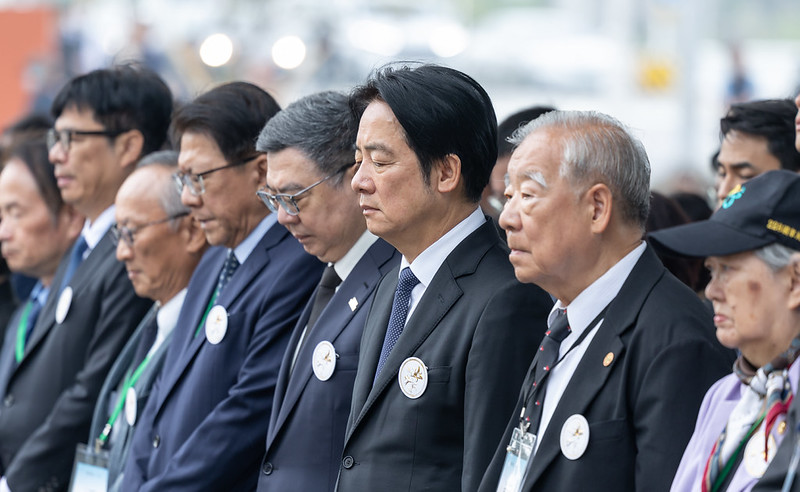
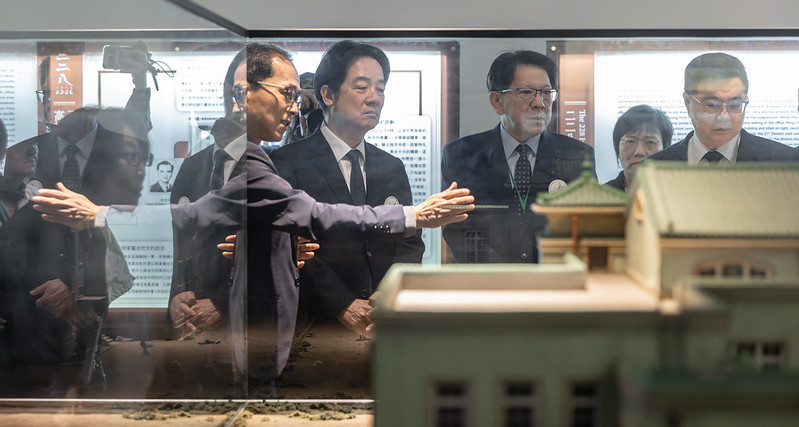
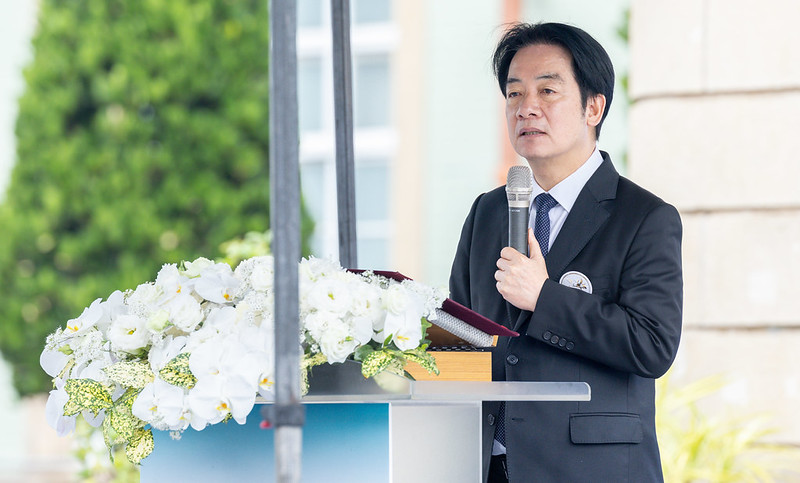
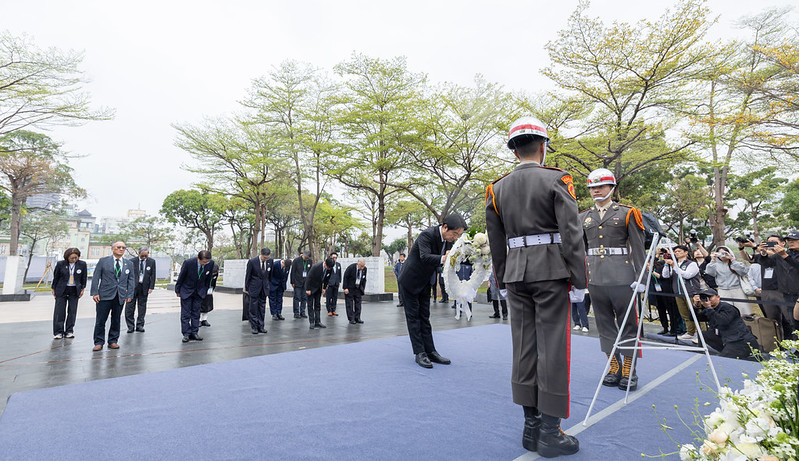
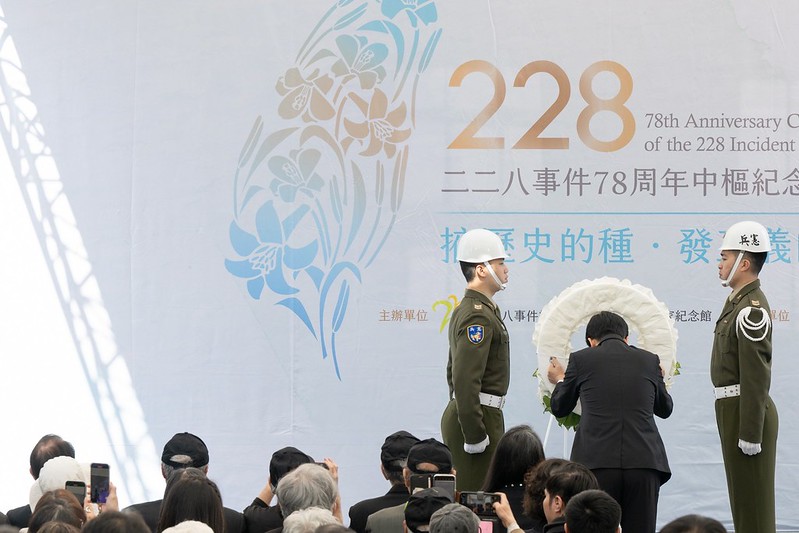
On the morning of February 28, President Lai Ching-te attended the nation’s main memorial ceremony marking the 79th anniversary of the 228 Incident held in Kaohsiung, and on behalf of the nation, expressed deepest condolences and sympathy to all the victims and their families. Stating that the government will further implement transitional justice to prevent the recurrence of a historical tragedy like the 228 Incident, the president remarked that only by honestly facing history and pursuing the truth can we truly achieve social reconciliation and create a harmonious, public-spirited, and dignified nation. He said that only a democratic system where the people are sovereign can prevent the state apparatus from harming people again.
President Lai stated that as president, his greatest mission is to protect Taiwan. He said that he will promote unity among the ruling and opposition parties, and hopes that all citizens will jointly defend national sovereignty and uphold democracy to ensure our people’s right to determine their own future. The president expressed hope that through memorial ceremonies year after year, we can achieve mutual understanding across generations and unite in solidarity based on the truth to ensure that Taiwan’s democracy never reverses course.
A translation of the president’s remarks follows:
Today marks the 79th anniversary of the 228 Incident. The nation’s main memorial ceremony is specially being held in the plaza fronting the Kaohsiung Museum of History, a key site where army troops violently suppressed city residents that year. Together, we are commemorating the innocent victims of that dark era, and extending condolences to all their family members. Our hearts are forever as one, and we will always keep the victims in our hearts.
Post-World War II, the 228 Incident is the most tragic event in Taiwan’s history. The incident was triggered on February 27, 1947, when armed agents from the National Government’s Monopoly Bureau conducting anti-smuggling operations hit and injured Ms. Lin Chiang-mai (林江邁), a cigarette vendor, with the butt of a gun. This aroused public anger and drew onlookers. When the anti-smuggling personnel fired warning shots into the crowd, they killed a civilian who stood up against the injustice. This public murder case involving government personnel sparked outrage among the citizens of Taipei.
On the morning of the next day, February 28, four to five hundred people initiated a march and petition, storming the gates of the Provincial Executive Office, demanding that it severely punish the murderer. As a result, clashes between the police and civilians broke out, and students in Taipei began to boycott classes and march in the streets. In addition, Chen Yi (陳儀), who had been dispatched to Taiwan as chief executive and garrison commander, mishandled the situation, causing the unrest of February 28 to spread throughout Taiwan. Chen Yi later reported the situation to Nanjing leader Chiang Kai-shek. To maintain political stability, military reinforcements were urgently ordered to Taiwan, thus beginning large-scale violent suppression. In the early morning of May 20, 1949, martial law was also imposed, and remained in effect for 38 years. Under authoritarian rule, the 228 Incident became a longstanding taboo over the 40 years that followed it. Society was unable to know the truth, and the victims and their families continued to suffer injustice, living in the shadows. There was no discussion of overturning unjust verdicts – no one dared to even speak.
The 228 Incident was a tragic historical event where innocent people were persecuted by an alien regime; in itself, it was certainly not a democratic movement, nor was it related to colonial rule. However, the 228 Incident in combination with the White Terror of the martial law period did indeed drive the Taiwanese people’s democratic will for self-determination. It was not until 40 years later, in the 1980s, that the forces of democracy finally converged and achieved success, and civil society groups began to take action, including:
1. In March 1986, the Taiwan Association for Human Rights held a discussion on the 228 Incident, breaking the existing taboo.
2. On September 28, 1986, the Democratic Progressive Party (DPP) was founded. Article 51 of the party’s action plan stipulates the goal of all party members pursuing the disclosure of the truth regarding the 228 Incident, and that February 28 be designated as Peace Day to eliminate prejudices based on provincial identity and promote social unity. This is also the origin of the government’s later establishment of the 228 Peace Memorial Day.
3. On February 15, 1987, in Tainan, hundreds of advocates for democracy including Mr. Cheng Nan-jung (鄭南榕), lawyer Stephen S.S. Lee (李勝雄), and Mr. Huang Chao-kai (黃昭凱) held the first march in all of Taiwan to overturn unjust verdicts related to the 228 Incident.
4. The year 1987 marked the 40th anniversary of the 228 Incident. The 228 Peace Day Promotion Association and the Presbyterian Church in Taiwan launched a movement to overturn unjust verdicts related to the 228 Incident, and called on the government and the public to face the scars of history and heal the wounds of the victims and their families.
5. On July 15, 1987, under the pressure of public opinion, the government finally lifted martial law after 38 years, the longest in the world at that time.
Thereafter, the 228 Incident was no longer taboo. The surviving victims and their families could open their hearts, talk about their inner suffering, and use their personal experiences to testify to that period of history.
In 2011 when she served as DPP chairperson, President Tsai Ing-wen published an article titled “A Letter for a Future 228.” In that article, she stated that there is no 228 Incident of the DPP, and there should be no 228 Incident of the Kuomintang. She wrote that there is only one 228 Incident in this world, and that is the 228 Incident of all of Taiwan; its historical truth should not change with the transfer of power between political parties. History clearly shows that since the party was founded, thanks to DPP predecessors’ links with civic groups and the general public, the party has accompanied the victims and their families through those stormy days. It also steadfastly promoted the complete re-election of the legislature and direct presidential elections, and the abolition of restrictions on political parties and the media as well as Article 100 of the Criminal Code, seeking 100 percent freedom of speech. Whether in opposition or in power, the pursuit of democracy and freedom and the protection of human rights have always been the DPP’s reason for being.
After martial law was lifted and political democracy was established, the government also began to take positive actions regarding the 228 Incident, including:
1. On March 9, 1983, authorities first published Mr. Yang Liang-kung (楊亮功)’s 228 investigation report of 1947.
2. At the plenary session on February 27, 1990, the day before the anniversary of the 228 Incident, all members of the Legislative Yuan observed one minute of silence for the victims.
3. In 1992, the Executive Yuan released a research report on the 228 Incident, established a 228 Incident research group, and promoted the establishment of memorials including the 228 Peace Memorial Monument, 228 Peace Memorial Park, and the 228 Memorial Museum. On February 28, 2011, the National 228 Memorial Museum formally opened and began operations, marking a new milestone in the movement to overturn injustices related to the 228 Incident.
4. In 1995, the February 28 Incident Disposition and Compensation Act was promulgated, and the Executive Yuan established the Memorial Foundation of 228, which accepts applications for compensation and grants compensation funds regarding the 228 Incident.
5. In 1996, President Lee Teng-hui became the first president to publicly apologize for the 228 Incident. Subsequently, Presidents Chen Shui-bian, Ma Ying-jeou, Tsai Ing-wen, and I myself also apologized for the 228 Incident again on 228 Peace Memorial Day.
6. On December 5, 2017, the Legislative Yuan passed the third and final reading of the Act on Promoting Transitional Justice.
7. On March 15, 2018, the National Human Rights Museum was formally established, and on May 17 and 18 that same year, plaques were respectively unveiled at the Green Island White Terror Memorial Park and Jing-mei White Terror Memorial Park. The National Human Rights Museum was established to promote reflection on the history of human rights violations at the national level and further cultivate democracy and freedom.
8. On May 31, 2018, the Transitional Justice Commission was formally established to promote transitional justice work.
9. On September 9, 2023, President Tsai Ing-wen attended a joint ceremony for the redressing of state injustices and the presentation of certificates for restoration of reputation, personally presenting the certificates to political victims and their families from the White Terror and authoritarian rule period.
Last year, when I presided over the main 228 memorial ceremony for the first time, I announced three declarations:
First was that we will accelerate our work to make political archives available for public access and pursue the truth:
After taking office, I instructed the National Security Bureau (NSB) to manually re-inspect one by one approximately 1 million records at the bureau from the martial law period to determine which of those records qualify as political archives. After one year and four months of independent review, the NSB further identified and this month declassified over 50,000 political archives from the martial law period prior to 1992. Combined with the files the NSB began reviewing and transferring beginning in 2000, a total of more than 140,000 political archives have now been handed over to the National Development Council’s National Archives Administration, all fully accessible under the “no document withheld, no word redacted” principle, including documents directly or indirectly related to the murders at the Lin I-hsiung (林義雄) residence, which have all been fully declassified in this and previous reviews.
This is an important step for the government in pursuing the truth. But to be candid, I must report that regrettably, it was found after a thorough investigation that the archives regarding the Lin family murders from that year are incomplete, and even the oral accounts are not entirely true or accurate. In particular, from investigative reports by the Transitional Justice Commission and the Control Yuan, we can see that many pieces of evidence were systematically destroyed at that time, and the NSB and intelligence units deliberately obstructed judicial investigations, resulting in missed opportunities to solve the case. Therefore, these files must be further analyzed and researched before they can be utilized. Despite the Lin family home being under strict surveillance at the time of the murders, intelligence records were, shockingly, systematically destroyed during the party-state period.
Who is able to destroy records? Who is able to make intelligence agencies block judicial investigations? Only the ruling government has that kind of power. This highlights how the authoritarian government at the time used state violence to harm the people and create social panic. Even though much evidence has already been destroyed, the intervention of the state apparatus and the concealment of evidence and facts are truths that cannot be wiped away, and I believe everyone clearly understands that.
In the future, the Ministry of Education should implement the national action plan for transitional justice education. As Chairman Yang Chen-long (楊振隆) of the Memorial Foundation of 228 has said, local historical memory should be incorporated into school curricula so that the younger generation can understand Taiwan’s history and love this land from an early age. The Ministry of Culture should also take even more initiative to hold cultural activities related to transitional justice. This would allow more people to understand the course of Taiwan’s democratic development so that every Taiwanese person can tell their own story, sing their own song, and love their own country.
Second was that the government will further implement transitional justice:
Thanks to Chairman Yang’s leadership, the Restoration of Victim’s Rights Infringed by Illegal Acts of the State During the Period of Authoritarian Rule Foundation further issued over 1,500 certificates of restoration of reputation last year, hoping that the government will make every effort to deliver belated justice and fairness to the victims and their families. As for the locations where human rights violations occurred during the period of authoritarian rule, we thank the Ministry of Culture for launching the review process, as we hope to preserve even more locations of significance to transitional justice. This includes the site of the Lin family murders, presently the Gikong Presbyterian Church, which has already been designated as a location of significance to transitional justice this year to be preserved and maintained.
For some time now, I have seen many people visiting the Gikong Presbyterian Church, and I hope that more generations of Taiwanese will visit all the historical sites across the country, reflect on and consider the damage authoritarian rule has done to human rights and freedom, and work together to deepen Taiwan’s democratic development. I greatly admire what Chairman Yang said in his speech, that the families of the victims must move beyond their sorrow, transform their grief into strength, and deepen Taiwan’s democracy to prevent such events from happening again.
Third was to prevent a recurrence of any historical tragedy similar to the 228 Incident:
The 228 Incident teaches us that democracy has never been a gift that falls from the sky – it is a responsibility that every generation of Taiwanese must protect and guard with their very lives. Only by honestly facing history and pursuing the truth can we truly achieve social reconciliation and create a harmonious, public-spirited, and dignified nation. Therefore, the 228 memorial ceremony, as Pastor Tien Yung-jen (田永人) just mentioned, is held every year to remind us that history serves as a mirror to ensure that it does not happen again. However, we also clearly understand that preventing history from repeating itself can only be achieved under a democratic system where the people are sovereign, thereby preventing the state apparatus from harming people again.
In recent years, China has attempted to annex Taiwan by any and all means. As president, my greatest mission is to protect Taiwan. I will promote unity among the ruling and opposition parties, and I hope that all citizens will jointly defend national sovereignty, uphold democracy, and ensure our people’s right to determine their own future. Although peace is priceless, one must have ideals regarding peace, and cannot harbor illusions. Only peace backed by strength is true peace. Peace negotiation that relinquishes sovereignty to advance unification is not true peace, and will suppress democracy, harm human rights, and cause no end of trouble.
In closing, it is my heartfelt hope that through memorial ceremonies held year after year, we can achieve mutual understanding across generations and unite in solidarity based on the truth to ensure that Taiwan’s democracy never reverses course. Thank you.